Commercial HVAC in New Braunfels, TX

Your Business Can't Wait: Fast, Reliable Commercial HVAC Services
When your business’s HVAC system fails, every minute counts. Ensure speed and reliability with expert, local technicians ready to service New Braunfels. Contact ReliaBee Air, Electric, & Plumbing today at tel:[Insert Number] or apply for financing to restore your facility's comfort immediately.
Commercial climate control is not a luxury; it is an operational necessity that impacts employee productivity, customer retention, and inventory safety. An unexpected failure during the peak of a Texas summer can halt operations entirely. ReliaBee Air, Electric, & Plumbing provides the rapid response and technical expertise required to minimize downtime and protect your bottom line.
- Same-day service options to drastically reduce business interruption.
- Guaranteed quality and efficiency standards with every diagnostic and repair.
- Full coverage throughout New Braunfels for comprehensive facility support.
- Fully licensed and insured for your protection – all service backed by comprehensive warranties.
Comprehensive Commercial HVAC Solutions for Operational Efficiency
Commercial heating and cooling requires a different tier of expertise compared to residential work. The loads are heavier, the run times are longer, and the complexity of the systems demands specialized knowledge. Your facility requires a system that manages high-occupancy loads and combats the intense external heat typical of Comal County.
Rooftop Units (RTUs) and Packaged Systems
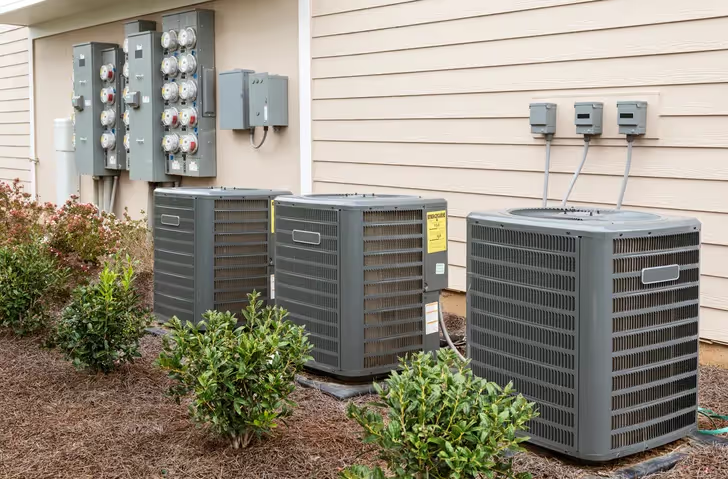
Most commercial spaces in the area rely on packaged rooftop units. These systems consolidate heating and cooling components into a single cabinet, saving valuable indoor floor space. Services for RTUs include structural evaluation for weight support, weatherproofing against severe storms, and precise calibration of economizers. An economizer allows the unit to use fresh outdoor air for cooling when conditions permit, significantly lowering electrical consumption during milder months.
Chillers and Cooling Towers
For larger industrial facilities or multi-story office buildings, air-cooled or water-cooled chillers are the standard. These complex loops transfer heat away from the building efficiently but require rigorous chemical balancing and mechanical maintenance. Technicians address issues related to scaling in tubes, compressor surges, and water flow rates. Proper maintenance of these heavy-duty systems ensures consistent temperatures across thousands of square feet.
Split Systems and VRF Technology
Variable Refrigerant Flow (VRF) systems and commercial split systems offer zoned control, allowing different areas of a building to maintain different temperatures simultaneously. This is critical for mixed-use buildings where a server room requires constant cooling while an adjacent office space needs heating. Technicians specialize in leak detection within long refrigerant line sets and the complex logic boards that control these inverter-driven compressors.
Commercial Controls and Building Automation
Hardware is only as effective as the system controlling it. Modern commercial HVAC relies on Building Automation Systems (BAS) to regulate schedules, temperature setpoints, and ventilation rates. Integrating these controls allows facility managers to monitor energy usage and detect faults remotely. Correctly configured thermostats and sensors prevent energy waste by ensuring systems do not run in empty buildings overnight or during weekends.
The Commercial Installation and Replacement Process
Executing a commercial HVAC installation involves logistics, engineering, and safety protocols that go beyond a simple equipment swap. A structured approach ensures that the new equipment performs to manufacturer specifications immediately upon startup.
Site Assessment and Load Calculation
The process begins with a detailed evaluation of the building’s thermal envelope. Technicians perform Manual N load calculations, which factor in square footage, insulation levels, window placement, occupancy rates, and internal heat gains from machinery or lighting. This data determines the exact tonnage required, preventing issues such as short-cycling (system too big) or inability to hold temperature (system too small).
System Design and Selection
Based on the load calculation, the appropriate equipment is selected. This stage involves choosing between standard-efficiency and high-efficiency units based on the long-term return on investment. Engineers also design or modify ductwork to ensure static pressure remains within acceptable limits. Poor airflow design can compromise even the most advanced HVAC unit, leading to premature failure.
Logistics and Safety Planning
Commercial installations often require cranes or lifts to place units on rooftops. A safety plan is established to manage pedestrian and vehicle traffic around the job site. Coordination with local authorities regarding road closures or parking lot access ensures the installation proceeds without legal or safety challenges.
Removal and Rigging
Old equipment is disconnected, creating a clear path for safe removal. Technicians adhere to EPA regulations regarding refrigerant recovery to ensure no harmful chemicals are vented into the atmosphere. The new unit is then rigged and lifted into position using heavy-duty strapping and verified weight distribution points to protect the roof structure.
Connection and Commissioning
Once the unit is set, technicians connect electrical lines, condensate drains, and duct transitions. The critical final step is commissioning, where the system is powered on and tested against design parameters. Technicians measure airflow, check refrigerant pressures, and verify amp draws on motors. The system is not considered installed until it proves it can handle the operational load.
Making the Critical Choice: Repair vs. Full System Replacement
Deciding whether to inject more capital into an aging system or invest in a new asset is a financial calculation. Business owners must weigh immediate cash flow against long-term operational costs and tax implications.
The 50% Rule
A widely accepted metric in facility management is the 50% rule. If the cost of a necessary repair approaches or exceeds 50% of the equipment's value (or the cost of replacement), installing a new unit is often the smarter financial move. Investing heavily in a depreciated asset frequently results in diminishing returns as other components begin to fail.
Frequency of Breakdowns
If your maintenance log shows repeated service calls over the last 12 months, the system has likely reached the end of its reliable lifespan. Constant repairs disrupt business operations, frustrate employees, and drive customers away. ReliaBee Air, Electric, & Plumbing helps assess total cost of ownership, comparing cumulative repair costs with the monthly financing of a modern, warrantied system.
Energy Efficiency and Operational Costs
Older commercial units typically operate at significantly lower SEER ratings than current standards require. A system installed 15 years ago may be costing your business 20% to 40% more in electricity every month compared to modern high-efficiency models. In a climate like New Braunfels, where cooling loads are substantial, the energy savings from a replacement often offset the monthly payment of new equipment.
R-22 Refrigerant Phase-Out
If your current system relies on R-22 refrigerant, repair costs will be extremely high due to the global phase-out of this chemical. Leaks in R-22 systems are often fatal because recharging them is cost-prohibitive. Replacing these units with systems using R-410A or newer refrigerants provides a future-proof solution with reduced service costs.
Navigating Local Climate and Regulatory Standards
Operating a business in Comal County presents specific environmental and regulatory challenges that influence how HVAC systems must be configured and maintained.
Combating High Heat and Humidity
The region experiences prolonged periods of high heat—often exceeding 100°F—paired with high humidity. Commercial systems must be sized for both temperature reduction and latent cooling (moisture removal). Oversized systems cool too quickly and shut off before dehumidifying, resulting in clammy air and potential mold growth. Technicians focus on airflow settings that enhance dehumidification to protect air quality and building materials.
Compliance with Codes and Permits
Commercial HVAC work must follow local building codes and ventilation standards such as ASHRAE 62.1. Electrical connections and rooftop structural modifications often require specific permits. Professional technicians handle permit filing and inspections to ensure your facility remains code-compliant and avoids penalties.
Local Utility Considerations
Understanding the area's electrical infrastructure is essential. Commercial 3-phase power is common, and voltage imbalances can damage sensitive compressor motors. Technicians also guide businesses on rebate programs offered by local providers, helping reduce the cost of installing high-efficiency systems or energy management solutions.
Why Professional Execution Matters for Commercial Systems
Commercial HVAC is high-stakes. The equipment is expensive, the voltages are dangerous, and the impact on business operations is immediate. Relying on general handymen or residential-only providers often leads to misdiagnoses and compounded repair costs.
Advanced Diagnostics and Tools
Professional commercial technicians use industrial-grade diagnostic tools such as thermal imaging cameras and combustion analyzers. These provide precise data that identifies root causes instead of masking symptoms.
Preventative Maintenance Agreements
The most effective way to control HVAC expenses is through proactive maintenance. Quarterly visits ensure filters are replaced, belts remain properly tensioned, and condenser coils are chemically cleaned. A dirty condenser coil can increase energy use by 30% and lead to compressor failure. Customized maintenance plans help shift operations from emergency response to predictable asset management.
Safety and Liability
Commercial rooftops and mechanical rooms pose significant hazards. Professional teams follow OSHA safety standards, including fall protection and lockout/tagout procedures. Hiring a fully insured provider like ReliaBee Air, Electric, & Plumbing ensures your business is protected from liability in the event of an incident.
Your facility depends on a stable environment to function. When systems falter, you need a partner who understands the technical demands of commercial equipment and the urgency of business continuity.
Secure Your Business Operations Today
Do not let HVAC failures disrupt your revenue or damage your inventory. Secure a partner who delivers precise diagnostics, rapid repairs, and strategic installations tailored to your facility’s needs.
Contact ReliaBee Air, Electric, & Plumbing today to schedule your commercial HVAC service or consultation.

Current Offers for
San Antonio Homeowners
Free Plumbing Safety Check


$59 AC Tune-Up
5% OFF FOR SENIORS
5% OFF FOR VETERANS & FIRST RESPONDERS

5% OFF FOR EDUCATORS


What Your Neighbors Are Saying