Heat Pump Repair in Schertz, TX

Is Your Heat Pump Failing? Swift, Expert Repair Services Available
Struggling with a malfunctioning heat pump during the peak heat or unexpected chill of Schertz, TX? Immediate, expert repair services can bring your system back to optimal performance quickly so you aren't left uncomfortable in your own home. Contact us today to schedule a diagnostic visit or discuss financing options available for your repair.
- Restore your comfort within hours, not days.
- Transparent pricing and no hidden fees.
- Efficient, long-lasting solutions to prevent future issues.
All services come with a full warranty and options for financing to make repairs manageable.
Comprehensive Diagnostics and Immediate Resolution
When a heat pump fails, the priority is identifying the root cause immediately to prevent further damage to the compressor or air handler. Unlike standard air conditioners, heat pumps are complex systems that manage both heating and cooling through a reversing valve mechanism. A breakdown often indicates a specific failure within the refrigerant cycle, electrical controls, or airflow management systems. In the variable climate of Schertz, where humidity spikes and temperatures fluctuate, a precise diagnosis is the only way to ensure the system does not fail again a week later.
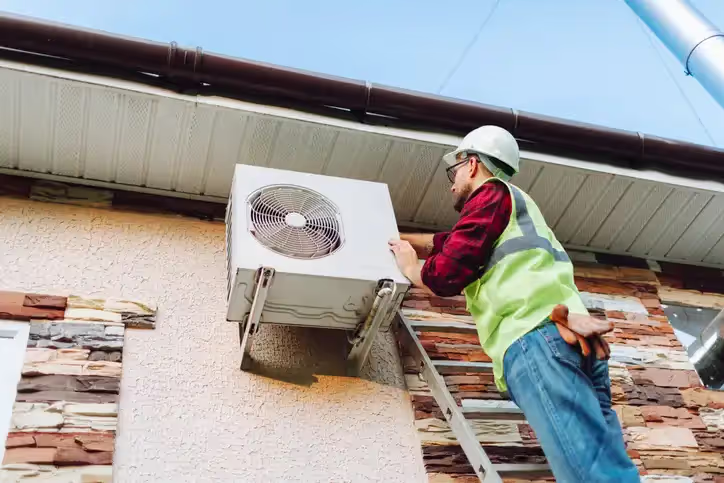
ReliaBee Air, Electric, & Plumbing utilizes advanced diagnostic tools to isolate the issue efficiently. The focus remains on restoring the unit to manufacturer specifications. Technicians examine the pressure levels, voltage readings, and mechanical components to determine exactly why the system is not maintaining the set temperature. Whether the unit is frozen over, blowing lukewarm air, or making grinding noises, the goal is a same-day resolution that minimizes downtime for your household.
Addressing Refrigerant Leaks and Pressure Issues
Refrigerant is the lifeblood of any heat pump. It transfers heat energy from the indoors to the outdoors during the summer, and reverses that process during the winter. Low refrigerant levels are rarely a result of evaporation; they almost always signal a leak in the evaporator or condenser coils. Simply "topping off" the refrigerant is not a repair; it is a temporary band-aid that costs money without solving the problem.
- Technicians use electronic leak detectors to pinpoint the exact location of the escape.
- Once the leak is identified, the refrigerant is pumped down or recovered according to EPA regulations.
- The compromised coil or line set is brazed and sealed to ensure a permanent fix.
- After the repair, the system is pressure-tested with nitrogen to verify integrity before being recharged to the precise factory-specified weight.
Reversing Valve Troubleshooting
The reversing valve is the component that distinguishes a heat pump from a standard AC. This 4-way valve physically changes the direction of the refrigerant flow, allowing the system to switch between heating and cooling modes. In regions with fluctuating weather, this component sees heavy usage. If a heat pump blows cold air while set to heat, or hot air while set to cool, the reversing valve is frequently the culprit.
- Technicians test the solenoid coil to ensure it is receiving and reacting to the 24-volt signal from the thermostat.
- If the solenoid is functioning but the valve is stuck mechanically, the entire valve body must be replaced.
- This repair requires brazing and precise handling, as overheating the new valve during installation can damage internal seals.
Electrical Component and Control Board Repair
Modern heat pumps rely heavily on sensors and printed circuit boards to manage defrost cycles and fan speeds. Electrical failures account for a significant portion of service calls. A system that refuses to turn on, trips the breaker repeatedly, or short-cycles (turns on and off rapidly) typically has an electrical fault.
- Capacitors, contactors, and relays are tested for continuity and capacitance.
- Wiring connections are inspected for corrosion or loose terminals, which can generate heat and lead to arcing.
- Defrost control boards are analyzed to ensure the system correctly enters and exits defrost mode during colder weather, preventing ice buildup on the outdoor unit.
A Streamlined Approach to Restoring Your System
Homeowners require a process that is transparent, logical, and fast. The repair workflow is designed to reduce uncertainty and provide clear answers regarding the status of the HVAC equipment. From the moment a technician arrives, the objective is to assess, propose a solution, and execute the repair with minimal disruption to the home.
- First, the technician performs a complete system audit, checking the thermostat, filtration, and outdoor unit condition. This holistic view prevents fixing a symptom while ignoring the disease.
- Next, specific performance data is gathered, including superheat and subcooling measurements, to understand how the refrigerant is behaving inside the lines.
- Then, a flat-rate quote is presented. This ensures the price is based on the job, not the number of hours it takes, eliminating surprise costs at the end of the service.
- Once the repair is authorized, the technician accesses truck stock to complete the work immediately whenever possible.
- Finally, the system is run through a full operational cycle to verify that temperature splits (the difference between return and supply air temperature) are within the correct range.
Determining the Right Path for Your HVAC Investment
A critical decision point for many homeowners arises when a major component fails: should you repair the existing unit or invest in a replacement? This decision is financial and logistical. Heat pumps in Texas run nearly year-round, handling both the intense summer cooling load and the winter heating requirements. This double duty means they may reach the end of their lifecycle faster than a furnace-only or AC-only system.
Making the right choice depends on data, not guesses. If a system is nearing the 10 to 12-year mark, the efficiency loss may already be costing you money on monthly utility bills. However, a well-maintained unit may only need a component swap to run reliably for several more years.
The 50% Rule and Repair Frequency
A common industry standard for making this decision is the 50% rule. If the cost of the repair approaches 50% of the value of a new system, replacement is generally the wiser financial move. Additionally, frequency matters.
- Evaluate how many times the system has required service in the last two years.
- Consider if the warranty on major parts like the compressor is still active.
- Assess if the system uses older R-22 refrigerant, which is phased out and extremely expensive to replace, versus the modern R-410A.
Efficiency Considerations
Older heat pumps often have SEER (Seasonal Energy Efficiency Ratio) ratings significantly lower than modern standards. A repair might get an old 10 SEER unit running again, but it will continue to consume high amounts of electricity. Replacing a failed compressor in an inefficient unit is often throwing good money after bad. Conversely, if the unit is relatively new and high-efficiency, repairing even an expensive component like a control board or blower motor is almost always the correct path.
Navigating Local Climate and Infrastructure Requirements
Operating a heat pump in Schertz requires specific attention to environmental factors. The high humidity experienced from late spring through early autumn places a heavy latent load on the system. The heat pump must run long enough to dehumidify the air, not just cool it. If a system short-cycles due to a repair issue, the indoor humidity can rise rapidly, leading to discomfort and potential mold growth.
During the winter months, although mild compared to northern states, temperatures drop low enough to trigger the heat pump’s defrost cycle. If the outdoor ambient sensor or defrost board fails, the outdoor coil can turn into a block of ice, blocking airflow and potentially crushing the coil fins. Local technicians understand the necessity of calibrating the defrost timing to match the local dew point and temperature averages.
Electrical and Permit Considerations
Ensuring your system complies with local building codes is essential for safety and home value. While minor repairs typically do not require permits, major component replacements or system change-outs generally do.
- Technicians ensure that all electrical connections meet the specifications of local utility providers and safety codes.
- Proper grounding and wire sizing are verified to prevent fire hazards, especially in older homes where electrical panels may be outdated.
- If a refrigerant circuit is opened, adherence to EPA Section 608 regarding refrigerant handling is mandatory to avoid environmental fines and ensure safety.
Emergency Handling and Auxiliary Heat Management
When a heat pump fails in the dead of winter, the system typically relies on "emergency heat" or "auxiliary heat" strips. These represent an electric resistance heating element located in the air handler. While this prevents the pipes from freezing and keeps the home warm, it is significantly more expensive to run than the heat pump compressor.
A common repair scenario involves the heat pump locking out the compressor to protect it, forcing the system into auxiliary heat mode permanently. Homeowners often notice this only when their electric bill doubles.
- Diagnostics include checking the sequencer and heating elements of the auxiliary strip.
- Technicians verify that the thermostat is correctly prioritizing the heat pump and only using auxiliary heat when the outdoor temperature drops below the balance point.
- Restoring the primary heat pump function is critical to reducing operational costs immediately.
Why Professional Troubleshooting is Non-Negotiable
Modern HVAC systems are integrated with smart home technology, variable speed motors, and complex zoning systems. DIY repairs or using a general handyman often leads to misdiagnosis. A misdiagnosed issue results in parts being swapped unnecessarily while the core problem worsens. For instance, a failing compressor can mimic a bad capacitor. Changing the capacitor might start the unit temporarily, but the underlying stress on the compressor remains, eventually leading to catastrophic failure.
ReliaBee Air, Electric, & Plumbing employs technicians who are trained to look at the system holistically. This includes checking static pressure in the ductwork, which often goes overlooked. High static pressure restricts airflow, causing blower motors to burn out and coils to freeze. Professional repair involves adjusting dampers, cleaning blower wheels, and ensuring the ductwork supports the capacity of the heat pump.
- Professionals carry the correct instrumentation to measure superheat and subcooling, which are the only accurate ways to charge a system.
- Access to OEM (Original Equipment Manufacturer) parts ensures that replacements fit perfectly and function as designed.
- Warranty protection on repairs provides peace of mind that if the specific part fails again, you are covered.
Critical Components That Require Expert Attention
The longevity of a heat pump is determined by the health of its major components. Neglecting unusual noises or odors can turn a minor repair into a full system replacement.
Compressor Health
The compressor is the engine of the heat pump. It compresses the refrigerant gas, raising its temperature and pressure. If the compressor fails, the system cannot heat or cool. Common signs of compressor distress include hard starting (lights dimming when the unit turns on) or loud clanking noises.
- Technicians install "hard start kits" to assist aging compressors, extending their lifespan.
- Acid tests are performed on the refrigerant oil if a burnout is suspected.
Fan Motor Performance
The outdoor fan motor pulls air across the condenser coil to release or absorb heat. If this motor fails or runs at the wrong speed, the heat exchange process is disrupted. This causes the compressor to overheat and trip on high head pressure.
- Bearings are checked for wear and lubrication.
- Fan blades are inspected for balance; a wobbling fan can cause vibration that damages copper lines.
Thermostat and Sensor Calibration
Sometimes the machinery is fine, but the brain of the system is confused. Miscalibrated thermostats or faulty temperature sensors can cause the system to run continuously or not at all.
- Technicians verify the thermostat placement is not affected by sunlight, drafts, or heat-generating appliances.
- Wiring behind the thermostat is checked to ensure the "O/B" terminal (which controls the reversing valve) is energized correctly for the specific brand of heat pump.
Secure Your Comfort and System Efficiency
Ignoring the signs of a struggling heat pump—whether it is strange noises, weak airflow, or rapidly increasing energy bills—only leads to more extensive damage and higher costs. The complex interplay of refrigerant, electricity, and airflow demands professional attention to ensure safety and reliability. In the demanding climate of Schertz, a functioning heat pump is a necessity, not a luxury.
Take action before a minor glitch becomes a total system failure. Trust ReliaBee Air, Electric, & Plumbing to restore your heating and cooling system to peak performance with speed and precision.
Ready to get your system running smoothly again? Schedule your repair service now.

Current Offers for
San Antonio Homeowners
Free Plumbing Safety Check


$59 AC Tune-Up
5% OFF FOR SENIORS
5% OFF FOR VETERANS & FIRST RESPONDERS

5% OFF FOR EDUCATORS


What Your Neighbors Are Saying