Emergency Service in Alamo Heights, TX

Urgent Care When Every Second Counts
Facing a sudden heating or cooling failure in Alamo Heights can instantly turn your home from a sanctuary into a safety hazard. Contact us immediately for 24/7 emergency dispatch to restore your comfort.
- 24/7 availability ensures you receive technical support when your system fails outside of standard business hours.
- Experienced HVAC professionals dedicated to prompt, effective diagnosis and repair.
- Strategically located technicians for fast access throughout the Alamo Heights area.
- Fully licensed and equipped to handle all makes and models of residential HVAC systems.
Identifying Critical System Failures Requiring Immediate Response
When your HVAC system stops working effectively, the temperature inside your home can climb or drop rapidly, potentially endangering pets, elderly family members, or the structural integrity of your home. Understanding the difference between a routine maintenance issue and a critical emergency helps you make the right call. We categorize emergencies by the severity of the system failure and the immediate impact on your indoor environment.
A complete lack of airflow during extreme weather conditions is the most common trigger for emergency service. If the blower motor ceases to function or the compressor fails to engage, the stagnant air allows indoor temperatures to match outdoor extremes quickly. In Alamo Heights, where humidity levels can be severe, a lack of air conditioning also leads to rapid moisture buildup, which can damage drywall and flooring within hours.
Strange noises often precede catastrophic failure. A screaming or grinding sound typically indicates a seized motor bearing or a compressor under extreme duress. Ignoring these sounds can turn a replaceable part into a requirement for a full system replacement. Similarly, electrical burning smells usually signal a short in the wiring or a component overheating. These situations require immediate shutoff of the system and professional intervention to prevent fire hazards.
- Total System Failure: The unit does not turn on or blows warm air while set to cool.
- Electrical Hazards: Buzzing sounds from the breaker box, burning odors, or frequent breaker trips.
- Refrigerant Leaks: Hissing sounds near the indoor or outdoor unit, often accompanied by ice buildup on the coils.
- Water Damage: Clogged condensate drains causing water to back up and threaten ceilings or floors.
The Diagnostic Process During an Emergency Call
When you request emergency service, the objective is to identify the root cause accurately and implement a solution that ensures safety and restores function. ReliaBee Air, Electric, & Plumbing technicians arrive with fully stocked vehicles, aiming to resolve the issue in a single visit whenever possible. The diagnostic phase is systematic and thorough, ensuring no underlying issues are overlooked.
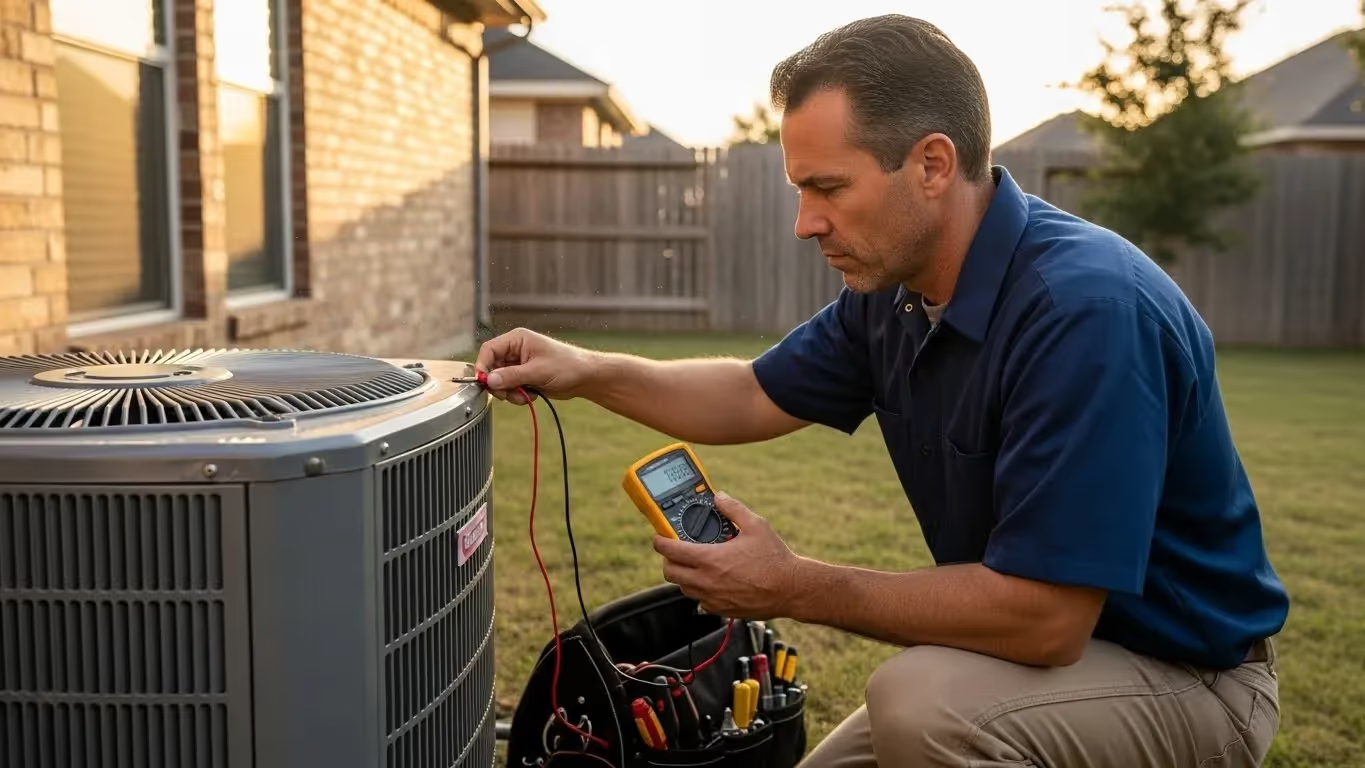
The technician begins by assessing the thermostat communication to verify that the signal is reaching the furnace or air handler. This rules out control board issues or simple calibration errors. Following this, we inspect the electrical components, including capacitors, contactors, and fuses. In high-heat environments, capacitors are prone to swelling and failing, preventing the compressor from starting. This is a common, rectifiable issue that restores cooling immediately upon repair.
We also analyze refrigerant levels and airflow restrictions. Low refrigerant levels indicate a leak that must be located and sealed; simply adding more refrigerant is a violation of EPA regulations and a temporary stopgap that does not solve the problem. We measure superheat and subcooling to determine exactly how the system is managing heat transfer. If airflow is restricted due to a frozen coil or a failed blower motor, we take steps to thaw the system safely before testing mechanical operation.
- Visual Inspection: Checking for physical damage, burnt wires, or oil spots indicating leaks.
- Electrical Testing: Measuring voltage and amperage to ensure components are within manufacturer specifications.
- Pressure Testing: Using gauges to verify refrigerant pressures are balanced for the current ambient temperature.
- Component Isolation: Testing individual parts like the fan motor or compressor to pinpoint the exact point of failure.
Managing HVAC Repair in Historic and Modern Homes
Alamo Heights presents a unique mix of architectural styles, ranging from historic estates to modern renovations. The age and construction of a home significantly influence how emergency HVAC repairs are approached. Older homes often utilize different ductwork configurations, requiring specialized knowledge to navigate retrofitted systems without causing collateral damage.
In properties with older electrical infrastructure, modern high-efficiency HVAC systems may strain existing circuits. An emergency call often reveals that the issue is not with the AC unit itself, but with an electrical supply that cannot handle the startup amperage of the compressor. We evaluate the entire circuit to ensure your home’s power supply supports reliable operation.
Insulation and duct sealing also play a role in emergency situations. In many local homes, ductwork runs through unconditioned attics where temperatures can exceed 130 degrees. If a duct disconnects or collapses, the system runs continuously without cooling the living space, leading to overheating and eventual burnout. We inspect accessible ductwork to ensure the cool air produced is actually reaching your rooms.
- Retrofit Compatibility: ensuring replacement parts work seamlessly with older, existing infrastructure.
- Electrical Capacity: Verifying that the home’s panel can support the HVAC load during peak operation.
- Duct Integrity: Checking for leaks or disconnects that mimic equipment failure.
- Thermostat Wiring: addressing compatibility issues between modern smart thermostats and older HVAC units.
Repair vs. Replacement Decisions in High-Stress Scenarios
During an emergency visit, you may face the decision between repairing a compromised unit or opting for a replacement. This decision is driven by data, cost-efficiency, and long-term reliability. We provide a clear breakdown of the condition of your system so you can make an educated choice without sales pressure.
The "50% Rule" is a standard industry metric we utilize. If the cost of the emergency repair approaches or exceeds 50% of the value of a new system, replacement is generally the more financially sound option. This is particularly relevant for systems nearing the 10 to 15-year mark. Continuing to patch an aging system often leads to a "money pit" scenario where multiple components fail in succession.
Refrigerant type is another critical factor. Systems manufactured before 2010 likely use R-22 refrigerant, which has been phased out and is exponentially more expensive to restock. If an older unit has a significant refrigerant leak, the cost to recharge it often outweighs the value of the unit. In these cases, we explain the efficiency gains and warranty protections that come with a modern R-410A or A2L compliant system.
- Age of Equipment: Systems over 10 years old have a higher likelihood of recurring breakdowns.
- Repair Frequency: Multiple repairs in the last two years indicate a system reaching the end of its lifecycle.
- Energy Efficiency: Newer systems can lower monthly utility bills, offsetting the initial investment.
- Warranty Status: Repairs on out-of-warranty units are full out-of-pocket costs, whereas new units come with 10-year parts coverage.
What to Expect regarding Permits and Local Compliance
Emergency repairs must still adhere to local building codes and regulations. While the immediate goal is restoring comfort, cutting corners on compliance can lead to fines, safety hazards, and issues when selling the property later. We handle the technicalities of compliance so the work performed on your property is legal and safe.
For significant repairs involving refrigerant handling or electrical alterations, specific certifications are required. Our technicians hold EPA Section 608 certification, authorizing them to handle refrigerants safely and legally. This prevents environmental contamination and ensures your system is charged to the exact manufacturer specifications.
In the event that an emergency leads to a system replacement, we manage the permitting process required by the municipality. This includes ensuring that the new unit meets current SEER2 efficiency standards and that the installation complies with local setback and noise ordinances. You receive documentation proving that all work was performed up to code.
- EPA Certification: Proper handling and disposal of refrigerants.
- Electrical Safety: Adherence to the National Electrical Code (NEC) for all wiring repairs.
- Efficiency Standards: Verifying equipment meets Department of Energy regional standards.
- Documentation: Providing clear records of work performed for warranty and insurance purposes.
The Importance of Urgent Response for Indoor Air Quality
Emergency HVAC service is not just about temperature; it is about air quality control. When a system shuts down, air circulation stops. In a humid climate, this stagnation allows moisture to settle on surfaces, creating an environment conducive to mold and mildew growth within 24 to 48 hours.
Furthermore, if the breakdown involves the blower motor or filtration system, airborne particulates like pollen, dust, and dander are no longer being captured. For households with allergy sufferers or respiratory issues, this rapid decline in air quality can be a health irritant. Getting the system running again re-establishes the filtration cycle, pulling contaminants out of the air.
Gas furnaces pose a different set of air quality risks. A cracked heat exchanger or blocked flue vent can cause carbon monoxide to leak into the home. If your carbon monoxide detector goes off, this is a critical emergency. We perform combustion analysis to detect leaks and ensure that exhaust gases are venting properly outside the home, keeping your indoor air safe to breathe.
- Humidity Control: Preventing moisture accumulation that leads to biological growth.
- Particulate Filtration: Restoring the removal of allergens and dust from the air.
- Ventilation: Ensuring fresh air exchange and proper exhaust of combustion byproducts.
- Odor Elimination: Identifying and fixing electrical or biological sources of bad smells.
Why Professional Troubleshooting Beats DIY Fixes
In an effort to restore comfort quickly, homeowners often attempt DIY troubleshooting. While checking the thermostat batteries or the breaker is a good first step, attempting to repair internal components can be dangerous and costly. Modern HVAC systems operate on high-voltage electricity and contain pressurized gases.
Mishandling electrical components can result in severe shock or damage to the unit’s main control board. A mistake as simple as wiring a capacitor incorrectly can reverse the motor direction or burn out the compressor instantly. Professional technicians utilize insulated tools and follow lockout/tagout procedures to ensure safety during the repair.
Additionally, manufacturer warranties often include clauses that void coverage if unauthorized repairs are attempted. By relying on a licensed professional, you maintain the validity of your warranty. We document the failure and the professional repair, ensuring you have the paper trail needed should a warranty claim arise in the future.
- Safety protocols: Protection against electrical shock and chemical burns.
- Correct Tooling: Using specialized gauges and meters for accurate diagnostics.
- Warranty Preservation: Adhering to manufacturer guidelines to keep coverage intact.
- Long-Term Reliability: Fixing the root cause, not just the symptom.
Post-Repair System Testing and Validation
A repair is not complete until the system has been stress-tested. Once the failed component is replaced or the issue resolved, we run the system through a full operational cycle. This involves monitoring the temperature drop across the evaporator coil (delta T) to ensure the system is cooling or heating effectively.
We also check the amp draw on motors to confirm they are running within their rated capacity. If a new part is installed but the underlying strain on the system remains, the part will fail again prematurely. Validation ensures that the repair holds up under the thermal load of the hottest or coldest days.
Finally, we review the thermostat settings and programming with you. Often, a system failure resets the thermostat or clears schedules. We ensure your system is programmed for efficiency and comfort before we leave the premises. ReliaBee Air, Electric, & Plumbing is committed to leaving your home only when we are certain the system is stable and performing optimally.
- Performance Monitoring: Verifying temperature differentials and airflow velocity.
- Amp Draw Verification: Ensuring motors are not overheating or overworking.
- Cycle Testing: Watching the system start, run, and shut down properly.
- User Settings: Resetting thermostat schedules to your preference.
Why Choose Us
Choosing the right emergency HVAC service provider in Alamo Heights can make all the difference in safety, comfort, and long-term system reliability. ReliaBee Air, Electric, & Plumbing stands out for several key reasons:
- Rapid Response: Strategically located technicians ensure quick arrival times for any emergency.
- Experienced Professionals: Our team is trained to handle all makes and models, with expertise in both modern and historic home systems.
- Comprehensive Diagnostics: Every call includes a systematic inspection to identify root causes and prevent recurring issues.
- Licensed and Certified: Fully licensed, insured, and EPA Section 608 certified for safe refrigerant handling.
- Transparent Communication: Clear explanations of repair needs, replacement options, and cost-effective solutions without high-pressure sales.
- Safety First: Strict adherence to electrical, gas, and building code standards ensures your home and family remain protected.
- Long-Term Reliability: Focused on fixing underlying issues, not just temporary fixes, to extend the life of your HVAC system.
Call Now
Don’t let a sudden HVAC failure disrupt your home or compromise your safety. Whether it’s extreme heat, freezing temperatures, or indoor air quality concerns, our team is ready to respond immediately.
Request professional emergency service now and restore comfort to your home with confidence. Trust ReliaBee Air, Electric, & Plumbing to provide fast, safe, and reliable solutions when every second counts.

Current Offers for
San Antonio Homeowners
Free Plumbing Safety Check


$59 AC Tune-Up
5% OFF FOR SENIORS
5% OFF FOR VETERANS & FIRST RESPONDERS

5% OFF FOR EDUCATORS


What Your Neighbors Are Saying