HVAC Installation in Selma, TX

Is Your Current Climate Control System Failing to Keep Up with Texas Heat?
Whether it is the scorching summer heat or the unexpected winter chills in Selma, your HVAC system is the most critical appliance in your home. When your system fails or operates inefficiently, you need a reliable solution immediately to restore safety and comfort to your living space. Contact our team today to schedule an on-site consultation or ask about our flexible financing options to get your system replaced immediately.
- Rapid response team available to assess system failures and plan replacements quickly.
- Certified installations that maximize energy efficiency and indoor comfort.
- Upfront pricing and clear manufacturer warranties for total peace of mind.
All installations are fully compliant with local codes, with flexible financing options available to ensure you do not have to delay essential upgrades.
Fix Your HVAC Issues Quickly and Efficiently
Living in Selma, TX, means dealing with distinct weather patterns. The summers are characterized by high humidity and temperatures that frequently exceed 90°F, while winters can bring sudden, sharp cold snaps. An aging or malfunctioning HVAC system struggles to maintain consistent temperatures under these conditions. If you are noticing hot spots in certain rooms, humidity levels that feel uncomfortable indoors, or a system that runs constantly without cooling the home, a full system replacement is often the most cost-effective path forward.
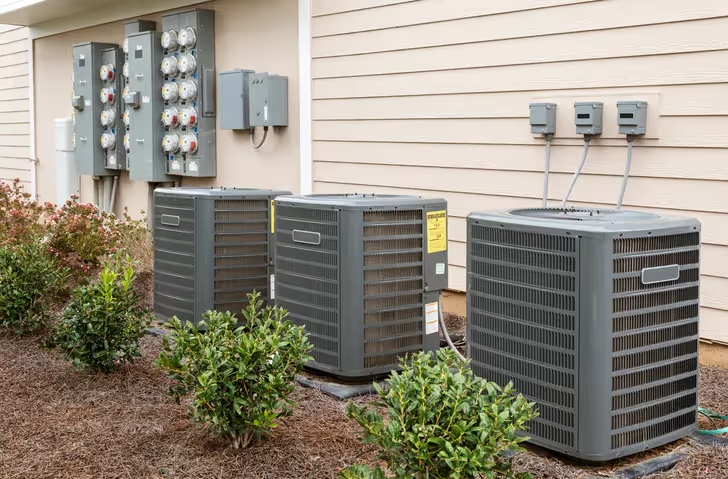
Replacing an HVAC unit is a significant investment, but it is also a direct investment in the structural integrity of your home and your monthly budget. Modern systems are designed to handle the specific latent heat loads found in this region. Older units often lack the variable-speed technology required to remove humidity effectively, leading to clammy indoor environments and mold growth risks. By choosing a professional installation, you ensure that the equipment is sized correctly for your specific square footage and insulation levels, eliminating energy waste and ensuring reliable performance when the weather is at its worst.
ReliaBee Air, Electric, & Plumbing focuses on delivering precise, data-driven installation services that align with your specific home layout. We do not use guesswork. We utilize industry-standard calculation methods to ensure the unit we install is perfectly matched to your cooling and heating needs.
Today’s HVAC Installation Services: Scope, Speed, Inclusions
When you purchase a new HVAC system today, you are buying more than just a metal box that sits outside your home. You are investing in a complete climate control ecosystem. The scope of a modern installation has evolved to include advanced diagnostics, air quality integration, and smart home connectivity. Understanding what is included in a standard installation helps homeowners make informed decisions and manage expectations regarding the timeline.
Most standard residential installations in Selma can be completed within a single day, provided there are no major structural modifications required for the ductwork. The goal is to minimize disruption to your daily routine while ensuring the system is set up for long-term success.
The Scope of Installation
A professional installation covers the removal of the old equipment and the integration of the new system. This includes the outdoor condenser unit, the indoor air handler or furnace, and the evaporator coil. It also includes the necessary refrigerant lines, electrical disconnects, and thermostat calibration.
Critical Inclusions in the Service
- Load Calculation: Before any equipment is ordered, technicians perform a Manual J load calculation. This assesses the thermal characteristics of your home—windows, insulation, orientation—to determine the exact BTU capacity needed.
- Ductwork Inspection: Existing ductwork is inspected for leaks, disconnects, or inadequate sizing. Placing a high-efficiency unit on leaking ductwork defeats the purpose of the upgrade.
- Site Protection: Technicians use drop cloths and shoe covers to protect flooring and furniture during the removal and installation process.
- System Testing: Once the physical installation is complete, the system undergoes a rigorous commissioning process. This measures airflow, static pressure, and refrigerant charge to ensure they meet manufacturer specifications.
- Debris Removal: All old equipment, packaging materials, and debris are hauled away and disposed of according to environmental regulations.
Timeline Expectations
- Morning: Arrival, site preparation, and safe recovery of old refrigerant. Removal of the existing indoor and outdoor units.
- Mid-Day: Modification of the plenum (if necessary), setting the new units in place, brazing refrigerant lines, and connecting high-voltage and low-voltage electrical wiring.
- Afternoon: Vacuuming the lines to remove moisture, releasing the refrigerant, startup, and performance testing.
- Late Afternoon: Final walkthrough with the homeowner to explain thermostat operation and maintenance requirements.
Our HVAC Installation Process: Steps to Ensure Comfort
A standardized process is the difference between a system that lasts 15 years and one that fails in five. We adhere to a strict protocol that ensures every component is installed correctly and safely. This process is designed to adhere to local building codes and manufacturer warranty requirements.
Step 1: Evaluation and Sizing
The process begins with a technical evaluation. Simply reading the model number off the old unit is not sufficient, as the previous unit may have been sized incorrectly. Technicians measure the home and evaluate insulation levels to determine the correct tonnage. This prevents "short-cycling," a condition where an oversized unit cools the air too quickly without removing humidity, leading to a clammy indoor environment.
Step 2: Safe Removal and Disposal
Handling HVAC equipment involves working with high-voltage electricity and pressurized refrigerants. The first physical step is to disconnect electrical power safely. Technicians then attach a recovery machine to the old unit to capture the refrigerant, preventing it from venting into the atmosphere. Once the system is empty, the old hardware is disconnected and removed from the property.
Step 3: Equipment Staging and Installation
The new indoor evaporator coil and furnace (or air handler) are positioned first. If the new unit has different dimensions than the old one, a transition fitting is fabricated to connect it to the existing supply and return plenums. The outdoor condenser is placed on a composite pad to ensure it remains level and off the ground, protecting it from water pooling and debris.
Step 4: Line Set and Electrical Connection
Copper refrigerant lines connect the indoor and outdoor units. These lines are brazed using nitrogen to prevent oxidation inside the pipes, which acts as a contaminant. Once brazed, the lines are pressure-tested to check for leaks. Simultaneously, electrical connections are made, including the installation of a new disconnect box if the existing one is weathered or non-compliant.
Step 5: Vacuum and Charge
Before the system runs, a deep vacuum is pulled on the refrigerant lines. This removes non-condensable gases and moisture. Even a single drop of water in the system can freeze and damage the compressor or react with the oil to form acid. Once the vacuum holds, the factory-supplied refrigerant is released, and the system is fine-tuned based on the length of the line set.
Step 6: Commissioning and Walkthrough
The system is powered on and allowed to stabilize. Technicians measure the temperature split (the difference between the air entering and leaving the unit) to verify cooling capacity. They also check static pressure to ensure the blower motor isn't overworking. Finally, the homeowner is trained on how to use the new thermostat and how to change filters.
Deciding Between HVAC Repair and Replacement
Homeowners often face the dilemma of whether to repair a failing unit or invest in a new system. While repairs can solve immediate problems, they often serve as temporary bandages on a system that is nearing the end of its useful life. Making the right financial decision requires looking at the age of the unit, the cost of the repair, and the potential energy savings of a replacement.
The 50% Rule
A common industry benchmark is the 50% rule. If the cost of the repair approaches 50% of the value of the system (or the cost of a new system), replacement is usually the better option. For example, replacing a compressor on a 12-year-old unit is rarely cost-effective because other components are likely to fail soon after.
Age of the System
In the Selma area, the heavy usage during long summers puts significant strain on air conditioners. Most systems have a lifespan of 10 to 15 years. If your system is over 10 years old and requires a major repair, technology has likely advanced enough that a new unit will offer significant efficiency gains.
Efficiency and Energy Bills
Older units often have SEER (Seasonal Energy Efficiency Ratio) ratings of 10 or 12. Modern standards require a minimum of SEER2 14.3 in the South, with many units going much higher.
- Rising Energy Costs: If your electricity bills have been creeping up despite normal usage, your system is likely losing efficiency.
- Frequent Breakdowns: If you have called for repairs more than twice in the last year, the system is becoming unreliable. The cumulative cost of service calls often exceeds the monthly payments for a new system.
- R-22 Freon Issues: Systems manufactured before 2010 likely use R-22 refrigerant. This refrigerant is phased out and extremely expensive to replace. If an R-22 system develops a leak, replacement is almost always the only viable option.
Comfort Consistency
A failing system struggles to distribute air evenly. If you have rooms that are consistently hotter than the rest of the house, or if the unit runs continuously without reaching the set temperature, the compressor is likely losing compression or the coils are fouled beyond cleaning. ReliaBee Air, Electric, & Plumbing can evaluate the health of your current system and provide a transparent comparison between the cost of repair and the long-term savings of replacement.
Selma-Specific HVAC Considerations: Permits and Seasonal Tips
Operating an HVAC business in Selma requires specific knowledge of local regulations and environmental challenges. Installations must adhere to strict guidelines to ensure safety and efficiency. Ignoring these local factors can lead to code violations, insurance issues, and poor system performance.
Permitting and Inspections
In Selma and the greater Texas area, replacing an HVAC system generally requires a municipal permit.
- Safety Compliance: Permits ensure that the electrical work meets the National Electrical Code (NEC) and that gas connections (for furnaces) are secure and leak-free.
- Efficiency Verification: Inspectors may verify that the installed equipment meets the regional minimum efficiency standards.
- Resale Value: When selling a home, unpermitted work can flag issues during the buyer's inspection. Professional installers handle the permit application and scheduling of the final inspection as part of the service.
Managing Humidity and Airflow
The primary challenge in this region is humidity. An air conditioner must run long enough to pull moisture out of the air. If a system is oversized, it cools the room to the target temperature in five minutes and shuts off. This "short cycle" leaves the humidity high, creating a breeding ground for mold and dust mites. We prioritize sizing equipment to ensure long, steady run times that effectively dehumidify the home.
Insulation and Attic Ventilation
The performance of your new HVAC unit is heavily dependent on your attic. In Selma summers, attic temperatures can reach 140°F. If the ductwork running through the attic is poorly insulated, you lose cooling capacity before the air ever reaches your living room. During installation, it is vital to inspect attic ventilation and duct insulation to ensure the new system isn't fighting a losing battle against radiant heat.
Drainage Requirements
Air conditioners in humid climates produce gallons of condensate water daily. Local codes require specific drainage setups, including primary drain lines, secondary drain pans, and emergency float switches. These switches shut the unit off if the drain clogs, preventing water damage to ceilings and floors. Ensuring these safety mechanisms are installed correctly is a non-negotiable part of our process.
Why Choose Us: Local Expertise and Reliable Services
Selecting the right contractor is just as important as selecting the right brand of equipment. A top-tier Trane or Carrier unit will fail prematurely if installed poorly. We focus on technical excellence and customer transparency to distinguish our services in the market.
Technical Certification
Our technicians undergo rigorous training and hold certifications that validate their expertise in modern HVAC technology. This includes handling new refrigerants, troubleshooting complex electrical controls, and designing ductwork systems that deliver balanced airflow. We do not rely on subcontractors; our team is accountable for every step of the project.
Warranty Stewardship
A manufacturer’s warranty is only valid if the system is registered and installed according to specifications. We handle the warranty registration process for you. Additionally, we back our labor with guarantees that ensure if an issue arises related to the installation, we return to fix it at no cost to you.
Respect for Your Property
We understand that we are guests in your home. Our process includes protecting your floors, cleaning up all debris, and leaving the workspace cleaner than we found it. We communicate clearly regarding arrival times and project duration so you are never left guessing.
Commitment to Efficiency
We are not interested in selling you the most expensive unit; we want to sell you the right unit. We analyze your energy usage and comfort goals to recommend systems that offer the best return on investment. Whether you need a standard single-stage unit or a high-efficiency variable-speed system, we provide honest recommendations based on data.
ReliaBee Air, Electric, & Plumbing is dedicated to keeping your home comfortable regardless of the forecast. If your system is showing signs of age or failure, do not wait for a complete breakdown in the middle of a heatwave. Secure your comfort and lower your energy bills today.
Your Comfort Upgrade Starts Here
When Texas weather puts your HVAC system to the test, the difference between discomfort and dependable relief comes down to timely action. If your current equipment is aging, inefficient, or struggling to keep up, now is the ideal moment to invest in long-term reliability and improved indoor comfort. Our team at ReliaBee Air, Electric, & Plumbing is ready to help you move forward with a solution built around precision installation, energy efficiency, and year-round performance.
Take control of your home climate now—contact us to schedule your comprehensive HVAC assessment.

Current Offers for
San Antonio Homeowners
Free Plumbing Safety Check


$59 AC Tune-Up
5% OFF FOR SENIORS
5% OFF FOR VETERANS & FIRST RESPONDERS

5% OFF FOR EDUCATORS


What Your Neighbors Are Saying