Heat Pump Repair in Castle Hills, TX

Is Your Heat Pump Failing to Maintain Consistent Comfort?
When your heating and cooling system fails to keep up with the humid summers or sudden winter chills common in Castle Hills, you are likely facing a critical mechanical failure that requires immediate attention. Contact us now for emergency dispatch or 24/7 repair scheduling.
ReliaBee Air, Electric, & Plumbing understands that a malfunction isn't just an inconvenience; it is a disruption to your daily life and safety. In a region where temperatures swing from 95°F highs to 55°F lows, your heat pump is the heartbeat of your home’s climate control. When the reversing valve sticks or the compressor struggles, efficiency plummets and humidity levels inside your home can become unbearable. Our team provides decisive, expert intervention to restore your system's functionality immediately.
- Rapid, same-day service availability to restore your comfort quickly.
- Expert diagnosis and precision repairs performed by NATE-certified technicians.
- 24-hour availability for all emergency repair needs, ensuring you are never left without climate control.
- All services are backed by a comprehensive labor and parts warranty for total peace of mind.
Immediate Diagnostic and Repair Scope
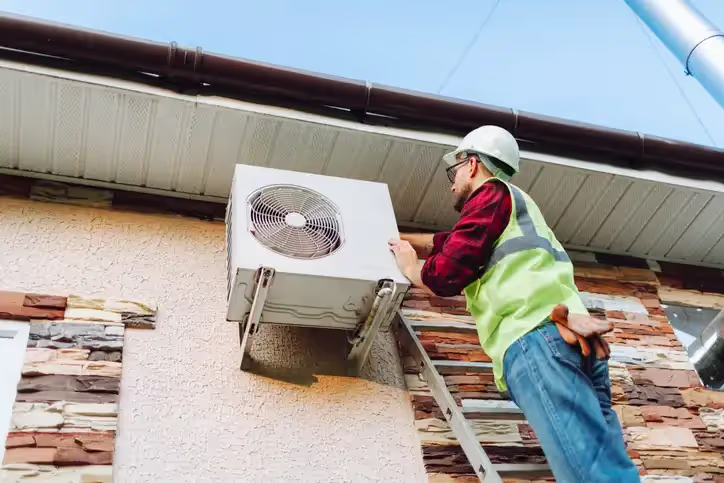
When you request service, the priority is identifying the root cause of the failure rather than just treating the symptom. Heat pumps are complex systems that handle both heating and cooling, meaning they have specific components like reversing valves and auxiliary heat strips that standard air conditioners do not. A technician arrives fully equipped to handle common failures on the spot.
Comprehensive System Evaluation
The diagnostic process involves a systematic check of the heat pump’s vital signs. This is not a cursory glance; it is a deep dive into the electrical and mechanical integrity of the unit.
- Thermostat and Control Communication: The technician verifies that the thermostat is correctly sending signals to the heat pump. In many Castle Hills homes, wiring issues or outdated thermostats fail to trigger the second-stage heating or the reversing valve properly.
- Airflow and Static Pressure: Restricted airflow causes the system to overheat in summer or freeze up in winter. The technician measures static pressure to ensure the ductwork and filters are not strangling the system's performance.
- Refrigerant Charge Verification: Heat pumps require a precise refrigerant charge to transfer heat effectively. A system that is low on refrigerant will run continuously without reaching the target temperature, driving up utility bills.
- Electrical Component Testing: Capacitors, contactors, and relays are tested for proper voltage and amperage. Worn electrical parts are the leading cause of sudden compressor failure.
Addressing Common Heat Pump Failures
Technicians are prepared to address the specific mechanical issues that plague heat pumps in this climate zone.
- Reversing Valve Replacement: If your unit cools but won't heat (or vice versa), the reversing valve is often the culprit. This component dictates the flow of refrigerant. If it is stuck, the system cannot switch modes.
- Auxiliary Heat Repair: During the colder nights in Castle Hills, the heat pump relies on electric heat strips (auxiliary heat) to assist. If these strips fail, the system blows lukewarm air.
- Defrost Board Troubleshooting: In winter, the outdoor unit may freeze. The defrost board controls the cycle to melt this ice. A faulty board leads to ice accumulation, which can crush the outdoor coil and ruin the unit.
- Condensate Drain Clearing: Given the high rainfall in May and general humidity, drain lines frequently clog with algae or debris. Clearing these prevents water damage and safety switch trips.
The Step-by-Step Repair Process
Homeowners need to know exactly what happens from the moment a technician is dispatched to the final system test. The focus is on transparency, efficiency, and restoring the home to a livable temperature without unnecessary delays.
- Arrival and Site Protection: The technician arrives within the scheduled window, wearing shoe covers and using drop cloths to protect flooring. Respect for the property is a standard operating procedure.
- Symptom Discussion: The technician listens to your observations regarding noises, smells, or specific times of day when the unit struggles. This context helps narrow down the potential issues quickly.
- Diagnostic Testing: Using advanced multimeters and gauges, the technician isolates the failed component. This process removes the guesswork and pinpoints the exact failure point.
- Upfront Explanation and Quote: Once the issue is identified, you receive a clear explanation of what is broken, why it broke, and the total cost to fix it. There are no hidden fees or surprise charges after the work is done.
- Execution of Repairs: With your approval, the technician performs the repair using OEM or high-quality aftermarket parts carried in the truck.
- System Validation: The job is not complete until the system is running. The technician cycles the heat pump through all modes (heating, cooling, defrost, emergency heat) to verify that the repair holds and the system is operating at peak efficiency.
Deciding When to Repair or Replace
Homeowners often face the difficult choice between investing in a repair or opting for a full system replacement. This decision should be based on data, system age, and financial logic, not pressure.
The 50% Rule
A general guideline used in the industry is the 50% rule. If the cost of the necessary repair approaches 50% of the value of a new system, replacement is generally the more financially sound option. Putting thousands of dollars into an aging system often yields diminishing returns.
Age and R-22 Considerations
Heat pumps typically last between 10 and 15 years.
- Systems Over 10 Years Old: If your unit is over a decade old and requires a major component like a compressor or reversing valve, the warranty has likely expired. In this scenario, repair costs are high, and the risk of another component failing soon is significant.
- Refrigerant Type: Older systems use R-22 refrigerant (Freon), which has been phased out. R-22 is becoming prohibitively expensive and difficult to source. If your older unit has a refrigerant leak, topping it off is a temporary and costly fix. continued investment in an R-22 system is rarely recommended.
Frequency of Breakdowns
If you have required repairs more than twice in the last two years, the system is signaling the end of its reliable lifespan. Recurring issues indicate that the internal components are wearing out simultaneously. ReliaBee Air, Electric, & Plumbing technicians provide an honest assessment of the system's overall health to help you avoid the "money pit" scenario of constant repairs.
Efficiency and Utility Bills
Modern heat pumps are significantly more energy-efficient than models manufactured just a decade ago. If your energy bills have been steadily climbing despite regular maintenance, the system has likely lost its efficiency. Replacing it with a high-SEER unit can lower monthly utility costs, helping to offset the investment of a new installation.
Local Climate Factors and Regulatory Notes
Operating a heat pump in Castle Hills presents specific challenges due to the local climate and regulatory environment. Understanding these factors ensures that repairs are durable and code-compliant.
- Humidity Management: The humid subtropical climate means the system must work hard to dehumidify the home in summer. If the evaporator coil is dirty or the refrigerant is low, the system cannot remove moisture effectively, leading to clammy indoor air and mold growth risks.
- Defrost Cycle Requirements: While winters are mild compared to northern climates, temperatures frequently drop into the 30s and 40s. The high humidity means frost forms easily on the outdoor unit. A functioning defrost cycle is non-negotiable here; otherwise, the unit becomes a block of ice and shuts down.
- Permitting and Codes: For minor repairs, permits are generally not required. However, if the repair involves significant electrical work or replacing the condenser unit, local codes may require a permit. Adhering to these regulations ensures safety and compliance for future home sales.
- Drainage Solutions: The high rainfall in spring, particularly in May, can affect the drainage around the outdoor unit. If the unit sits in standing water or mud, it can rust or suffer electrical shorts. Technicians check the pad and surrounding grade to ensure the unit remains dry and stable.
Professional Standards and Technical Expertise
Selecting a service provider is about trust and technical capability. The complexity of heat pump systems requires a higher level of training than standard air conditioning units.
- Certified Technicians: Heat pumps involve high-voltage electricity and high-pressure refrigerant. Repairs are performed by technicians who have undergone rigorous training and certification. This ensures that the diagnosis is accurate and the repair is safe.
- Fully Stocked Mobile Warehouses: Trucks are stocked with universal parts, capacitors, contactors, motors, and refrigerants. The goal is to complete the repair in a single visit, minimizing downtime for the homeowner.
- Detailed Documentation: Every repair includes a detailed service report outlining what was done, the parts used, and the warranty coverage on those parts. This documentation is vital for maintaining the manufacturer's warranty on the equipment.
Faulty heating and cooling equipment puts your home and comfort at risk. Delaying repairs can lead to total system failure and higher replacement costs. Secure your appointment with ReliaBee Air, Electric, & Plumbing today to restore efficient, reliable climate control to your home.
Schedule Your Heat Pump Repair Now
Root-Level Repair Solutions That Prevent Recurring Damage
Temporary fixes often ignore deeper system faults. ReliaBee Air, Electric, & Plumbing approaches every heat pump repair in Castle Hills, TX, with full-cycle diagnostics to uncover the actual source of failure. Whether dealing with short cycling, failed reversing valves, or refrigerant imbalance, our repairs are carried out to restore system stability—not just functionality.
Choose Heat Pump Repair That Addresses the Full Operating System

Current Offers for
San Antonio Homeowners
Free Plumbing Safety Check


$59 AC Tune-Up
5% OFF FOR SENIORS
5% OFF FOR VETERANS & FIRST RESPONDERS

5% OFF FOR EDUCATORS


What Your Neighbors Are Saying