Heating Repair in Balcones Heights, TX

When your heating fails during a Balcones Heights winter, every minute counts because a cold home quickly becomes a safety hazard for your family and pipes. Contact us immediately to schedule a priority diagnostic visit or to inquire about flexible financing options that fit your budget. Restoring warmth requires technical precision and a team that understands the urgency of a breakdown. ReliaBee USA provides rapid, reliable solutions to get your system running efficiently again:
- Rapid response from local technicians - servicing within hours, not days.
- Quality service backed by decades of experience and a satisfaction guarantee.
- Receive comprehensive diagnostics and upfront pricing without any hidden fees.
All services come with a robust warranty and are performed by fully licensed technicians who adhere to local safety codes.
Immediate Diagnostics and System Restoration
A heating system breakdown is rarely convenient, often occurring during the first cold snap of the year or in the middle of the night. When a technician arrives at your property in Balcones Heights, the primary goal is accurate fault isolation. Guesswork in HVAC repair leads to recurring issues and unnecessary expenses. Professional diagnostics involve a systematic review of the furnace or heat pump to identify exactly which component has failed. This ensures that the repair addresses the root cause rather than just a symptom.
Modern heating systems are complex networks of electrical sensors, gas valves, and airflow mechanics. A breakdown might manifest as a system blowing cold air, making unusual banging noises, or refusing to turn on entirely. In many cases, the issue stems from specific component failures such as a cracked heat exchanger, a faulty ignition system, or a worn-out blower motor. Technicians carry advanced diagnostic tools to measure gas pressure, voltage drops, and airflow static pressure to pinpoint these issues quickly.
Upon identifying the problem, the focus shifts to immediate restoration. Service trucks are typically stocked with the most common replacement parts, including capacitors, flame sensors, igniters, and control boards. This inventory preparation allows many repairs to be completed during the initial visit, eliminating the need to wait for parts to be ordered. The objective is to transition your home from cold and uncomfortable to warm and regulated in the shortest timeframe possible.
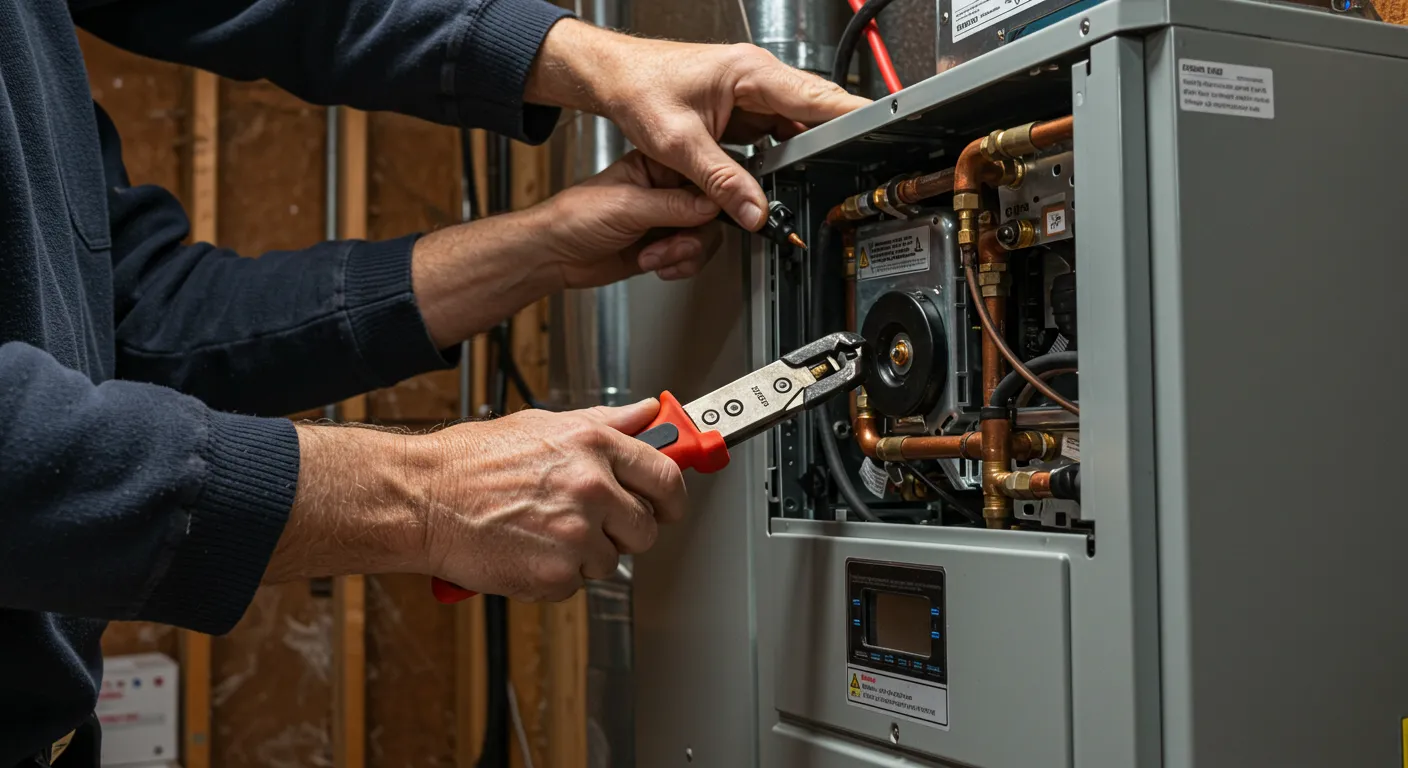
The Heating Repair Process Explained
Homeowners deserve transparency regarding what happens during a service call. Professional repair services follow a strict protocol to ensure safety and efficiency. This structured approach guarantees that nothing is overlooked and that the heating unit operates safely after the technician departs:
- First, the technician conducts a site assessment, checking the thermostat settings and the physical condition of the heating unit. This includes inspecting the filter, the breaker panel, and the immediate area around the furnace or air handler for signs of water or gas leaks.
- Next, the system is put through a test cycle. If the unit attempts to start, the technician monitors the sequence of operation. For a gas furnace, this involves watching the draft inducer, the igniter, the gas valve opening, and the flame sensor proving the flame. If any step in this sequence fails, it isolates the circuit that requires attention.
- Then, specific electrical and mechanical tests are performed. This may involve using a multimeter to check the resistance on a hot surface igniter or checking the microamps on a flame sensor. For heat pumps, refrigerant levels and reversing valve operation are scrutinized to ensure the system can switch effectively between heating and cooling modes.
- Once the issue is identified, the technician provides a clear explanation of the failure and presents a quote for the repair. No work begins until you understand the scope and cost. Upon approval, the faulty component is removed and replaced with an OEM-quality part.
- Finally, the system is restarted and monitored for a full cycle. The technician checks for carbon monoxide leaks, verifies proper temperature rise (the difference in air temperature entering and leaving the unit), and ensures the blower motor is moving air quietly and efficiently.
Deciding Between Repair and Replacement
One of the most difficult decisions a homeowner faces is whether to invest in another repair or to replace the system entirely. While repair is often the most cost-effective immediate solution, there are specific thresholds where replacement becomes the more financially sound choice. Making this distinction requires looking at the age of the unit, safety concerns, and long-term efficiency:
- The Age of the System: Most gas furnaces have a lifespan of 15 to 20 years, while heat pumps typically last 10 to 15 years. If your equipment is nearing the end of this range, finding replacement parts may become difficult and expensive. A major component failure, such as a cracked heat exchanger, a seized compressor, in an old unit is usually a signal to replace. Investing heavily in a dying system often results in throwing good money after bad, as other parts are likely to fail shortly after.
- The Cost of Repair vs. System Value: A common industry standard used to aid this decision is the "50% Rule." If the cost of the repair approaches or exceeds 50% of the value of the system (or the cost of a new unit), replacement is generally recommended. Additionally, if you have required frequent repairs over the last two seasons, those cumulative costs often outweigh the monthly investment of a new, warranted system.
- Safety and Efficiency: Safety is a non-negotiable factor. If a technician identifies a crack in the heat exchanger of a gas furnace, the unit must be shut down immediately due to the risk of carbon monoxide poisoning. In this scenario, replacement is almost always the only safe option. Furthermore, older units operate at lower efficiency levels. Upgrading from a 70% AFUE furnace to a modern 95% AFUE model can significantly reduce monthly utility bills, helping the new system pay for itself over time.
Local Climate Factors Impacting Your Heating
Operating a heating system in this region presents unique challenges due to the specific climate conditions. While winters are generally mild compared to northern states, the area is subject to high humidity and sudden temperature drops. These environmental factors influence how heating systems degrade and what types of repairs are most common:
- Humidity and Corrosion: The region experiences significant humidity throughout the year. For heating systems, particularly those located in attics or crawl spaces, this moisture can lead to corrosion on electrical contacts and rust on steel components like burners and heat exchangers. Oxidation on flame sensors is a frequent cause of system failure in Balcones Heights. Regular maintenance and repair services often involve cleaning these sensors and inspecting wiring for corrosion that could lead to short circuits.
- The Strain of "Stop-and-Go" Weather: Unlike colder climates where heaters run constantly for months, local weather often requires the heat to run in the morning and the air conditioning to run in the afternoon. This constant switching puts stress on the system, particularly on the thermostat and the reversing valve in heat pumps. The system expands and contracts frequently, which can loosen electrical connections and cause premature wear on the blower motor. ReliaBee USA technicians are trained to look for these specific wear patterns during diagnostic visits.
- Electrical Storms and Surge Protection: Spring and summer thunderstorms are common in the area, bringing lightning and power surges. While these occur outside the heating season, the damage often remains dormant until the heater is turned on for the first time in winter. Control boards are highly sensitive to voltage spikes. If a furnace fails to start, it is often due to electronic damage sustained during a previous storm season. Installing surge protection and checking fuses are standard parts of the troubleshooting process here.
Technical Expertise and Safety Protocols
Handling heating equipment involves working with high-voltage electricity, combustible gases, and open flames. Attempting DIY repairs or relying on unqualified labor poses significant risks to property and personal safety. Professional service ensures that all work complies with local building codes and manufacturer specifications:
- Combustion Safety: For gas furnaces, maintaining the correct fuel-to-air ratio is critical. If the mixture is too rich, it produces excessive soot, which can clog the heat exchanger and create a fire hazard. If it is too lean, the flame may be unstable. Professionals use combustion analyzers to calibrate the burner assembly precisely, ensuring the flame burns blue and steady. This maximizes heat output while minimizing dangerous byproducts like carbon monoxide.
- Airflow and Static Pressure: A heater cannot function correctly if it cannot move air. Issues with ductwork sizing, dirty blower wheels, or blocked return vents can cause the system to overheat. Known as "limiting out," this causes the furnace to shut down repeatedly to prevent a fire. Technicians measure static pressure to determine if the ductwork is restricting airflow. Correcting these airflow issues not only fixes the immediate breakdown but also extends the life of the blower motor and improves temperature consistency across the home.
- Venting and Drainage: High-efficiency furnaces produce condensation as a byproduct of combustion. This acidic water must be drained away properly. If the drain lines become clogged with algae or debris—common in humid environments—the safety switches will shut the unit down to prevent water damage. Technicians clear these lines and check the flue pipes for proper drafting. Improper venting can lead to exhaust gases back-drafting into the living space, a serious health risk that professional repair eliminates.
Restoring Comfort to Your Home
When the temperature drops, a reliable heating system is the heart of a comfortable home. Ignoring minor noises, odd smells, or short-cycling issues can lead to complete system failure when you need heat the most. Professional repair services address the immediate malfunction while also inspecting the overall health of the unit to prevent future breakdowns.
From calibrating thermostats to replacing major mechanical components, the goal is always to deliver consistent, safe, and efficient warmth. Do not let a heating breakdown disrupt your life or compromise your safety. Ensure your system is handled by experts who understand the intricacies of modern HVAC technology and the specific demands of the local climate.
Secure your comfort today with professional heating repair that prioritizes speed, accuracy, and long-term reliability — contact us today.

Current Offers for
San Antonio Homeowners
Free Plumbing Safety Check

$59 AC Tune-Up
5% OFF FOR SENIORS
5% OFF FOR VETERANS & FIRST RESPONDERS
5% OFF FOR EDUCATORS


What Your Neighbors Are Saying