Heating Repair in Leon Valley, TX

Unexpected Heating System Failures Demand Immediate Attention
As temperatures drop, a reliable heating system isn't just a comfort; it's a necessity for your home's safety and livability. If you are facing unexpected heating failures, weird noises, or rising inefficiencies, we are here to help you resolve the issue—fast; contact us now to schedule your diagnosis.
Residents in Leon Valley know that while winters may be mild, the cold fronts can be sharp and unforgiving. When your furnace or heat pump goes down, you need a solution that goes beyond a quick patch. You need a comprehensive repair that addresses the root cause:
- Same-day repair services to restore your comfort without delay.
- Transparent pricing and online estimates available immediately.
- Experienced technicians ensuring quality repairs with long-term warranties.
All services are delivered with necessary permits and backed by comprehensive warranties to ensure your peace of mind.
What You Get With Professional Repair Services
When your heat goes out, the immediate reaction is often stress regarding the timeline and the cost. The primary goal of a service visit is to eliminate that uncertainty immediately. You are not just paying for a fix; you are paying for an accurate assessment that determines exactly why the system failed and how to prevent it from happening again next month.
ReliaBee Air, Electric, & Plumbing focuses on delivering a streamlined service experience. This begins with dispatching technicians who are fully equipped with fully stocked trucks. The objective is to complete the repair in a single visit whenever possible. You get a technician who respects your time and property, arriving with the diagnostic tools required to test voltage, gas pressure, and airflow without guesswork.
You also get financial clarity. One of the biggest frustrations homeowners face is the surprise bill at the end of a job. Professional service means you receive a clear explanation of the problem and a quote for the repair before any work begins. This includes a breakdown of parts and labor so you can make an informed decision — apply for financing. Whether it is a minor electrical component or a major motor replacement, the focus remains on restoring safe, efficient operation to your home.
How The Heating Repair Process Works
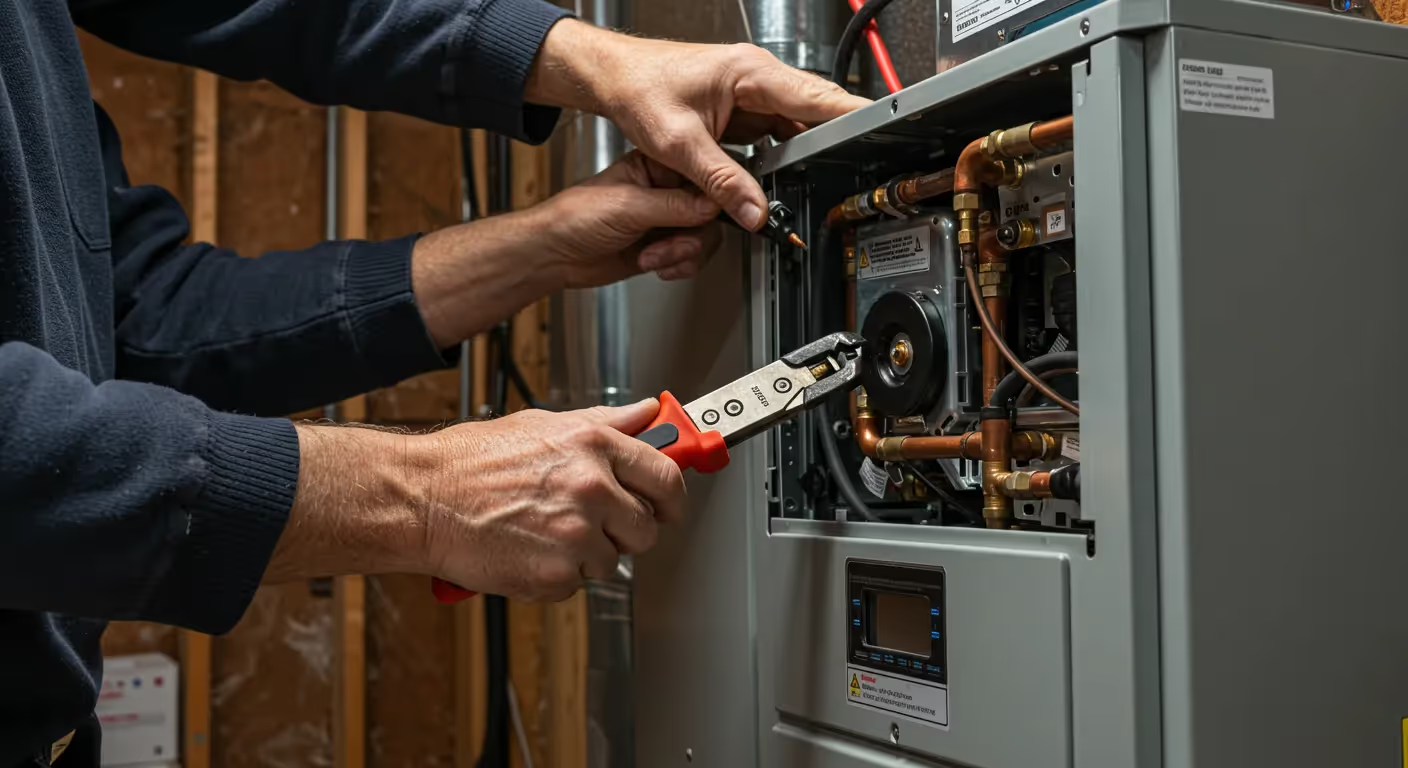
Understanding the steps involved in a heating repair can help alleviate anxiety about the process. A professional repair is systematic, following a logical order to ensure no component is overlooked:
System Diagnostic and Troubleshooting
- The technician begins by inspecting the thermostat to ensure it is communicating correctly with the heating unit.
- They will check the power supply, circuit breakers, and safety switches to rule out simple electrical failures.
- For gas furnaces, the ignition system, pilot light, and flame sensor are tested for proper operation.
- Airflow is measured to ensure the blower motor is moving heat effectively through the ductwork.
- If the system is a heat pump, refrigerant levels and reversing valves are inspected for leaks or mechanical sticking.
Reviewing Findings and Options
- Once the issue is isolated, the technician provides a detailed report of the findings.
- You will be presented with repair options, ranging from immediate necessary fixes to recommended maintenance that could prevent future breakdowns.
- The technician explains the age and condition of the failed part versus the rest of the system, helping you understand the value of the repair.
Execution of Repairs
- Upon your approval, the technician proceeds with the repair. This involves safely disconnecting power or gas lines.
- Faulty components are removed and replaced with high-quality, manufacturer-approved parts.
- Any loose wiring is tightened, and dirty sensors (like the flame sensor) are cleaned to ensure reliability.
- The system is also checked for safety hazards, such as cracks in the heat exchanger which could leak carbon monoxide.
Testing and Calibration
- The job is not done when the part is installed. The technician must run the system through a full heating cycle.
- They verify that the system ignites safely, reaches the target temperature, and shuts down properly without short-cycling.
- The thermostat is calibrated if necessary to ensure the temperature reading matches the actual room temperature.
- Final checks are made on the vents to ensure even heat distribution throughout the house.
When Replacement Is A Better Option Than Repair
While repair is often the most cost-effective solution, there are specific scenarios where continuing to patch an old system is financially unwise. Making this distinction requires looking at the long-term math of energy efficiency and repair frequency:
The 50% Rule
- A common industry standard is the "50% Rule." If the cost of the repair approaches 50% of the value of a new system, replacement is generally the smarter financial move.
- This is particularly true if the warranty on your current unit has expired, meaning you are paying full price for both parts and labor.
Frequency of Breakdowns
- If you have required multiple repairs in the last two years, your system is likely nearing the end of its lifespan.
- Frequent breakdowns indicate that major components are failing in succession. Fixing one part often puts stress on another aging part, leading to a cycle of constant service calls.
Safety Concerns
- Certain failures constitute immediate safety hazards that necessitate replacement. A cracked heat exchanger in a gas furnace is a prime example.
- A cracked exchanger can allow carbon monoxide to escape into your living space. In almost all cases, a furnace with a compromised heat exchanger should be replaced rather than repaired due to the severity of the risk.
Energy Efficiency and Age
- Heating systems over 15 years old are significantly less efficient than modern units.
- If your energy bills have been steadily rising despite regular maintenance, the system may have lost its efficiency rating (AFUE).
- upgrading to a modern system can sometimes lower monthly utility bills enough to offset the installation cost over time.
Local Climate Factors Affecting Your Heating
Operating a heating system in this region presents unique challenges due to the specific climate conditions. While the area is known for hot, humid summers, the winters bring a specific set of variables that impact how your heating system performs and degrades:
Humidity and Mildew Risks
- The region sees approximately 30 inches of annual rainfall, with spring and fall being particularly wet. This ambient humidity does not disappear in winter.
- High humidity can lead to moisture buildup within ductwork or near the air handler. If a system is not run frequently, this moisture can encourage mold or mildew growth.
- During repairs, it is vital to check the drain lines and ensure the system is not retaining moisture that could impact indoor air quality.
The Strain of "Stop-and-Go" Weather
- The local climate often fluctuates between mild 70°F days and sudden freezes where lows drop to the 40s or below.
- This weather pattern causes "short cycling" or infrequent heavy usage. A furnace might sit idle for weeks and then be forced to run at maximum capacity during a cold front.
- This stop-and-go operation puts significant stress on ignition components and capacitors, which are the most common parts to fail during the first freeze of the season.
Electrical Grid and Voltage Fluctuations
- During extreme cold snaps, the local power grid can experience high demand.
- Fluctuations in voltage can damage sensitive electronic control boards in modern furnaces and heat pumps.
- Installing surge protectors or checking the condition of the system’s electrical connections is a critical part of local maintenance and repair.
Differentiators in Service Quality
Choosing a service provider goes beyond just finding someone who can turn a wrench. It is about finding a partner who understands the technical intricacies of modern HVAC systems and respects your home:
Technical Expertise and Diagnostics
- True repair quality comes from accurate diagnostics. It is easy to swap a part, but understanding why the part failed prevents callbacks.
- Technicians should be trained to look at the system holistically. For example, a failed blower motor might be caused by undersized ductwork. Replacing the motor without addressing the airflow restriction will only lead to another failure.
- ReliaBee Air, Electric, & Plumbing emphasizes this level of technical depth, ensuring that the root cause is identified and resolved.
Warranties and Guarantees
- High-quality repairs are backed by warranties. If a company is not willing to stand behind their work with a labor and parts guarantee, it is a red flag.
- You should look for clear terms regarding how long the repair is guaranteed. This protects you from paying twice for the same issue if a replacement part turns out to be defective.
Respect for Property
- A service visit involves a stranger entering your private space. Professionalism is non-negotiable.
- This includes using shoe covers to protect flooring, using drop cloths around the work area, and cleaning up all debris after the job is done.
- The goal is to leave the home exactly as it was found, with the only difference being a working heating system.
Availability and Responsiveness
- Heating failures rarely happen at convenient times. They usually occur during the first cold snap of the year or late at night.
- A service provider must offer availability that matches the urgency of the situation. Being able to access online scheduling or get a quick response determines whether you spend the night in the cold or in comfort.
Restoring Comfort and Efficiency
A functioning heating system is essential for maintaining a safe and comfortable home environment. Ignoring minor issues like strange noises, odd smells, or tepid airflow can lead to catastrophic failures when the weather turns freezing. By addressing repairs promptly, you extend the life of your equipment, improve energy efficiency, and ensure the safety of your household.
Whether you are dealing with a pilot light that won't stay lit, a heat pump that is icing over, or a furnace that simply won't turn on, professional intervention is the fastest route to a solution. Do not let a small malfunction turn into a costly replacement.
Ensure your home stays warm and safe this season. Schedule your heating repair service today.

Current Offers for
San Antonio Homeowners
Free Plumbing Safety Check


$59 AC Tune-Up
5% OFF FOR SENIORS
5% OFF FOR VETERANS & FIRST RESPONDERS
5% OFF FOR EDUCATORS


What Your Neighbors Are Saying