HVAC Maintenance in Leon Valley, TX

Is Your System Failing to Keep Up With the Heat?
Encountering unexpected HVAC failures can disrupt your comfort, especially during the relentless heat common to this region. When your air conditioner struggles to maintain a consistent temperature or your heating unit fails during a cold snap, you need a solution that restores balance immediately. ReliaBee Air, Electric, & Plumbing offers swift, reliable maintenance to restore your system’s efficiency and ensure your home remains habitable regardless of the forecast. Call us immediately to schedule a comprehensive system diagnostic and tune-up.
Professional maintenance addresses the root causes of inefficiency rather than just treating the symptoms. Our approach ensures:
- Ensure your HVAC is summer-ready with our comprehensive check-up that inspects critical cooling components.
- Enjoy uninterrupted comfort with our availability for emergency services when breakdowns occur at inconvenient times.
- Save on energy costs with our efficiency-boosting maintenance routines designed to lower amperage draw and improve airflow.
All services are fully licensed, include a warranty for your peace of mind, and financing options are available for major repairs or replacements.
What Our HVAC Service Includes: Timelines and Expectations
When you invest in professional maintenance, you are paying for a rigorous inspection and cleaning process designed to prolong the life of your equipment. A standard tune-up goes far beyond a simple filter change. It involves a systematic examination of the mechanical, electrical, and thermodynamic functions of your heating and cooling equipment:
Electrical Component Inspection
Loose or corroded electrical connections are a leading cause of system failure and can pose significant fire hazards. Our technicians tighten all electrical connections and measure the voltage and current on motors. Faulty electrical components often cause the system to operate unsafely and reduce the life of major components like the compressor and blower motor. We inspect the capacitor to ensure it is holding the correct charge, as a weak capacitor can lead to compressor failure.
Airflow and Filtration Analysis
Restricted airflow places an unnecessary strain on your HVAC unit, leading to higher energy bills and a shortened system lifespan. We inspect the blower motor and wheel for debris buildup. If the blower components are dirty, they cannot move air effectively. We also check the air filter and replace it if you have a replacement available, or recommend the correct MERV rating for your specific system needs. Proper airflow is essential for the heat exchange process; without it, the evaporator coil may freeze.
Refrigerant Charge Verification
For air conditioners and heat pumps, maintaining the correct refrigerant level is critical. Too much or too little refrigerant will damage the compressor and reduce the system's efficiency. We use gauges to measure the operating pressures and temperatures (subcooling and superheat) to ensure the system is charged to the manufacturer’s specifications. If a leak is detected during this process, we identify the source so it can be addressed before recharging.
Coil Cleaning and Inspection
The evaporator and condenser coils play a vital role in heat transfer. If the condenser coil is clogged with dirt, grass clippings, or debris, the system cannot release heat effectively. This forces the unit to run longer to cool your home. We clean the outdoor condenser coil to ensure maximum efficiency. We also inspect the indoor evaporator coil for mold or dust buildup, which can impact indoor air quality and cooling capacity.
Thermostat Calibration
A thermostat that reads the temperature incorrectly will cause your system to run longer than necessary or cycle on and off too frequently (short cycling). We verify that your thermostat is calibrated correctly and communicating properly with the control board. If you utilize a smart thermostat, we ensure the settings are optimized for energy efficiency based on your usage patterns.
Lubrication of Moving Parts
Friction is the enemy of mechanical efficiency. Older motors and bearings often require lubrication to operate smoothly. Lack of lubrication causes friction in motors and increases the amount of electricity you use. We apply the necessary lubrication to motors and bearings where applicable to reduce resistance and wear.
Your Guide to Maintenance: What to Expect During a Visit
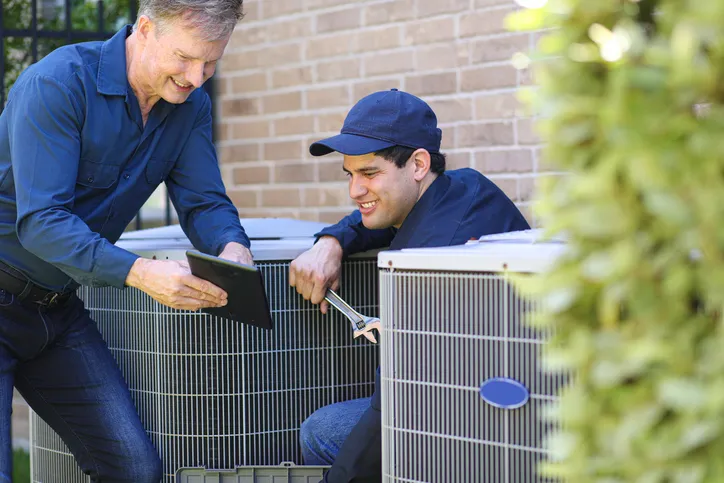
Understanding the process of a maintenance visit helps you prepare and ensures transparency. We follow a structured workflow to ensure no component is overlooked:
- Arrival and Assessment: The technician arrives within the scheduled window, respecting your property by wearing shoe covers and using drop cloths where necessary. The visit begins with a discussion about any specific issues you have noticed, such as strange noises, hot spots in the house, or rising utility bills.
- System Shutdown and Safety Check: To perform a safe inspection, the technician will temporarily disconnect power to the HVAC unit. This allows for the safe opening of panels and handling of electrical components.
- Comprehensive Diagnostic: The technician proceeds through the multi-point inspection checklist, examining both the indoor air handler/furnace and the outdoor condenser unit. This includes testing safety controls to ensure the system shuts down properly in the event of a malfunction.
- Cleaning and Adjustment: Physical tasks are performed, such as flushing the condensate drain line to prevent water damage, cleaning the flame sensor in furnaces, and washing the outdoor unit. Adjustments are made to blower speeds or gas pressure if needed.
- System Restart and Performance Testing: Power is restored, and the system is allowed to run for a sufficient period to stabilize. The technician measures the temperature split (the difference between supply and return air) to verify the unit is cooling or heating effectively.
- Reporting and Recommendations: You receive a detailed report of the findings. If parts are worn but still functional, you will be advised on their remaining lifespan. If critical repairs are needed, the technician explains the issue, the solution, and the associated costs before any further work is done.
Deciding Between HVAC Repair or Replacement
Homeowners in Leon Valley often face the difficult decision of whether to pour more money into an aging system or invest in a new one. Making this decision requires analyzing the age of the unit, the cost of repairs, and the frequency of breakdowns:
The 50% Rule
A general guideline used in the industry is the 50% rule. If the cost of the repair approaches 50% of the value of the system (or the cost of a new system), replacement is generally the better financial option. Continuing to repair a system that has lost half its value usually results in diminishing returns.
System Age and Efficiency
The average lifespan of a central air conditioning system is 10 to 15 years, while furnaces can last 15 to 20 years. If your system is over 10 years old and requires a major repair, such as a compressor or heat exchanger replacement, it is often more prudent to replace it. Newer systems have higher SEER2 (Seasonal Energy Efficiency Ratio) ratings, which can significantly lower monthly utility bills compared to a decade-old unit.
Frequency of Repairs
If you find yourself calling for service multiple times a year, those costs add up quickly. A system that requires frequent "band-aid" fixes is signaling that it is nearing the end of its operational life. Constant breakdowns also pose a reliability risk, leaving you vulnerable to outages during the hottest days of the year.
Comfort and Air Quality Issues
An aging system may struggle to dehumidify the home or maintain consistent temperatures across different rooms. If your home feels clammy or if you have noticed an increase in dust and allergens despite changing filters, the system's performance may be degraded beyond what a simple tune-up can fix. ReliaBee Air, Electric, & Plumbing can provide a comparative analysis to help you determine if a new installation would solve these chronic comfort issues.
Refrigerant Type
Older systems often utilize R-22 refrigerant (Freon), which has been phased out due to environmental regulations. Supplies of R-22 are limited and extremely expensive. If your older unit has a refrigerant leak, the cost to recharge it may be prohibitive, making replacement the only logical choice.
Local HVAC Guidelines: Permits and Seasonal Considerations
Operating an HVAC system in Texas requires specific attention to regional climate factors and local regulations. The environment plays a massive role in how your system performs and degrades over time:
Handling High Humidity and Heat
The climate in this region is characterized by long, oppressive summers with high humidity. This places a heavy latent load on your air conditioner, meaning it must work hard not just to lower the temperature, but to remove moisture from the air. Regular maintenance must include checking the condensate drain line. Algae and mold thrive in these dark, wet environments and can clog the drain, leading to water backup that triggers safety float switches or causes water damage to ceilings and floors.
Seasonal Transitions and Heating Safety
While winters are generally mild, cold snaps do occur. Gas furnaces must be inspected for cracked heat exchangers, which can leak carbon monoxide. Because the heating system sits idle for many months, the initial startup can sometimes be problematic. Dust that has settled on the heat exchanger or burners can cause a burning smell or ignition issues. A fall tune-up ensures the system is safe to operate before the first freeze hits.
Permitting and Regulatory Compliance
In Leon Valley and the surrounding Bexar County area, major HVAC work, particularly system replacements and significant ductwork modifications, often requires a permit. This ensures that the installation meets current building codes and safety standards. Professional service providers handle the permitting process, ensuring that the electrical connections, gas piping, and venting systems comply with local ordinances. Using a licensed contractor protects you from liability and ensures the manufacturer’s warranty remains valid.
Hard Water Impact
The local water supply can be hard, containing high levels of minerals. If you use a water-based cooling system or if water is used to clean your coils, mineral deposits can build up over time. This scale acts as an insulator, reducing the efficiency of the coils. Technicians aware of local water conditions utilize specific cleaning agents to remove these deposits without damaging the delicate aluminum fins of the coils.
Why Choose Professional Certification and Local Commitment
Selecting a service provider is about trust and technical competence. Your HVAC system is likely the most expensive appliance in your home, and its proper operation is vital for your health and safety:
Technical Expertise and Training
Modern HVAC equipment involves complex electronics, variable speed motors, and advanced refrigerants. Certifications such as NATE (North American Technician Excellence) indicate that a technician has demonstrated real-world working knowledge of HVAC systems. Continuous training is required to keep up with the evolution of heat pump technology and smart home integration.
Proper Tools and Diagnostics
Diagnosing a modern system requires more than guesswork. Professionals utilize advanced diagnostic tools, including combustion analyzers, digital manifolds, and psychrometers, to get accurate readings of system performance. This precision prevents misdiagnosis, which can lead to unnecessary parts replacement.
Liability and Safety
HVAC work involves high-voltage electricity, flammable gases, and high-pressure refrigerants. A professional company carries liability insurance and workers' compensation. This protects the homeowner from being held liable if an injury occurs on their property during the service call. Furthermore, licensed professionals adhere to EPA regulations regarding the handling and disposal of refrigerants, ensuring environmental compliance.
Long-Term System History
Establishing a relationship with a single service provider allows for better tracking of your system’s history. Technicians can see previous repairs, track gradual changes in performance data (like increasing amp draws or drifting pressures), and predict failures before they happen. This continuity of care is difficult to achieve when using different providers for every issue.
Secure Your Comfort with Expert Maintenance
Delaying maintenance often leads to higher repair bills and reduced system efficiency. Your HVAC system works tirelessly to combat the Texas heat, and it requires regular attention to perform at its peak. By scheduling a professional inspection, you ensure that your home remains a sanctuary of comfort regardless of the weather outside.
Take control of your indoor climate today. Contact us to schedule your comprehensive HVAC maintenance service and experience the difference of a properly tuned system — contact us today.

Current Offers for
San Antonio Homeowners
Free Plumbing Safety Check


$59 AC Tune-Up
5% OFF FOR SENIORS
5% OFF FOR VETERANS & FIRST RESPONDERS

5% OFF FOR EDUCATORS


What Your Neighbors Are Saying