Electrical Panel Upgrade in Leon Valley, TX

Outdated Electrical Systems Cannot Support Modern Appliances
If you find yourself frequently resetting tripped breakers or noticing lights dimming when your HVAC system cycles on, your home’s electrical infrastructure is likely struggling to keep up with current power demands. Contact us today to discuss financing options or to schedule a safety evaluation of your main breaker box.
Homes in Leon Valley are often equipped with older 100-amp panels that were never designed to handle the load of modern high-efficiency appliances, electric vehicle chargers, or extensive home office setups. Continuing to overload an outdated panel creates fire risks and can damage sensitive electronics. ReliaBee Air, Electric, & Plumbing ensures your home has the power capacity it needs to operate safely and efficiently:
- Eliminate electrical hazards: Replace obsolete equipment to reduce the risk of electrical fires and ensure ground fault protection.
- Support new appliances: Gain the amperage necessary for central air conditioning, EV charging stations, and modern kitchen suites.
- Streamline compliance: Ensure your electrical system meets all current Texas state codes and local safety regulations.
- Enhance home value: A modern 200-amp panel is a key selling point and often a requirement for home insurance coverage.
Fully licensed, insured, and compliant with the latest National Electrical Code (NEC) standards adopted by the state.
What an Electrical Panel Upgrade Entails: Scope and Timeliness
An electrical panel upgrade is more than just swapping out a grey metal box; it is a comprehensive overhaul of your home’s energy distribution center. When you commission this service, you are essentially increasing the volume of electricity your home can safely bring in from the utility grid and distributing it more effectively to your circuits:
Standard Scope of Work
Most upgrades involve moving from a 100-amp service to a 200-amp service. This increase is standard for modern living, allowing for simultaneous use of high-draw appliances without tripping breakers. The service includes the removal of the old panel and the installation of a new enclosure, main breaker, and circuit breakers. It also involves upgrading the grounding system—driving new copper ground rods into the earth—to ensure lightning strikes or surges have a safe path away from your home’s internal wiring.
The scope also covers the service entrance cable—the heavy wire running from the utility weather head on your roof or the underground lateral to your meter can. If this cable is frayed or undersized, it is replaced to match the new amperage capacity. Labeling is another critical component; every circuit is traced and clearly marked so you know exactly which switch controls the kitchen, the garage, or the master bedroom.
Timeline and Downtime
For most residential properties in Leon Valley, a standard panel upgrade is completed in a single day. The process requires power to be cut to the home. Typically, power is disconnected early in the morning, and the new system is operational by late afternoon. The goal is to minimize disruption so you are not left without electricity overnight. Coordination with the local utility provider is handled beforehand to ensure the disconnect and reconnect happen on schedule. While complex scenarios involving rewiring or moving the panel location may extend the timeline, the core replacement is a swift operation.
Inclusions
- New Breaker Box and Bus Bar: High-quality copper or aluminum bus bars that resist corrosion.
- Circuit Breakers: Installation of standard, Arc Fault Circuit Interrupter (AFCI), and Ground Fault Circuit Interrupter (GFCI) breakers as required by code.
- Grounding System: Installation of two ground rods spaced six feet apart, bonded to the water pipe where applicable.
- Weather Head and Riser: Replacement of the external conduit and weather head if they are damaged or too small for the new wire gauge.
- Whole-Home Surge Protection: Often included or recommended to protect all appliances from grid spikes, particularly relevant given the regional weather patterns.
Your Guide to the Electrical Panel Upgrade Process
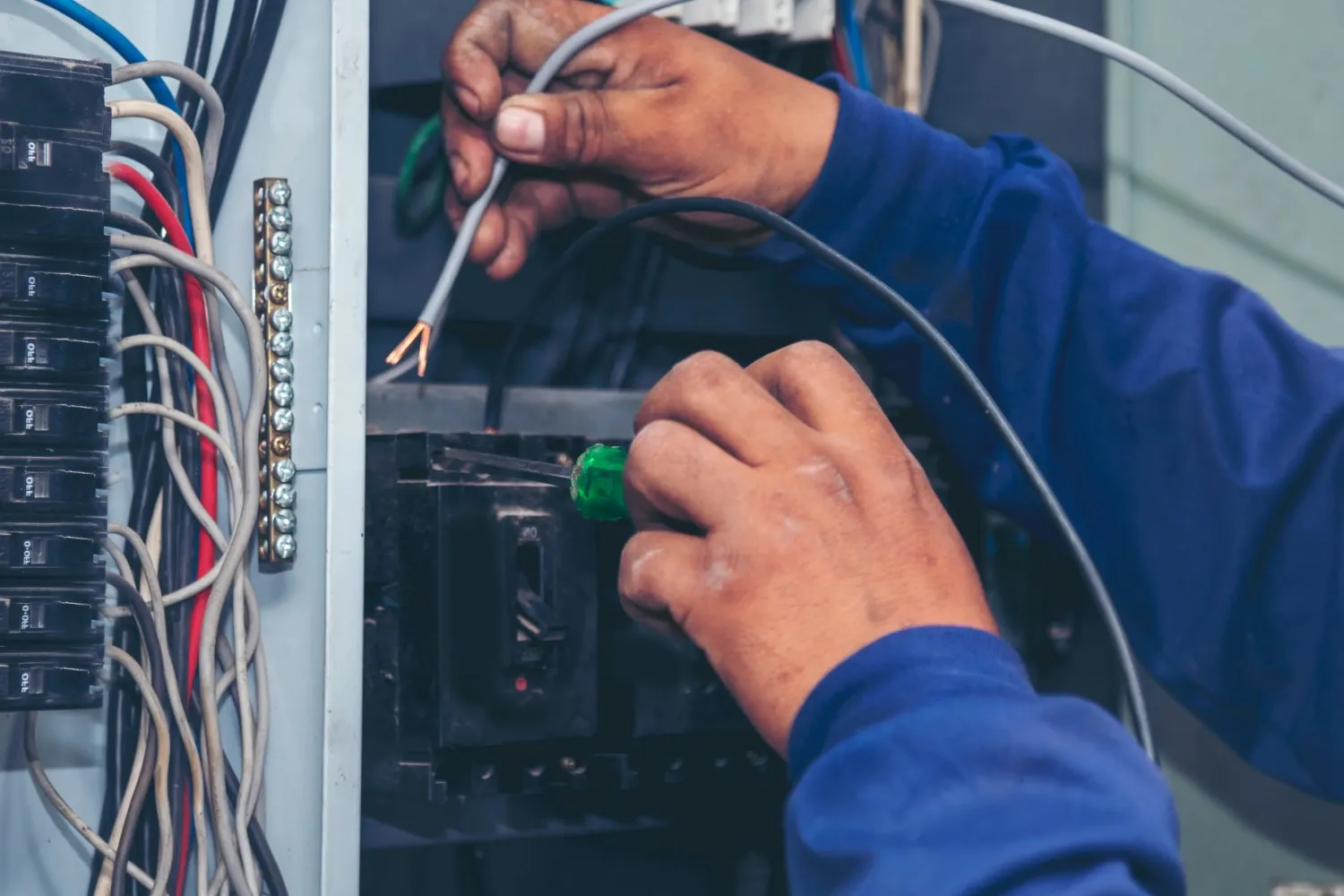
Upgrading your electrical service is a technical process that requires strict adherence to safety protocols and administrative steps. We handle the logistics to ensure a seamless transition from the old system to the new one:
- Initial Load Calculation and Assessment
- The process begins with a calculation of your home’s total electrical load. This determines if you need 200 amps or if a larger 400-amp service is necessary for large estates or homes with significant workshop equipment.
- The existing wiring condition is inspected to ensure it can be safely reconnected to a new breaker.
- Permitting and Utility Coordination
- Before any wire is cut, a permit is pulled with the local building department. This is a non-negotiable step that protects your property value and ensures the work is legal.
- A request is sent to the local utility company to schedule the temporary disconnection of power. This coordination is vital to ensure the crew can work safely on the main service lines.
- Site Preparation and Demolition
- On the morning of the installation, the area around the panel is cleared.
- Once the utility provider cuts the power, the old panel is dismantled. Old breakers are discarded, and the existing wires are carefully organized and labeled.
- Installation of New Hardware
- The new enclosure is mounted securely to the wall.
- The service entrance cables are connected to the new meter socket and the main breaker.
- Grounding wires are run to the exterior ground rods and the water main.
- Existing branch circuits (lights, outlets, appliances) are tied into the new circuit breakers.
- Verification and Labeling
- Once the physical installation is complete, a series of continuity tests are run to ensure there are no short circuits.
- The panel schedule is written out clearly, identifying every circuit.
- Final Inspection and Reconnection
- The city or municipal inspector reviews the work to ensure it meets the National Electrical Code.
- Upon passing inspection, the utility company is notified to restore power to the home.
- A final voltage check ensures 120/240 volts are being delivered correctly throughout the system.
Deciding Between an Electrical Panel Upgrade or Repair
Homeowners often wonder if they can simply replace a bad breaker rather than investing in a full panel upgrade. While repairs are suitable for minor issues, certain conditions dictate that a full replacement is the only safe and financial choice:
When to Repair
If your panel is relatively new (less than 15 years old) and a single breaker has failed due to mechanical wear, a replacement of that specific component is usually sufficient. If a rodent chewed a specific wire inside the box, that wire can be repaired or replaced without swapping the entire unit. Repairs are viable when the total amperage capacity of the home is sufficient, but a localized component has failed.
When to Replace
Replacement becomes necessary when the panel itself is the point of failure or limitation:
- Obsolescence: If your home still utilizes a fuse box, it is immediately due for replacement. Fuses are not safe for modern electrical loads and often lead to homeowners bypassing safety measures.
- Brand-Specific Dangers: Certain panels installed between the 1950s and 1980s, specifically Federal Pacific Electric (FPE) Stab-Lok and Zinsco panels, have documented design flaws. These breakers often fail to trip during a surge or short circuit, causing the wires to overheat and catch fire. Insurance companies frequently mandate the removal of these specific brands before renewing a policy.
- Signs of Thermal Damage: If you see burn marks, melted plastic, or corrosion on the bus bars or breakers, the internal integrity of the panel is compromised. Repairing individual parts in a thermally damaged panel is a temporary patch on a systemic failure.
- Major Renovations: Adding a hot tub, a new HVAC unit, a swimming pool pump, or a dedicated circuit for a workshop generally requires more physical space in the panel and more total power than an old 100-amp service provides. If your panel is full (no empty slots), "tandem breakers" are a poor substitute for a proper upgrade.
- Appliance Performance Issues: If your lights flicker when the refrigerator compressor turns on, or if your computer UPS (Uninterruptible Power Supply) clicks constantly, your panel is starving your appliances of stable voltage. This fluctuation shortens the lifespan of your electronics.
Navigating Local Electrical Codes and Permits
Electrical work in the Leon Valley area is governed by strict regulations designed to ensure the safety of residents and first responders. Ignoring these requirements can result in significant fines, the inability to sell your home, or the refusal of insurance claims in the event of a fire:
Permitting Requirements
In Texas, almost all work involving the main electrical service requires a permit. This is not merely a formality; it triggers a third-party inspection. The inspector acts as a second set of eyes, verifying that wire gauges are correct, grounding is sufficient, and the workspace clearance meets code. For homeowners, the permit is proof of professional work, which is critical during real estate transactions.
Adopted Codes and Safety Standards
The region generally adheres to recent editions of the National Electrical Code (NEC). Key requirements that influence your upgrade include:
- AFCI Protection: Arc Fault Circuit Interrupters are now required for most living areas. These advanced breakers detect dangerous arcing conditions that standard breakers miss, preventing fires inside the walls.
- GFCI Protection: Ground Fault Circuit Interrupters are mandatory in wet areas, including kitchens, bathrooms, garages, and outdoor outlets.
- External Emergency Disconnects: Newer code updates often require an emergency disconnect switch located on the exterior of the home. This allows firefighters to cut power to the house without entering a burning building.
Regional Climate Factors
The local climate, characterized by high humidity and intense thunderstorm seasons, heavily influences how electrical components degrade:
- Corrosion Resistance: Outdoor meter cans and service entrance cables must be rated to withstand high humidity and UV exposure. Rusted enclosures can allow water to seep into the main panel, causing catastrophic corrosion on the bus bars.
- Surge Protection: With the frequency of lightning and grid fluctuations during storm season, installing a Whole Home Surge Protection device directly at the panel level is a critical defense layer. This stops voltage spikes before they travel down the wires to destroy televisions, computers, and smart appliances.
- Overhead vs. Underground: In older neighborhoods with overhead lines, the attachment point to the house (the mast) is often pulled away from the structure by falling tree limbs during storms. An upgrade often involves reinforcing this attachment point to prevent future damage.
Why Professional Execution Matters
The "Do It Yourself" approach is popular for painting and landscaping, but it has no place in main electrical panel work. The voltage entering your home is lethal. Even when the main breaker is turned off, the service lugs bringing power from the street remain live and un-fused. Accidental contact results in severe injury or death:
Liability and Insurance
Most homeowner insurance policies explicitly exclude coverage for damages resulting from unlicensed electrical work. If a fire occurs and the investigation reveals amateur wiring in the main panel, the claim will likely be denied. By hiring ReliaBee Air, Electric, & Plumbing, you transfer that liability to a licensed entity. We carry the necessary bonding and insurance to protect your property throughout the project.
Long-Term Reliability
Professional installation ensures that connections are torqued to manufacturer specifications. Loose connections create resistance, which generates heat—the primary cause of electrical fires. A professional also balances the load between the two 120-volt legs of your service, ensuring that your system runs efficiently and you don't experience dimming lights on one half of the house.
Resale Value
A sticker on the panel from a licensed contractor, accompanied by a closed permit on file with the city, adds tangible value to your home. Home inspectors specifically look for the condition of the electrical panel. A new, code-compliant system removes a major negotiation hurdle, giving potential buyers confidence in the safety of the property.
Upgrading your electrical panel is an investment in the safety, efficiency, and future-readiness of your home. Whether you are addressing safety concerns with an older brand of panel or preparing for a kitchen remodel, the right infrastructure is essential. Ensure your home in Leon Valley is powered correctly and safely.
Power Your Home’s Future with Confidence
When it comes to protecting your home and preparing it for the demands of modern living, upgrading your electrical panel is one of the smartest investments you can make. ReliaBee Air, Electric, & Plumbing delivers safe, code-compliant, and efficiency-boosting electrical upgrades designed to keep your appliances running smoothly and your family protected. Whether you're experiencing flickering lights, adding new high-demand equipment, or simply want peace of mind, our licensed professionals ensure a seamless, stress-free experience from start to finish. Contact ReliaBee Air, Electric, & Plumbing today to schedule your safety evaluation or explore flexible financing options—your home deserves reliable power that lasts.

Current Offers for
San Antonio Homeowners
Free Plumbing Safety Check


$59 AC Tune-Up
5% OFF FOR SENIORS
5% OFF FOR VETERANS & FIRST RESPONDERS

5% OFF FOR EDUCATORS


What Your Neighbors Are Saying