Commercial HVAC in Alamo Ranch, TX

Operational Disruption Caused by HVAC Failure?
Dealing with inconsistent office temperatures, humidity issues, or skyrocketing energy bills in Alamo Ranch can grind your daily operations to a halt. When your commercial heating or cooling system fails, you need immediate, professional intervention to restore comfort and protect your bottom line—Contact us here for emergency commercial HVAC support.
ReliaBee Air, Electric, & Plumbing understands that a malfunctioning HVAC system is more than an inconvenience; it is a liability that affects employee productivity and customer satisfaction. Whether you manage a retail space, an office building, or a light industrial facility, downtime is not an option. We provide specialized commercial services designed to address high-load cooling demands and complex heating requirements specific to this region.
Our commercial services deliver:
- Rapid on-site diagnosis and prioritized service dispatch to minimize your downtime.
- Customized repair and installation solutions to boost efficiency and reduce long-term operational costs.
- Comprehensive maintenance plans designed to extend the lifespan of your critical capital equipment.
- All services are fully licensed and come with a warranty for your peace of mind.
Immediate Commercial HVAC Solutions
When you request service, the priority is diagnosing the root cause of the failure rather than simply patching a symptom. Commercial systems are complex networks of mechanical, electrical, and airflow components. A failure in one area, such as a clogged condensate drain or a failing capacitor, can trigger system-wide shutdowns.
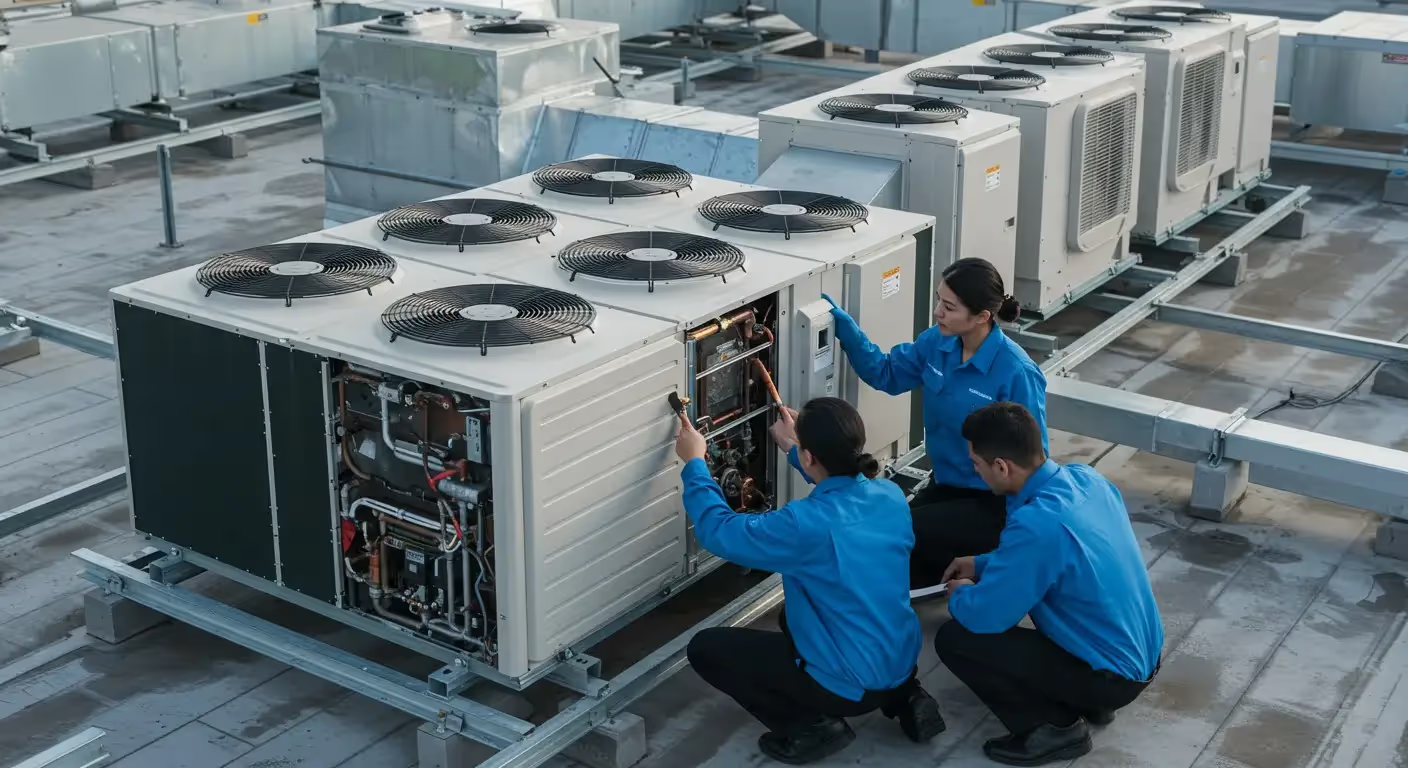
Upon arrival, a certified technician conducts a thorough evaluation of your rooftop unit (RTU), split system, or chiller. This process involves checking refrigerant pressures, testing electrical voltage and amperage against manufacturer specifications, and inspecting the condition of the heat exchanger and compressor.
The scope of immediate service includes:
- System Diagnostics: Utilizing advanced tools to identify airflow restrictions, refrigerant leaks, or sensor calibrations that are off-target.
- Electrical Safety Checks: Tightening connections, inspecting contactors for pitting, and ensuring safety switches are engaging correctly to prevent fire hazards.
- Airflow Optimization: verifying that supply and return ducts are balanced, ensuring every zone in your facility receives adequate conditioning.
- Component Replacement: Swapping out worn belts, seized motors, or faulty thermostats with OEM-grade parts to restore functionality immediately.
The Installation and Replacement Process
There comes a point where a commercial unit reaches the end of its useful life or becomes too costly to operate. Replacing a commercial HVAC system is a major capital improvement project that requires precise planning and execution. We manage the entire lifecycle of the installation to ensure your business operations continue with minimal interruption.
The replacement process follows a strict protocol to ensure compliance and performance:
- First, a load calculation is performed. This is critical because replacing a unit with the exact same tonnage as the old one is often a mistake. Renovations, changes in occupancy, or added equipment can alter the thermal load of your building. We calculate the precise heating and cooling load required for your current layout.
- Next, equipment selection focuses on efficiency ratings (IEER/SEER) that meet your budget and long-term energy goals. This includes selecting the right configuration—whether it is a packaged rooftop unit, a heat pump, or a VRF (Variable Refrigerant Flow) system.
- Then, the logistics of the installation are coordinated. This involves arranging crane services for rooftop units, securing necessary permits, and coordinating with your facility manager to schedule work during off-peak hours if necessary to avoid disrupting customers or staff.
- During installation, technicians modify existing ductwork and gas lines to accommodate the new unit. Great care is taken to seal all connections to prevent air leakage and ensure proper static pressure.
- Finally, the commissioning phase begins. This is not just turning the unit on; it involves testing every mode of operation, balancing the air distribution, and verifying that the thermostat controls are communicating correctly with the mechanical equipment.
Repair vs. Replace: Making the Financial Decision
Deciding whether to repair an aging unit or invest in a new system is a common dilemma for facility managers. Making the wrong choice can lead to wasted capital or repeated downtime. The decision should be based on data, equipment age, and financial forecasting.
Consider replacement if the following conditions apply:
- The 50% Rule: If the cost of the necessary repair approaches 50% of the value of a new unit, replacement is generally the smarter financial move. This is especially true if the unit is out of warranty.
- Equipment Age: Commercial HVAC systems typically last 15 to 20 years. If your system is over 15 years old and experiencing frequent breakdowns, parts may be becoming obsolete, making future repairs difficult and expensive.
- Energy Efficiency: Older units often have significantly lower efficiency ratings compared to modern standards. Upgrading to a high-efficiency unit can reduce monthly energy bills by a substantial margin, effectively paying for the installation over time through operational savings.
- Comfort Complaints: If the system can no longer maintain consistent humidity levels or temperatures despite repairs, the compressor or coils may be degraded beyond recovery.
Understanding Commercial Maintenance Agreements
Preventive maintenance is the single most effective way to protect your HVAC investment. In a commercial setting, systems run longer and harder than residential units. Neglected maintenance leads to dirty coils, slipping belts, and clogged filters, which force the system to work harder, increasing energy consumption and the risk of premature failure.
A comprehensive maintenance program addresses the specific needs of commercial equipment:
- Coil Cleaning: Dirty condenser and evaporator coils reduce the system's ability to transfer heat. Regular cleaning ensures the unit operates at peak efficiency, which is vital during the hot Alamo Ranch summers.
- Belt and Pulley Inspection: Worn or loose belts can cause performance drops and damage to the blower motor. proactive replacement prevents sudden failures.
- Lubrication: Moving parts such as motors and bearings require lubrication to reduce friction and wear. This extends the life of these expensive components.
- Control Calibration: Ensuring that thermostats and building automation systems are reading temperatures accurately prevents the system from over-cooling or over-heating the space.
Local Climate Considerations for Commercial Systems
Operating a business in Alamo Ranch presents specific challenges regarding climate control. The local weather patterns dictate how your system must be configured and maintained.
- Extreme Heat Load: Summers frequently see temperatures exceeding 90°F. Your cooling system must have the capacity to handle this high ambient heat without tripping safety switches. This often requires checking refrigerant charges specifically for high-load performance.
- Humidity Control: With moderate annual rainfall peaking in May and September, indoor humidity can become a problem. Excess humidity can lead to mold growth and "sick building syndrome." Commercial systems must be equipped with proper dehumidification capabilities or economizers that can manage fresh air intake without introducing too much moisture.
- Heating Requirements: While winters are mild, freezing temperatures do occur. Commercial facilities need reliable heating, whether through gas-fired furnaces or heat pumps, to prevent pipes from freezing and to keep employees comfortable during cold snaps.
- Permitting and Codes: Commercial HVAC work requires adherence to local building codes and permitting processes. Ensuring that your installation meets all safety and environmental regulations is part of the professional service provided.
Indoor Air Quality and Productivity
Beyond temperature control, the quality of the air inside your building directly impacts the health and productivity of your occupants. Commercial buildings are often tightly sealed to conserve energy, which can trap pollutants, allergens, and pathogens inside.
Improving Indoor Air Quality (IAQ) involves several strategies:
- High-Efficiency Filtration: upgrading from standard filters to higher MERV ratings captures smaller particles, including dust, pollen, and mold spores.
- Ventilation Management: Proper ventilation ensures a steady supply of fresh outdoor air to dilute indoor contaminants. This requires functioning economizers and balanced air exchange rates.
- UV Light Purification: Installing UV-C lights within the ductwork or near the coils can neutralize airborne bacteria and viruses, creating a healthier environment for staff and customers.
Why Technical Expertise Matters
Commercial HVAC is not a job for general handymen or residential-only technicians. The electrical systems are higher voltage (often 3-phase power), the refrigerant loops are larger, and the control systems are more sophisticated. ReliaBee Air, Electric, & Plumbing utilizes technicians who are specifically trained in commercial applications.
We focus on the metrics that matter to business owners:
- Return on Investment (ROI): We help you calculate the payback period of high-efficiency upgrades.
- Total Cost of Ownership: We look at the long-term costs of fuel, electricity, and maintenance, not just the upfront price of a repair.
- Operational Continuity: Our workflows are designed to get your system running as fast as possible because we know that every hour of downtime costs you money.
Choosing the right partner means selecting a team that understands the urgency of commercial failures. From navigating the specific zoning and access requirements in Alamo Ranch to handling heavy equipment lifts safely, professional execution is the standard.
Secure Your Business Comfort Today
Your HVAC system is the lungs of your commercial facility. Ignoring signs of failure or delaying necessary upgrades puts your revenue and reputation at risk. Do not wait for a complete system collapse during the peak of summer or a freeze in winter.
Take control of your facility's environment. Ensure your employees are productive and your customers are comfortable with a system that operates efficiently and reliably.
Schedule your commercial HVAC assessment or service now to protect your business operations.

Current Offers for
San Antonio Homeowners
Free Plumbing Safety Check


$59 AC Tune-Up
5% OFF FOR SENIORS
5% OFF FOR VETERANS & FIRST RESPONDERS
5% OFF FOR EDUCATORS


What Your Neighbors Are Saying