AC Service in Windcrest, TX

Restore Cool Air Immediately When Your System Fails
As temperatures soar in Windcrest, finding a cooling system that simply pushes warm air around is a homeowner's nightmare, requiring immediate restoration of comfort before the heat becomes dangerous. You need immediate relief with emergency services tailored for our intense Texas summers, so contact us today to schedule a diagnostic or discuss available financing options. ReliaBee Air, Electric, & Plumbing provides rapid response times because we understand that Texas humidity turns a broken AC into a safety hazard within hours.
- Fast, same-day service ensures you beat the heat without unnecessary delays.
- 24/7 availability guarantees technical support is present whenever a breakdown occurs.
- Trusted technical expertise backed by solid customer satisfaction and local knowledge.
- Licensed professionals guarantee high-quality service with full warranty coverage on parts and labor.
Why Quick AC Repair Can’t Wait in This Climate
In many parts of the country, a broken air conditioner is an inconvenience. In Windcrest, TX, it is an emergency. The combination of mid-to-upper 90s°F temperatures and high Gulf humidity creates a heat load that builds up inside a home rapidly. When your cooling system stops running, your home’s internal temperature can match the outdoor temperature within a few hours, putting stress on pets, children, and the structure of your home itself.
Waiting to address a malfunction often leads to compounding mechanical failures. An air conditioner that is struggling to cool due to a dirty coil or low refrigerant will run continuously. This "short cycling" or continuous running overheats the compressor. If the compressor fails, you move from a minor repair category into a full system replacement. Speed is not just about comfort; it is about preserving the lifespan of your existing equipment and preventing humidity damage, such as mold growth in drywall and furniture.
Furthermore, efficiency drops significantly when a unit is malfunctioning. You may notice your utility bills spiking before the unit completely fails. Addressing weird noises, weak airflow, or odd smells immediately allows technicians to resolve the root cause before it drains your wallet through energy waste or catastrophic component failure.
Our Services Today: Fast, Effective, and Reliable
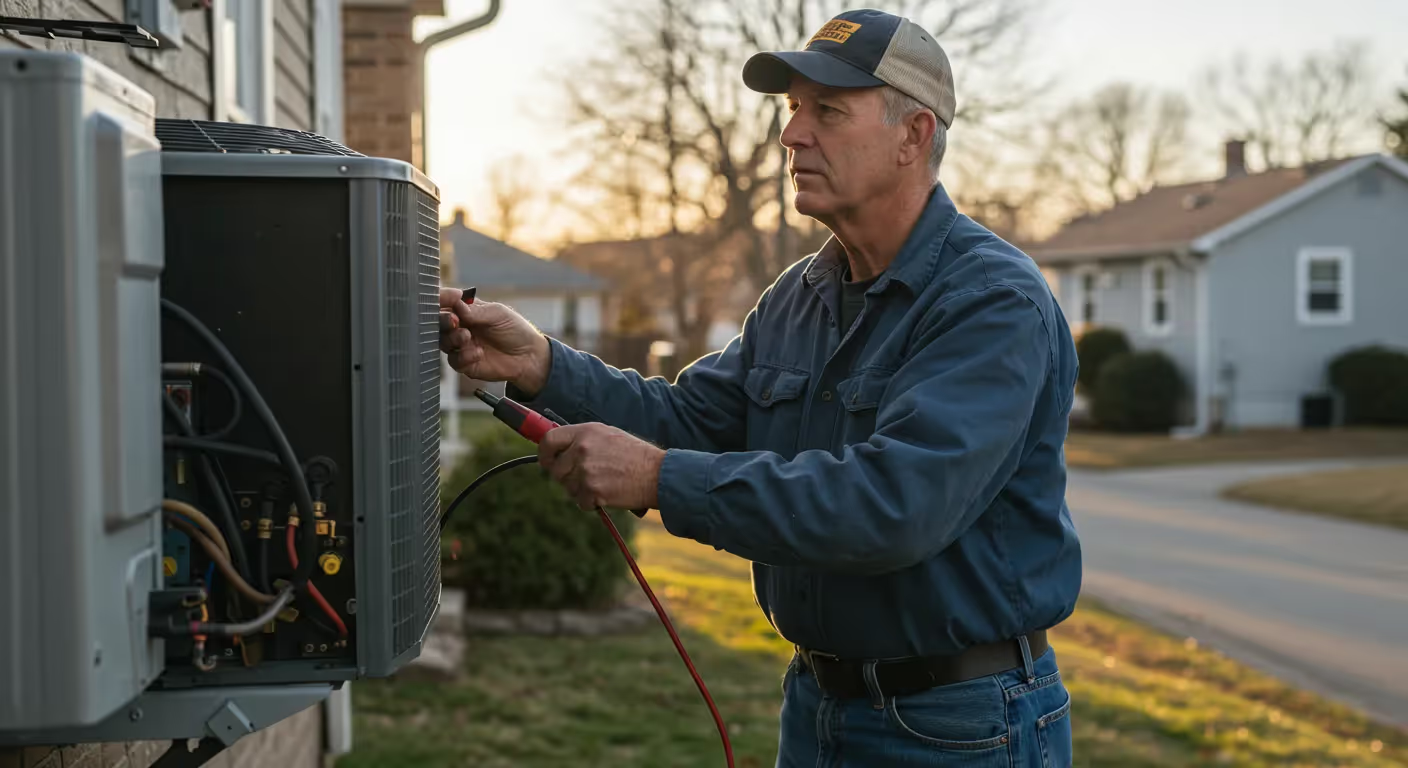
When you request service, the objective is to restore functionality and efficiency in a single visit whenever possible. Modern air conditioning systems are complex machines involving high-voltage electricity, high-pressure refrigerants, and delicate airflow dynamics. A professional service call covers a comprehensive evaluation of the entire system, not just the obvious symptoms.
Comprehensive Diagnostics
Technicians arrive equipped to handle a wide array of common and complex issues. The diagnostic phase is the most critical step. Without accurate troubleshooting, repairs are merely guesses.
- Electrical Analysis: We inspect capacitors, contactors, and wiring connections. Loose connections or failing capacitors are the leading cause of sudden breakdowns during heatwaves.
- Refrigerant Levels: We measure superheat and subcooling to ensure the refrigerant charge is exact. Too much or too little refrigerant destroys efficiency and risks freezing the coil.
- Airflow Assessment: We check the blower motor, air filter, and ductwork static pressure to ensure air is moving freely across the evaporator coil.
- Condensate Drain Check: We ensure the moisture removed from your air is draining away from your home, preventing water damage and safety switch trips.
Targeted Repairs
Once the issue is identified, the repair process is transparent. You receive a clear explanation of what failed and why. Common repairs executed on the spot include replacing blown fuses, swapping out burnt capacitors, clearing clogged drain lines, and recharging refrigerant. For more severe issues, such as a compressor failure or a leaking evaporator coil, we outline the specific timeline and parts required.
Preventative Optimization
Service is not just about fixing what is broken; it is about optimizing what is working. During a service visit, technicians will often clean the condenser coil. A dirty outdoor coil acts as a blanket, trapping heat inside the unit and forcing the compressor to work harder. Removing this debris lowers the operating pressure and electricity usage immediately.
How We Ensure Your AC Works Perfectly
The process of restoring or installing an AC system follows a strict protocol to ensure longevity and adherence to manufacturer specifications. Whether it is a repair or a new installation, cutting corners results in premature failure. We adhere to a rigid workflow to guarantee results.
- Site Evaluation and Sizing: First, technicians evaluate the specific cooling load of the property. This involves more than just reading the model number of the old unit. We look at insulation levels, window placement, and square footage. In Windcrest, humidity control is as important as temperature control, so proper sizing is non-negotiable. An oversized unit cools too fast and fails to dehumidify; an undersized unit runs forever without reaching the setpoint.
- System Protection and Safety: Next, we prepare the workspace to protect your home. Drop cloths are used, and safety power disconnects are engaged. If refrigerant handling is involved, we use recovery machines to capture old refrigerant in compliance with EPA regulations, ensuring no harmful chemicals are vented into the atmosphere.
- Precision Installation or Repair: Then, the core work begins. For repairs, defective parts are removed and OEM (Original Equipment Manufacturer) or equivalent high-quality parts are installed. For installations, the condenser is leveled on a composite pad to dampen vibration. Copper refrigerant lines are brazed with nitrogen flowing through them to prevent oxidation inside the pipes—a crucial step often skipped by budget contractors that prevents future blockages.
- Commissioning and Testing: Finally, the system is not just turned on; it is commissioned. We measure the temperature drop across the coil (the "delta T") to ensure it falls within the 16-22 degree range. We check the amp draw on the compressor and fan motors. We verify the thermostat is communicating correctly with the control board. Only after these metrics meet technical standards is the job considered complete.
Deciding Between AC Repair or Replacement
Homeowners often face the difficult choice between sinking money into an aging unit or investing in a new system. This decision should be based on data and math, not just sales pressure. There are clear indicators when replacement becomes the more financially sound option.
The $5,000 Rule
A common industry standard to help you decide is the $5,000 rule. Multiply the age of your equipment by the estimated repair cost. If the total exceeds $5,000, replacement is generally the better investment. For example, if your 12-year-old unit needs a $600 repair (12 x 600 = 7,200), it is likely time to replace. If a 5-year-old unit needs the same repair (5 x 600 = 3,000), repair is the logical choice.
Refrigerant Type
Older systems utilize R-22 (Freon), a refrigerant that has been phased out and is exponentially expensive to procure. If your system runs on R-22 and develops a leak, the cost to recharge it often rivals the down payment on a modern, high-efficiency system. Newer systems use R-410A or the emerging A2L refrigerants, which are environmentally friendly and cheaper to service.
Frequency of Breakdowns
If you have required repairs more than once in the last two years, your system is signaling the end of its reliable life. Components tend to fail in a domino effect on older machines. Fixing a fan motor today does not guarantee the compressor won't fail next month. ReliaBee Air, Electric, & Plumbing technicians can provide a truthful assessment of the overall condition of the system to help you forecast future reliability.
Efficiency Ratings (SEER2)
Newer units have much higher SEER2 (Seasonal Energy Efficiency Ratio) ratings. Replacing a 10 SEER unit with a 16 SEER2 unit can reduce cooling costs by 30% to 50%. In a climate like Windcrest, where ACs run for the majority of the year, these energy savings can offset the monthly cost of a new system financed over time.
Local Climate Considerations for Your AC
Operating an air conditioner in this specific region requires attention to environmental factors that do not exist in cooler climates. The local infrastructure and weather patterns dictate specific maintenance needs.
Humidity Management
High humidity is the enemy of indoor comfort. Your air conditioner is also a dehumidifier. If your system is short-cycling or the evaporator coil is dirty, it cannot remove moisture effectively. This leads to a "clammy" feeling inside the house even when the thermostat reads 72 degrees. We prioritize airflow adjustments that maximize latent cooling (moisture removal) to combat the sticky outdoor air.
Cottonwood and Debris
During specific times of the year, local flora releases seeds and cottonwood that get sucked directly into the outdoor condenser fins. This creates a felt-like mat over the coil, choking off air. Regular chemical cleaning of the outdoor coil is essential in this area to prevent the system from overheating.
Electrical Grid Fluctuations
Summer storms and high demand on the Texas power grid can lead to voltage fluctuations and brownouts. These power surges can damage the sensitive electronic control boards and compressor motors in modern AC units. We frequently recommend the installation of whole-home surge protectors or hard-start kits to assist the compressor during startup, protecting your investment from grid instability.
Permitting and Regulations
HVAC work in this area is subject to specific codes regarding safety and efficiency. Replacement of major components often requires adherence to current SEER2 federal standards. Professional service providers ensure that all work is compliant with local municipal codes, preventing issues when you eventually sell your home.
Differentiators in Service and Quality
When your cooling system fails, you have many options, but the quality of the technician entering your home determines the long-term success of the repair. We focus on technical proficiency and transparent communication.
- Technical Certification: Our team undergoes continuous training to stay ahead of the rapid changes in HVAC technology, including inverter-driven compressors and smart thermostat integration. You are not getting a handyman; you are getting a specialized HVAC technician.
- Transparent Pricing Structure: You will never face hidden fees or surprise charges. We provide upfront assessments. You will know the scope of work and the associated costs before any tools are applied to your equipment.
- Fully Stocked Trucks: To maximize the chances of a same-day repair, service vehicles are stocked with the most common universal parts, capacitors, contactors, and motors. This reduces the need for supply house runs and gets your system running faster.
- Respect for Your Property: Technicians treat your home with care, using shoe covers and cleaning up the workspace after the job is done. The only evidence of our visit will be a cool, comfortable home.
Experience Warranty and Peace of Mind
Repairs are backed by warranties that protect you against defects. If a replaced part fails within the warranty period, we make it right. We believe in doing the job correctly the first time, ensuring that your AC system is ready to handle whatever the weather throws at it.
You do not have to endure the heat or worry about the reliability of your cooling system. Professional, efficient, and direct service is available to restore your home to the comfortable sanctuary it should be. Contact us today to schedule your AC service and experience immediate relief from the heat.

Current Offers for
San Antonio Homeowners
Free Plumbing Safety Check


$59 AC Tune-Up
5% OFF FOR SENIORS
5% OFF FOR VETERANS & FIRST RESPONDERS

5% OFF FOR EDUCATORS


What Your Neighbors Are Saying