Electrical EV Charger in Windcrest, TX

Looking to install an EV charger but feeling overwhelmed by the technical options and electrical requirements? Relying on a standard wall outlet often leads to anxiety about whether your vehicle will have enough range for your morning commute. Let our certified technicians provide a swift, safe, and compliant installation that maximizes your vehicle's potential. Contact us today to schedule your site assessment and installation financing options:
- Expert installation performed within 24 hours so you are never left waiting for a charge.
- Full compliance with all local electrical codes to ensure the safety of your home and vehicle.
- Assistance with accessing utility rebates to make your hardware upgrade more affordable.
All installations come with a comprehensive labor warranty and full assistance with necessary city permits.
Comprehensive EV Charger Installation Services
Transitioning to an electric vehicle changes how you fuel your daily life, but the infrastructure in many older homes in Windcrest, TX, is not immediately ready to support high-speed charging. A standard Level 1 charger, which plugs into a regular 120-volt outlet, typically adds only 3 to 5 miles of range per hour of charging. For most drivers, this is insufficient for daily usage. Upgrading to a Level 2 home charging station allows you to charge up to 10 times faster, ensuring your battery is full every morning.
ReliaBee specializes in the turnkey installation of Level 2 charging stations. We handle the entire project scope, from the initial load calculation of your electrical panel to the final hardware mounting and software setup. Whether you have purchased a Tesla Wall Connector, a ChargePoint Home Flex, or an Electrify America station, the installation process requires a licensed professional to ensure the high-voltage electricity is handled correctly.
The service includes a thorough inspection of your existing electrical system. Electric vehicles draw a significant continuous load, meaning the circuit must be capable of running at high amperage for hours without overheating. We assess your breaker panel to determine if it has the capacity to add a dedicated 240-volt circuit. If your current panel is full or outdated, we provide the necessary service upgrades to accommodate the new load safely.
We provide:
- Hardwired Installation: This involves connecting the charging station directly to your electrical panel. It is the most secure method and often allows for higher charging speeds and amperage settings compared to plug-in models.
- NEMA Outlet Installation: If you prefer portability, we install high-grade NEMA 14-50 or 6-50 outlets. This allows you to plug in your mobile connector. We use industrial-grade receptacles designed to withstand the heat cycles of EV charging, preventing the melting issues common with residential-grade dryer outlets.
- Smart Charger Setup: Modern chargers connect to WiFi, allowing you to monitor energy usage, schedule charging for off-peak hours, and track costs. We assist with the configuration of these smart features to ensure connectivity.
How the Installation Process Works
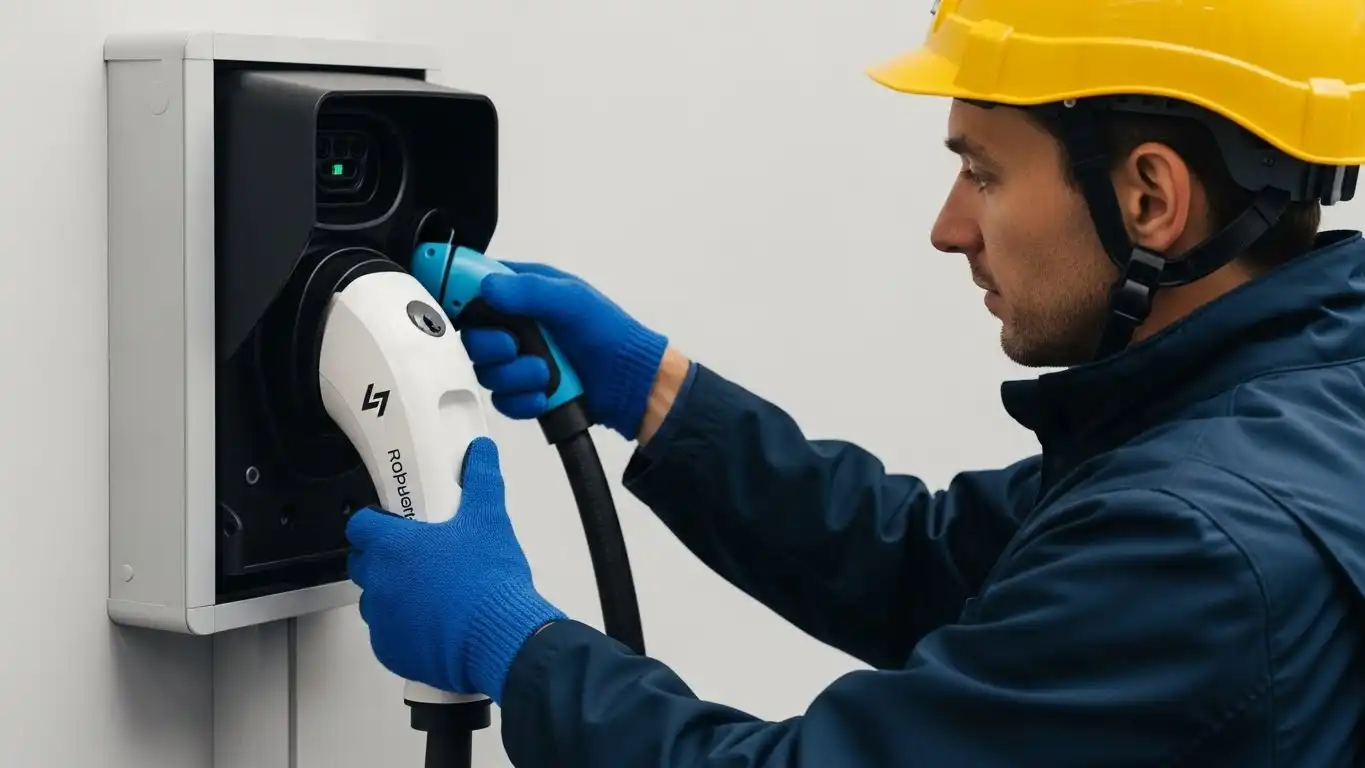
Installing a dedicated charging station is a construction project that involves electrical modification. We have streamlined the workflow to minimize disruption to your home while strictly adhering to safety protocols:
- Site Assessment and Load Calculation: First, a technician evaluates your garage or exterior parking area to determine the optimal location for the charger. The primary constraint is the distance from the electrical panel. We perform a load calculation based on the National Electrical Code (NEC) to ensure your home’s 100-amp or 200-amp service can handle the additional demand of an EV without tripping the main breaker.
- Circuit Wiring and Protection: Next, we run a new, dedicated circuit from your main panel to the charger location. This involves running conduit and heavy-gauge copper wiring. The gauge of the wire is critical; using wire that is too thin for the amperage causes voltage drop and fire hazards. We install a dedicated breaker sized 125% of the continuous load, as required by code. For example, a 48-amp charger requires a 60-amp breaker.
- Mounting and Termination: The charging unit is securely mounted to a wall stud or a pedestal. If the location is outdoors, we ensure weatherproofing measures are taken. The wiring is terminated into the unit, ensuring tight connections. Loose connections are the leading cause of electrical fires in high-amperage circuits.
- Testing and Commissioning: Once the physical installation is complete, we energize the circuit and perform safety tests. We check voltage levels and ensure the ground connection is solid. We then plug in the vehicle or a tester to verify that the charger communicates correctly with the car and delivers the expected power.
- Walkthrough and Education: Finally, we walk you through the operation of your new equipment. This includes how to read the status lights, how to set up charging schedules to take advantage of lower electricity rates, and how to maintain the cable and connector.
Deciding Between Repair, Upgrade, or New Installation
Homeowners often grapple with whether their existing electrical setup is sufficient or if they need a completely new installation. There are specific scenarios where replacing or upgrading your infrastructure is the only logical choice for performance and safety:
- Slow Charging Speeds: If you are relying on the mobile connector that came with your car and plugging it into a standard wall outlet, you are likely experiencing "range anxiety." If your car is not fully charged after an overnight session, a repair to the outlet will not fix the issue. You require a new Level 2 installation to increase voltage from 120V to 240V.
- Tripping Breakers: If plugging in your car causes your kitchen lights to flicker or your garage breaker to trip, your circuit is overloaded. EV charging should never share a circuit with other appliances like freezers or garage door openers. In this case, repairing the breaker is a temporary patch. The solution is installing a dedicated line specifically for the vehicle.
- Overheating Outlets: If you are using a previously installed dryer outlet for your EV, check for heat. Standard residential outlets are not designed for the continuous, high-draw cycle of an EV. If the plastic faceplate is discolored or the plug feels hot to the touch, this is a fire hazard. You must replace the receptacle with an industrial-grade outlet or switch to a hardwired connection immediately.
- Upgrading Your Vehicle: Older EVs or plug-in hybrids often had lower acceptance rates (e.g., 3.3 kW or 6.6 kW). Newer long-range EVs can accept 11.5 kW or more. If you have an older charging station, it may be throttling your new car's charging speed. Replacing the actual charging unit with a modern, higher-amperage model ensures you get the fastest charge your vehicle is capable of accepting.
Local Considerations for Windcrest Homeowners
Operating an Electric Vehicle in the greater San Antonio area presents specific environmental and regulatory considerations that impact installation:
- Heat Management and Equipment Placement: Windcrest experiences hot, humid summers with temperatures frequently reaching the mid-90s°F. While most EV chargers are rated for outdoor use, direct exposure to the Texas sun can cause the unit to derate (slow down) to protect its internal electronics. We strongly recommend installing chargers inside the garage whenever possible. If an outdoor installation is necessary, we advise placing the unit on a north-facing wall or under a shaded carport to maintain optimal charging speeds during summer afternoons.
- Electrical Permitting and Codes: Electrical work in Texas is strictly regulated to prevent hazards. Installing a Level 2 charger requires a permit to ensure the work meets the National Electrical Code. Unpermitted work can void your homeowner's insurance policy in the event of an electrical fire. We handle the permit application process, ensuring the wire sizing, conduit fill, and breaker specifications meet local municipal requirements.
- Utility Coordination: Depending on your local utility provider, there may be rebates available for installing Energy Star-certified smart chargers. Additionally, some utilities offer time-of-use rate plans that make electricity cheaper at night. Our installation setup includes configuring your charger to strictly operate during these low-cost windows, saving you money on your monthly energy bill.
- Precipitation and Weatherproofing: With annual precipitation between 30 and 34 inches, outdoor electrical connections must be watertight. We use NEMA 3R or NEMA 4 rated enclosures and liquid-tight conduit for all exterior runs. This protects the wiring from the heavy rains that occur in May and September, preventing short circuits and corrosion.
Why Professional Installation is Non-Negotiable
While the DIY spirit is commendable, EV charger installation is not a handyman task. It involves high-amperage electricity that is significantly more dangerous than standard lighting circuits. The continuous load nature of EV charging stresses components to their limit, revealing any weakness in the system:
- Amperage Matching: A common mistake in amateur installations is mismatching the breaker size to the charger output. A 48-amp charger cannot be put on a 50-amp breaker; it requires a 60-amp breaker due to the 125% continuous load rule. Violating this rule creates a code violation and a fire risk. We ensure every component is mathematically matched for safety.
- Torque Specifications: Electrical connections must be torqued to specific inch-pound requirements. If a screw terminal is too loose, it causes arcing and heat. If it is too tight, it can shear the wire. Our technicians use calibrated torque tools to ensure every connection is factory-perfect.
- Panel Balancing: Adding a large 240-volt load can imbalance your electrical panel if not placed correctly. We ensure the load is balanced across both phases of your electrical service, preventing issues with other appliances in your home.
- Future-Proofing: We install wiring that not only meets your current car's needs but prepares your home for future EVs with larger batteries. By running higher-capacity conduit and wiring now, you avoid having to rip out and redo the work when you buy your next vehicle.
Secure Your Charging Infrastructure Today
The convenience of waking up to a fully charged vehicle transforms the EV ownership experience. It eliminates the need for public charging stops and ensures your car is ready whenever you are. — schedule service today. Proper installation is the foundation of this reliability. It protects your vehicle’s battery health, your home’s electrical system, and your family’s safety.
Don't risk your investment with subpar wiring or unlicensed work. Trust ReliaBee to deliver a seamless, code-compliant, and high-performance charging solution tailored to your home and vehicle.
Ready to upgrade your home charging experience? Contact us now to schedule your professional installation.

Current Offers for
San Antonio Homeowners
Free Plumbing Safety Check


$59 AC Tune-Up
5% OFF FOR SENIORS
5% OFF FOR VETERANS & FIRST RESPONDERS

5% OFF FOR EDUCATORS


What Your Neighbors Are Saying