AC Service in Converse, TX

AC Failures During the Peak of Texas Heat Need Immediate Attention
Is your AC struggling to keep up with the Texas summer heat? Feeling the discomfort of a hot and humid home can be frustrating, especially when the indoor temperature continues to rise despite your thermostat settings. If your system is blowing warm air or has stopped working entirely, contact us immediately to schedule a diagnostic visit.
Residents in Converse know that a functioning air conditioner is a necessity, not a luxury, given the subtropical climate. ReliaBee Air, Electric, & Plumbing provides comprehensive service to restore your cooling quickly.
- Rapid response and diagnosis within an hour of your call.
- Experienced technicians, ensuring your AC is fixed right the first time.
- Transparent pricing with no hidden fees.
All services are backed by a full warranty, and we offer flexible financing options for major repairs or system replacements.
Comprehensive Diagnostics and Immediate Service Scope
When an air conditioning system fails, the priority is identifying the root cause accurately to prevent recurring issues. A generic "tune-up" is often insufficient for a system that has completely stalled or is making unusual noises. The focus during a service visit is on the mechanical, electrical, and airflow components that drive the system’s performance.
Upon arrival, certified technicians conduct a thorough multi-point inspection. This is not a cursory glance; it involves testing the system under load to see how it performs in real-time. The goal is to isolate the specific component causing the failure, whether it is a failed capacitor, a seized compressor, or a refrigerant leak.
The service scope generally covers the following areas:
- Electrical System Analysis: Technicians inspect the contactor, capacitor, and wiring for signs of wear, burning, or loose connections. Electrical failures are a common cause of sudden breakdowns.
- Refrigerant Level Check: Low refrigerant indicates a leak. Simply adding more fluid without fixing the leak is a temporary solution. The service includes searching for the leak source in the evaporator or condenser coils.
- Airflow and Static Pressure Testing: If the blower motor is working but air isn't moving, the issue may lie in the ductwork or a clogged filter. Static pressure tests reveal if the system is "suffocating" due to restrictions.
- Condensate Drain Inspection: In humid climates, the condensate line removes gallons of water from the air. If this line clogs, it can trigger safety switches that shut down the unit to prevent water damage.
- Thermostat Calibration: Sometimes the unit is fine, but the control center is misreading the temperature. Technicians verify that the thermostat is communicating correctly with the air handler and condenser.
Once the diagnosis is complete, you receive a detailed report of the findings. This includes a clear explanation of what failed, why it failed, and the options available to fix it immediately.
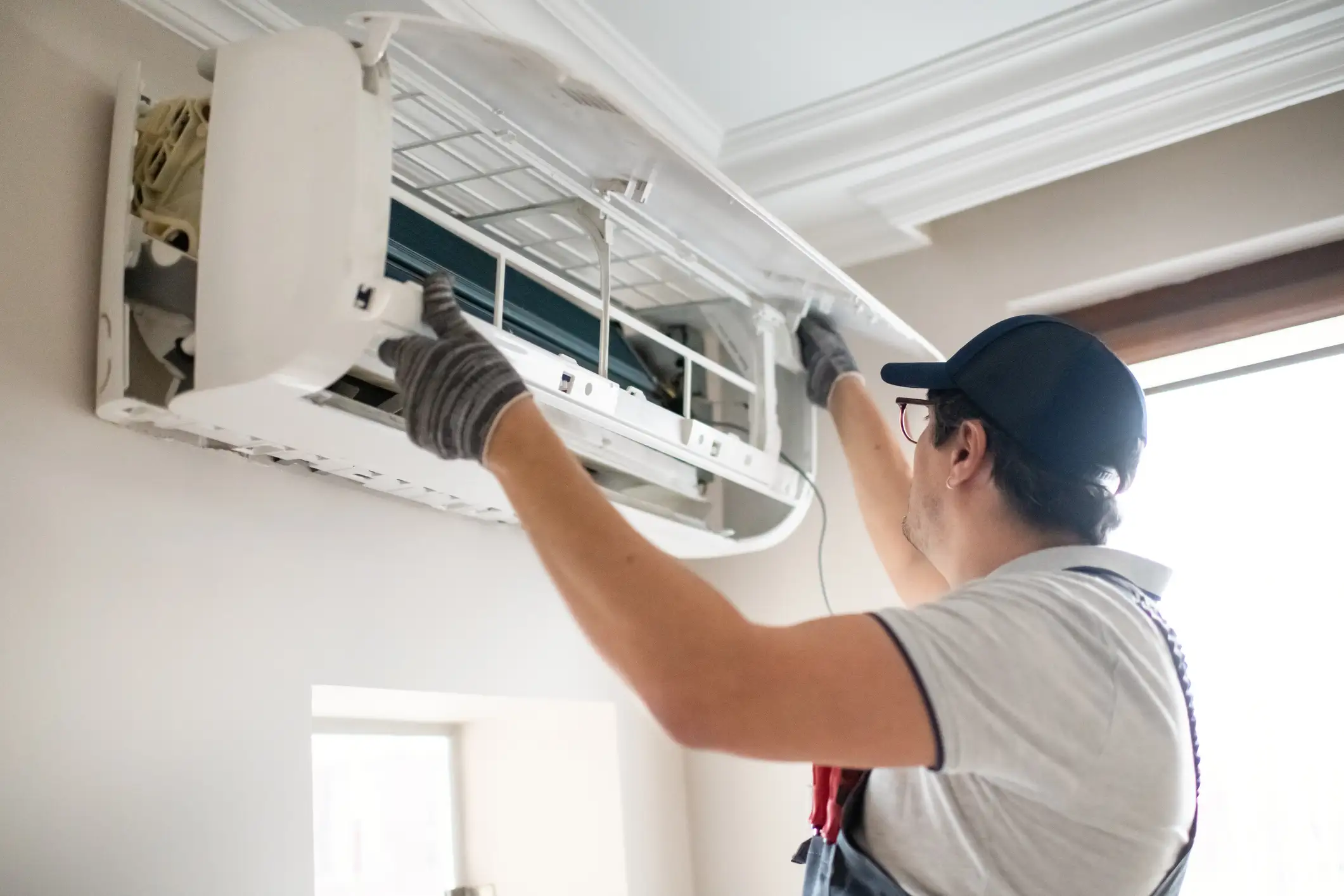
The AC Service and Restoration Process
Understanding the workflow of a service call helps homeowners know what to expect. Professional service is structured to be efficient, minimizing disruption to your daily routine while ensuring safety and technical accuracy.
Site Preparation and Protection
Technicians arrive fully equipped with the necessary parts and tools. Before entering the home, shoe covers and floor protectors are used to keep the workspace clean. The area around the indoor unit (often in an attic or closet) and the outdoor condenser is cleared to allow safe access.
System Isolation and Safety Check
Power is cut to the unit to prevent electrical hazards. Technicians verify that all circuits are de-energized before touching internal components. This step is critical for safety and for preventing shorts that could damage the control board during repair.
Component Repair or Replacement
If a specific part, such as a fan motor or compressor start kit, is identified as the culprit, it is removed and replaced. For refrigerant issues, the system may need to be evacuated (drained of old fluid), the leak brazed and sealed, and then recharged to the manufacturer's specified sub-cooling or superheat levels.
System Testing and Cycle Verification
After the repair is made, the power is restored, and the system is forced into a cooling cycle. Technicians monitor the temperature drop (the difference in temperature between the return air and supply air) to ensure it falls within the optimal range of 16 to 20 degrees Fahrenheit. Amp draws are measured to ensure motors are not overworking.
Final Walkthrough and Cleanup
The workspace is cleaned, and all debris or old parts are removed. The technician explains the work performed, demonstrates that the system is cooling effectively, and answers any technical questions regarding the repair.
Deciding When to Repair vs. Replace Your Unit
Homeowners often face a difficult choice when an older unit breaks down: is it worth fixing, or is it time to invest in a new system? This decision should be based on data and financial logic rather than guesswork. While ReliaBee Air, Electric, & Plumbing is fully equipped to handle repairs, there are specific thresholds where replacement becomes the more economical choice.
The 50% Rule
A general guideline in the HVAC industry is the 50% rule. If the cost of the repair approaches or exceeds 50% of the value of a new system, replacement is usually the smarter financial move. Investing heavy capital into a degrading asset often leads to diminishing returns.
System Age and Expected Lifespan
Most air conditioners in this region last between 10 and 15 years. The harsh heat accelerates wear and tear. If your unit is over 12 years old and requires a major component like a compressor or evaporator coil, the remaining lifespan of the unit may not justify the repair cost.
Refrigerant Type
Older units often use R-22 (Freon), which has been phased out and is incredibly expensive to source. If your older unit has a refrigerant leak, the cost to refill it can be exorbitant. Modern systems use R-410A or newer refrigerants, which are more efficient and environmentally friendly.
Frequency of Breakdowns
If you have required multiple service calls in the last two seasons, the system is likely entering a phase of rapid decline. "Nickel and diming" repairs—fixing a capacitor one month, a fan motor the next—can quickly add up to the cost of a down payment on a new, high-efficiency system.
Energy Efficiency Ratings (SEER)
Older units may have a SEER rating of 10 or 12. Modern standards require higher efficiency, often starting at SEER2 14.3 or higher in the South. Upgrading can result in significant monthly savings on electricity bills, effectively helping the new system pay for itself over time.
Local Climate Factors and Service Considerations
Operating an air conditioning system in Converse presents specific challenges due to the local geography and climate patterns. The subtropical environment means that AC units must work harder and longer than in cooler parts of the country.
Humidity Management
High humidity levels are a constant factor. Your AC does not just cool the air; it dehumidifies it. If a system is short-cycling (turning on and off too quickly) due to being oversized or having a dirty coil, it will fail to remove moisture. This leads to a clammy indoor environment and increases the risk of mold growth in ductwork. Service checks prioritize condensate drainage and dehumidification performance.
Spring Storm Impact
The region is prone to severe weather, particularly thunderstorms in the spring. Lightning strikes and power surges can damage sensitive electronic control boards and compressor windings. Additionally, debris from storms can clog outdoor condenser coils, restricting airflow and causing the unit to overheat. Post-storm inspections are often necessary to clear debris and check for electrical surge damage.
Permitting and Regional Codes
When major repairs or replacements are undertaken, adherence to local building codes is mandatory. This ensures that electrical connections are up to safety standards and that refrigerant handling complies with environmental regulations. Technicians familiar with local requirements ensure that all work is compliant, preventing issues when it comes time to sell the home or file insurance claims.
Attic Heat Loads
Many homes in the area have air handlers and ductwork located in unconditioned attics. In the summer, attic temperatures can soar well above 130°F. This places immense thermal load on the equipment. ensuring ductwork is properly insulated and sealed is vital to prevent cooling loss before the air even reaches your living space.
Technical Expertise and Service Integrity
Selecting a service provider involves looking for technical competence and operational transparency. The goal is to restore comfort without unnecessary upsells or temporary patches that fail a week later.
NATE-Certified Technicians
Service is performed by technicians who have undergone rigorous testing and certification. This ensures a deep understanding of thermodynamics, electrical theory, and mechanical systems.
Upfront, Flat-Rate Pricing
Quotes are provided before any work begins. Pricing is based on the job, not the hour. This prevents billing surprises if a repair takes longer than anticipated due to unforeseen complications.
Truck Stock and Availability
Service vehicles are stocked with universal parts and common OEM components. This high inventory level maximizes the chances of completing the repair in a single visit, restoring your cooling immediately rather than waiting days for parts ordering.
Warranty Support
Repairs are backed by warranties on both parts and labor. If a replaced component fails within the warranty period, it is rectified at no additional cost. This aligns the provider's incentives with the homeowner's desire for a long-lasting fix.
Restore Your Comfort Today
A broken air conditioner in the Texas heat is an urgent issue that impacts the safety and comfort of your household. Ignoring minor signs of trouble, such as strange noises or weak airflow, can lead to total system failure when you need cooling the most. Whether you require a complex compressor repair, a refrigerant leak fix, or a complete system evaluation, professional assistance is available to resolve the problem efficiently.
Do not let the heat take over your home. Secure your appointment now for reliable, expert AC service — contact us today.

Current Offers for
San Antonio Homeowners
Free Plumbing Safety Check


$59 AC Tune-Up
5% OFF FOR SENIORS
5% OFF FOR VETERANS & FIRST RESPONDERS

5% OFF FOR EDUCATORS


What Your Neighbors Are Saying