AC Service in Live Oak, TX

Is Your Air Conditioner Failing to Combat the Live Oak Heat?
A malfunctioning cooling system during the peak of a humid Live Oak summer creates an immediate crisis for your home comfort and safety. Contact us today to schedule an emergency diagnostic or system evaluation to restore your indoor climate. Beat the Live Oak heat with fast, reliable AC services. Whether it's urgent repairs or efficient installations, we ensure your comfort without delay.
- Enjoy same-day service to restore your comfort quickly.
- Get peace of mind with extended warranties for all services.
- Experience expert care with our certified and experienced technicians.
All services are compliant with local permitting requirements and come with a robust warranty for your peace of mind. When your cooling equipment fails, ReliaBee Air, Electric, & Plumbing provides the technical expertise required to diagnose complex issues and implement lasting solutions.
Comprehensive Diagnostics and Repair Scope
When you request service for an air conditioning unit that is blowing warm air, making strange noises, or failing to turn on, you receive a thorough technical assessment. The goal is to identify not just the symptom, but the root cause of the failure. Modern cooling systems are complex networks of electrical components, refrigerants, and airflow mechanics. A comprehensive service visit addresses the immediate breakdown while checking the overall health of the system to prevent future interruptions.
Technicians arrive equipped to handle a wide array of mechanical and electrical failures common to split systems, packaged units, and ductless mini-splits. The scope of service typically involves isolating the electrical failure, leak detection for refrigerant loss, and airflow analysis. By focusing on the specific mechanics of the unit, technicians ensure that repairs restore the unit to manufacturer specifications.
Common issues addressed during a service visit include:
- Refrigerant Leak Detection and Recharge: Low refrigerant levels indicate a leak that must be sealed before recharging to ensure the system holds pressure and cools effectively.
- Electrical Component Replacement: Capacitors, contactors, and relays often fail due to heat stress; these are replaced to restore the start-up cycle of the compressor and fan motors.
- Condensate Drain Cleaning: clogged drain lines can trigger safety float switches that shut down the system; clearing these lines prevents water damage and restores operation.
- Frozen Evaporator Coils: Restricted airflow or low refrigerant can cause ice buildup; service involves thawing the coil and fixing the underlying flow issue.
- Sensor Calibration: Faulty thermostats or internal sensors can lead to short-cycling; recalibrating ensures accurate temperature control.
The AC Service and Installation Process
Understanding what happens from the moment a technician arrives helps homeowners prepare for the service. The process is designed to be transparent, minimizing disruption to your household while ensuring safety standards are met. Whether it is a minor repair or a major component replacement, the workflow remains structured and efficient.
Service and Repair Workflow:
- Initial Assessment: The technician listens to the operational sounds of the unit and measures output temperatures at the supply and return vents to gauge efficiency gaps.
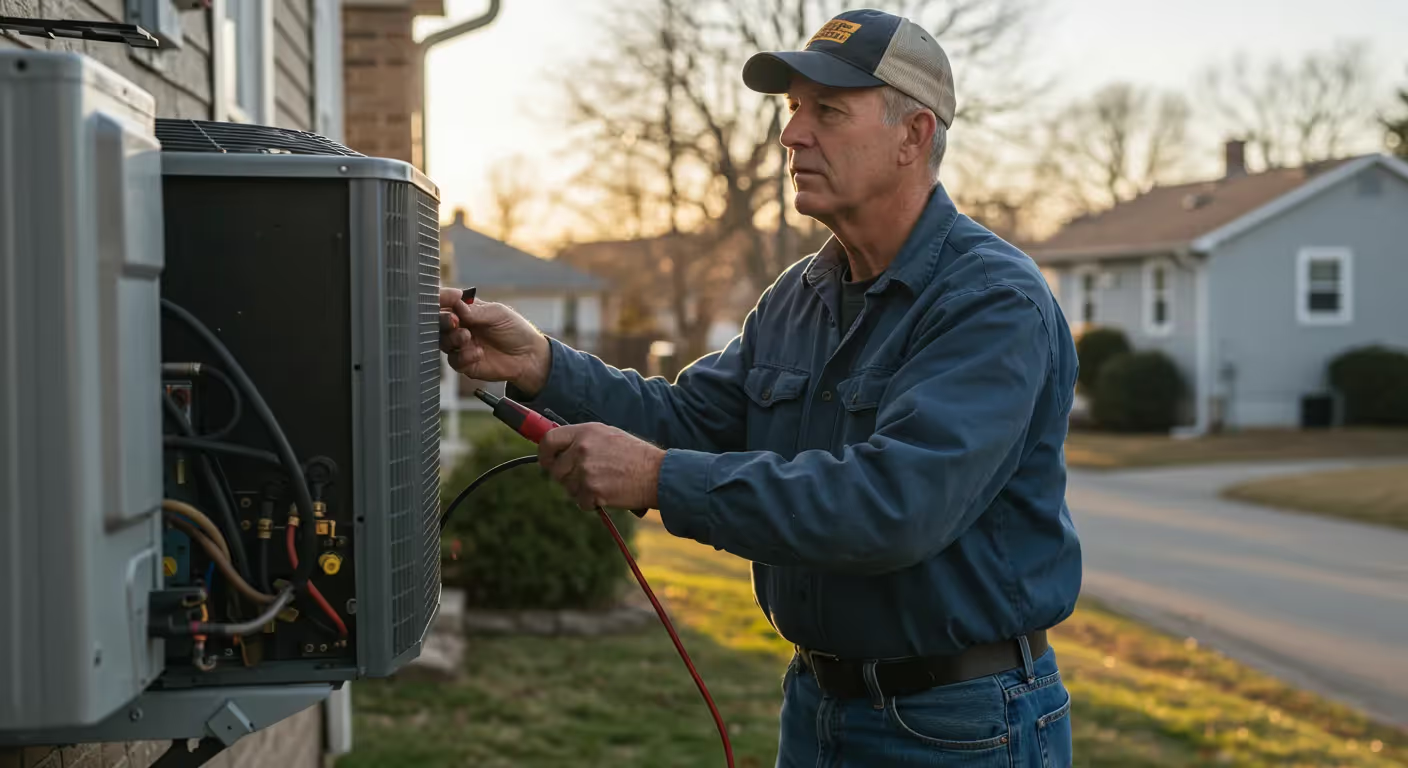
- System Diagnostics: Using specialized gauges and multimeters, the technician tests voltage amps, refrigerant pressures, and static pressure within the ductwork.
- Detailed Explanation: You receive a clear explanation of the failure, including which specific part has malfunctioned and why.
- Upfront Options: Solutions are presented with clarity, outlining the difference between a temporary patch and a permanent repair.
- Execution: Upon approval, the repair is performed using OEM or high-quality aftermarket parts suitable for your specific make and model.
- Performance Verification: The system is cycled through all modes to ensure it reaches the set temperature and cycles off correctly.
Installation and Replacement Workflow:
- Load Calculation: Before any new unit is proposed, a Manual J load calculation is performed to determine the exact cooling capacity required for the home’s square footage and insulation levels.
- Site Preparation: The workspace is prepped, utilizing drop cloths to protect flooring, and the old refrigerant is recovered according to environmental regulations.
- Equipment Setting: The new condenser and air handler are positioned, leveled, and secured to minimize vibration and noise.
- Connection and Brazing: Refrigerant lines are brazed and vacuum-tested to ensure a perfectly sealed, moisture-free system.
- Final Commissioning: The system is charged with refrigerant to the precise subcooling or superheat target, and airflow is balanced for optimal distribution.
Deciding Between Repair and System Replacement
Homeowners often face the difficult decision of whether to invest in another repair or opt for a full system replacement. This decision should be based on data, equipment age, and financial logic rather than guesswork. While repairs are often the fastest solution, they may not be the most economical choice for aging units that are nearing the end of their service life.
Evaluating the condition of the current system helps determine the best path forward. If a system requires frequent repairs or if the cost of a single repair approaches 50% of the value of a new unit, replacement is generally the recommended course of action. Newer systems also offer technological advancements that older units lack, such as variable-speed compressors and smart thermostat integration.
Key factors to consider include:
- Age of the Unit: Systems over 10 to 15 years old are often out of warranty and operate at lower efficiency levels compared to modern SEER2 standards.
- Refrigerant Type: Older units utilizing R-22 refrigerant are expensive to service due to the phase-out of this chemical; upgrading to a system using R-410A or R-454B ensures future serviceability.
- Energy Efficiency Ratios: If energy bills have been steadily climbing despite regular maintenance, the internal components may be worn beyond the point of efficient repair.
- Comfort Consistency: Significant temperature disparities between rooms or an inability to maintain humidity control often signal that the compressor is losing compression.
- Frequency of Breakdowns: If you have required professional service more than twice in the last two years, the cumulative cost of repairs may soon exceed the cost of a down payment on a new AC system.
ReliaBee Air, Electric, & Plumbing technicians provide honest assessments, helping you weigh the immediate cost of repair against the long-term savings of a high-efficiency replacement.
Local Climate Factors and Regulatory Compliance
Operating an air conditioning system in Live Oak requires specific attention to the regional climate. The humid subtropical environment places a heavy latent load on cooling equipment. This means the AC must work harder not just to lower the temperature, but to remove significant moisture from the air. Systems that are oversized or short-cycling will fail to dehumidify the home effectively, leading to a clammy indoor environment and potential mold growth.
Local building codes and utility regulations also play a critical role in AC service and installation. Compliance ensures safety and eligibility for local rebates. Ignoring these requirements can lead to fines or issues when selling the home in the future.
Regional considerations include:
- Humidity Management: Equipment must be sized correctly to run long enough to pull moisture from the air; variable-speed units are particularly effective for the South Texas climate.
- Permitting Requirements: The City of Live Oak and Bexar County often require permits for full system replacements to ensure electrical safety and proper drainage; professional services handle this paperwork on your behalf.
- Storm Protection: Sudden thunderstorms and occasional tornadoes can cause power surges; installing whole-home surge protectors or phase monitors on the condenser adds a layer of protection against weather-related electrical damage.
- Utility Rebates: Local energy providers frequently offer incentives for upgrading to high-efficiency systems; ensuring the installed unit meets specific SEER and EER criteria is necessary to qualify.
- Insulation Levels: In older Live Oak homes, attic insulation may have settled; inspecting insulation during AC service ensures that the cool air produced is not lost to the attic.
The Value of Professional Certification and Expertise
The HVAC industry is technically demanding, requiring deep knowledge of thermodynamics, electrical circuitry, and airflow dynamics. Entrusting your cooling system to certified professionals ensures that the work is performed safely and correctly the first time. Improperly handled refrigerants can damage the environment and the equipment, while poor electrical connections pose fire risks.
Professional service providers invest in continuous training for their technicians. This keeps them updated on the latest diagnostic tools, refrigerant regulations, and manufacturer best practices. Certifications such as NATE (North American Technician Excellence) indicate a technician has demonstrated real-world working knowledge of HVAC systems.
Benefits of hiring certified professionals:
- Accurate Diagnostics: Prevents the "parts changer" mentality where unnecessary parts are replaced in a trial-and-error fashion.
- Warranty Preservation: Manufacturer warranties often require proof of professional maintenance and repair; DIY or unlicensed work can void these valuable protections.
- Safety Protocols: Professionals are trained to handle high-voltage electricity and pressurized gases safely, protecting your family and property.
- Tooling and Equipment: Access to industrial-grade vacuum pumps, recovery machines, and digital manifolds ensures the system is serviced to precise tolerances that cannot be achieved with standard tools.
Ensuring Long-Term Cooling Performance
Maintaining a comfortable home environment in Texas is not optional; it is a necessity. High-quality AC service goes beyond a quick fix; it optimizes the system for peak performance, ensuring it can handle the sweltering heat without faltering. From tightening electrical connections to chemically cleaning coils, every step taken during a service call contributes to the longevity of the investment.
Choosing a service provider that prioritizes technical accuracy and customer transparency changes the experience from stressful to seamless. Whether dealing with a sudden breakdown or planning a scheduled upgrade, the focus remains on delivering cool, clean air to every room in the house.
Don't let a compromised AC system endanger your comfort or inflate your energy bills. Trust the experts at ReliaBee Air, Electric, & Plumbing to deliver the precision and reliability your home deserves. Secure your comfort today—contact us to schedule your expert AC service.

Current Offers for
San Antonio Homeowners
Free Plumbing Safety Check


$59 AC Tune-Up
5% OFF FOR SENIORS
5% OFF FOR VETERANS & FIRST RESPONDERS

5% OFF FOR EDUCATORS


What Your Neighbors Are Saying