Ceiling Fan Installation in Live Oak, TX

Stay Cool and Comfortable with Professional Ceiling Fan Installation
Struggling with the Live Oak heat? Enhance your home’s comfort and efficiency with a professionally installed ceiling fan. Contact us today to schedule your installation or to discuss available financing options.
When temperatures rise, your HVAC system works overtime to maintain a comfortable indoor environment. A ceiling fan does not just move air; it transforms how your home feels, alleviating the heavy workload on your air conditioner. ReliaBee Air, Electric, & Plumbing provides comprehensive installation services designed to get your air moving efficiently and safely.
- Expert installation within 24 hours.
- Increase energy efficiency and lower cooling costs.
- Wide selection of fan styles to match your home’s decor.
All installations are performed by licensed electricians with full warranty coverage.
Professional Installation for Immediate Airflow and Efficiency
Installing a ceiling fan involves much more than simply connecting a few wires and attaching blades. It requires a distinct understanding of structural support, electrical load calculations, and proper balancing to ensure silent, wobble-free operation. When you choose professional service, you secure a fixture that operates safely and effectively from the moment the switch is flipped.
Residents in Live Oak frequently encounter issues with DIY installations, such as noisy motors, shaking fixtures, or fans that fail to circulate air effectively due to improper placement. A professional approach eliminates these variables. The service includes a thorough assessment of your ceiling height and room dimensions to determine the optimal downrod length and blade span. This ensures the fan sits at the correct height to maximize the wind-chill effect, which makes you feel cooler without lowering the thermostat.
Included in the service is the verification of the electrical junction box. Ceiling fans are significantly heavier than standard light fixtures and create vibration and torque during operation. A standard plastic light box cannot support a ceiling fan. Technicians verify that a fan-rated steel brace or box is in place. If the existing infrastructure is insufficient, the service includes retrofitting the ceiling with the appropriate support system to prevent the fixture from falling.
Safety is paramount. Wiring protocols are strictly followed to prevent short circuits or overheating. This includes ensuring that wall switches are properly compatible with the fan’s motor and lighting kit. Whether the project involves a new installation where no fixture existed before or swapping out an old light for a modern fan, every component is tested for stability and electrical integrity.
Comprehensive Ceiling Fan Installation Process
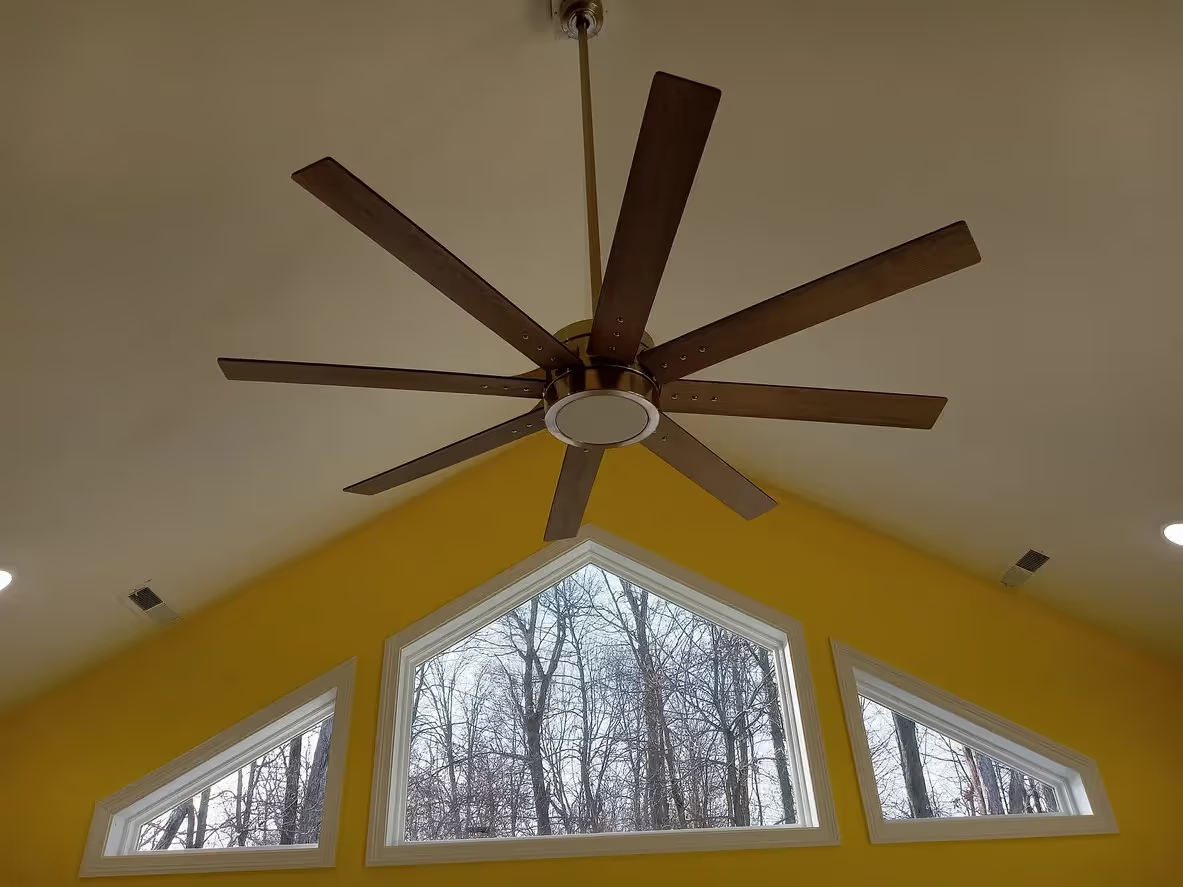
The installation process is methodical and designed to minimize disruption to your home while ensuring adherence to all local building codes. Technicians arrive fully equipped to handle various structural scenarios, from vaulted ceilings to outdoor patios requiring wet-rated fixtures.
- Site Assessment and Power Safety: The process begins with turning off power at the breaker panel to ensure zero risk of electrical shock. Technicians then inspect the mounting location. For new installations, they determine the best path for running new wiring from the nearest power source to the ceiling center. For replacements, they inspect the existing wiring insulation for signs of wear or heat damage that could pose a fire risk.
- Structural Support Verification: Technicians remove the existing fixture and examine the junction box. If the box is not rated for ceiling fans, it is removed and replaced. This step is critical. A fan-rated box is attached directly to a ceiling joist or uses a heavy-duty expanding brace bar that spans between two joists. This provides the necessary anchor to support the dynamic weight of the spinning fan.
- Assembly and Mounting: The fan motor assembly is prepared on the ground to reduce arm fatigue and ensure precise assembly of washers and screws. The mounting bracket is secured to the ceiling box. The motor assembly is then lifted and seated into the bracket. For high ceilings, extended downrods are utilized. Wiring is connected using high-quality wire nuts and secured with electrical tape to prevent loosening over time due to vibration.
- Blade Attachment and Balancing: Blades are attached to the motor housing using precision brackets. Once assembled, the technician runs the fan at the highest speed to check for wobbling. If a wobble is detected, a balancing kit is used. Small weights are applied to specific blades to counterbalance minute imperfections in blade density or shape, ensuring a smooth rotation.
- Control Setup and Final Testing: The final step involves setting up the controls. This may involve wiring a wall switch, programming a handheld remote, or syncing a smart fan to your home’s Wi-Fi network. The technician tests all speeds, the reverse function, and the lighting kit if applicable. They also demonstrate how to operate the controls and maintain the fan.
Determining When to Replace vs. Repair Your Unit
Ceiling fans are durable, but they are not immortal. Knowing when to invest in a repair versus a full replacement can save money and frustration in the long run. Often, homeowners in the Live Oak area hold onto aging units that consume excessive electricity and provide minimal airflow.
- Motor Failure and Noise: If a fan makes a loud humming or grinding noise, the internal bearings are likely shot or the motor windings are damaged. While capacitors can be replaced, a dying motor is rarely worth the cost of repair. Modern DC motors are silent and significantly more energy-efficient than older AC models. If the noise persists after tightening screws, replacement is the viable path.
- Severe Wobbling: Minor wobbles can be balanced, but severe shaking often indicates a bent motor shaft or warped blade brackets. If a fan has been struck by an object or was installed without a proper support box, the structural integrity of the unit may be compromised. Replacing the unit ensures safety and eliminates the annoyance of a shaking fixture.
- Inadequate Airflow: Older fans often have shallower blade pitches (the angle of the blade). A flat blade slices through the air but pushes very little of it downward. Modern fans are designed with optimized blade pitches (usually between 12 and 15 degrees) to move maximum air at lower RPMs. If you stand directly under your fan on high speed and barely feel a breeze, the design is obsolete.
- Lighting and Aesthetics: Lighting technology has advanced rapidly. Older fans with incandescent candelabra bulbs often provide poor illumination and generate excess heat. New models feature integrated LED kits that offer adjustable color temperatures and brightness levels while consuming a fraction of the energy. Updating the fan is an immediate way to modernize the look of a room and improve lighting quality.
Local Considerations for Installations
Operating in this region requires specific attention to environmental factors and local regulations. The climate here heavily influences the type of equipment needed and how it should be utilized.
- Heat and Humidity Management: Summers routinely see temperatures exceeding 90°F. While a fan does not lower the room temperature, the wind-chill effect allows you to raise your thermostat setting by about 4 degrees without a loss of comfort. This partnership between the fan and the AC unit is crucial for managing utility bills during peak summer months.
- Seasonal Adjustments: Winters are generally mild, but temperatures can drop into the 30s. Ceiling fans in this area should be equipped with a reverse function. By reversing the direction of the blades (clockwise), the fan pulls cool air up and pushes warm air, which naturally rises to the ceiling, back down toward the living space. This heat redistribution helps reduce the load on your heating system during cold snaps.
- Permitting and Electrical Codes: Electrical work involving new circuits or significant alterations often requires adherence to strict local codes. Live Oak and surrounding municipalities have specific requirements regarding arc-fault circuit interrupters (AFCIs) and proper grounding. Professional installers ensure that every aspect of the job meets the National Electrical Code (NEC) and local amendments to avoid issues during future home inspections or sales.
- Outdoor Ratings: For fans installed on patios or porches, selecting the correct wet or damp rating is non-negotiable. High humidity and thunderstorms common in spring and early summer can destroy a standard indoor fan installed outside. Moisture leads to rust, drooping blades, and electrical shorts. Installers ensure that any exterior fan carries a UL "Wet" or "Damp" rating to withstand the elements.
Operational Excellence and Service Standards
Choosing the right partner for your ceiling fan installation dictates the longevity and safety of the fixture. ReliaBee Air, Electric, & Plumbing focuses on delivering a seamless service experience that prioritizes technical accuracy and homeowner peace of mind.
The service is built on transparency and respect for your property. Technicians utilize drop cloths to protect flooring and furniture from dust and debris caused by cutting into drywall or drilling. Every wire is stripped to the correct length, and connections are mechanically secure. There is no guesswork involved; every step is executed according to manufacturer specifications and electrical safety standards.
Beyond the technical installation, the focus remains on the user experience. You receive guidance on the best fan sizes for your specific rooms—too big, and it can be overpowering; too small, and it won't move enough air. Advice is provided on blade materials, differentiating between solid wood, composite, and ABS plastic based on the humidity levels of the installation area.
Warranties cover both the labor and the craftsmanship. If a fan develops a wobble or a switch fails shortly after installation, the issue is rectified promptly. This accountability separates professional service from handyman fixes or DIY attempts. The goal is to provide a fixture that becomes an integrated, worry-free part of your home’s climate control system.
Whether upgrading a single bedroom fan or outfitting an entire home with high-efficiency units, the approach remains consistent: precision, safety, and efficiency. Ensure your home is prepared for the heat with equipment installed to last.
Secure Your Comfort Today
Don't let the heat dictate your comfort level at home. A properly installed ceiling fan is an immediate upgrade to your quality of life and energy bills. Ensure your installation is safe, code-compliant, and optimized for maximum airflow.
Ready to improve your home’s airflow? Contact us now to book your professional ceiling fan installation.

Current Offers for
San Antonio Homeowners
Free Plumbing Safety Check


$59 AC Tune-Up
5% OFF FOR SENIORS
5% OFF FOR VETERANS & FIRST RESPONDERS

5% OFF FOR EDUCATORS


What Your Neighbors Are Saying