EV Charger Installation in Live Oak, TX

Eliminate Charging Anxiety With Professional Home Solutions
Relying on public charging infrastructure or slow trickle charging from a standard wall outlet is inconvenient and often insufficient for daily driving needs in Live Oak. At ReliaBee Air, Electric, & Plumbing, we eliminate the uncertainty of EV ownership by providing dedicated, high-speed charging solutions directly to your garage or driveway. Call us to schedule your site assessment and installation.
A home charging station is not just an accessory; it is a critical electrical upgrade that requires precise load calculations and professional handling to ensure safety and efficiency. We specialize in navigating the specific electrical demands of your home to deliver a seamless charging experience.
- Same-day installation services available to get your vehicle powered up in hours, not days.
- Local, certified electricians who understand Live Oak building codes and regional electrical standards.
- Assistance with navigating Texas's $2,500 EV incentive to help offset your installation costs.
All installations are fully certified, compliant with the latest National Electrical Code (NEC), and backed by comprehensive labor warranties.
What to Expect: Process and Timelines Explained
When you decide to move forward with a Level 2 charger installation, the goal is to transition from decision to functional usage with minimal disruption to your home. Homeowners often ask how invasive the process is and what specific hardware is involved. The installation focuses on creating a dedicated 240-volt circuit, similar to what powers an electric dryer or oven, but optimized for the continuous high load of an electric vehicle.
A standard installation typically takes between four to eight hours, depending on the distance between your main electrical panel and the desired charging location. This timeline includes the mounting of the unit, running the necessary conduit, and making the final electrical connections. We arrive with fully stocked trucks, ensuring that common variables—such as needing a specific breaker type or extra heavy-gauge wire—do not cause delays.
The scope of work generally includes the installation of a NEMA 14-50 outlet for plug-in units or a hardwired connection for higher amperage wall boxes. Hardwiring is often recommended for outdoor installations or for chargers capable of delivering over 40 amps, as it creates a weather-tight seal and eliminates the potential failure point of a receptacle. Conversely, a plug-in installation offers flexibility if you plan to move or upgrade the unit in the future without calling an electrician.
Included in the service is a comprehensive site inspection. We evaluate your existing electrical panel’s amperage capacity. Many older homes in the area may operate on 100-amp service, which can be limiting if you also run electric HVAC systems and other heavy appliances. We determine if your current infrastructure can handle the additional 30 to 60 amps required for the charger or if a service upgrade or load management system is necessary to prevent main breaker trips.
Your Step-by-Step Installation Guide
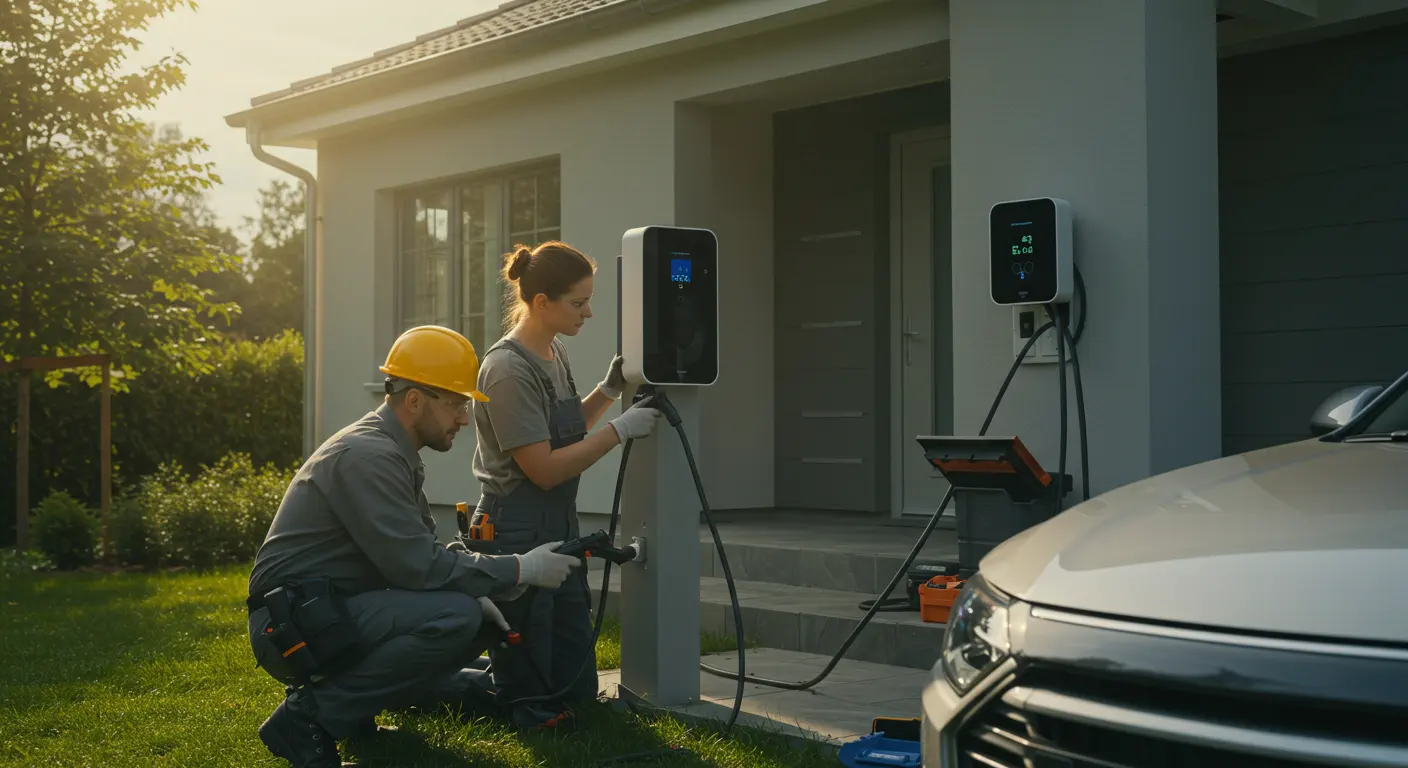
Installing an Electric Vehicle Supply Equipment (EVSE) unit is a systematic process designed to ensure fire safety and electrical reliability. While the specific route of the wiring varies by property, the core procedure follows a strict technical protocol to meet safety standards.
- Load Calculation and Panel Assessment: The process begins with a load calculation. We tally the amperage draw of your existing appliances—HVAC, water heaters, ranges, and lighting—to see how much "headroom" remains in your electrical panel. This step is non-negotiable; adding a heavy load to a maxed-out panel creates an immediate fire hazard.
- Circuit Installation: We install a new, dedicated dual-pole breaker in your main panel. The amperage of this breaker is matched to the charger’s requirements, typically ranging from 40 to 60 amps. We use only copper wiring, sized appropriately to minimize voltage drop and heat buildup over the length of the run.
- Conduit and Wiring Run: Technicians run electrical conduit from the panel to the garage or exterior charging location. This protects the heavy-gauge wire from physical damage. In finished garages, we strive to fish wires behind drywall where possible, or use clean, surface-mounted conduit if structural access is limited.
- Unit Mounting and Termination: The EV charger unit is securely mounted to a wall stud or a pedestal. We connect the wiring to the unit’s terminals, torqueing connections to manufacturer specifications. Loose connections are the primary cause of electrical arcing and overheating, so this step requires precision.
- System Testing and Activation: Once connected, we energize the circuit and test the voltage levels. We verify that the charger communicates correctly with the vehicle simulation tester or your actual EV. This ensures the unit initiates charging immediately and shuts off correctly when the battery is full.
- Final Walkthrough and Wi-Fi Setup: Many modern chargers are "smart" devices. We assist in connecting the unit to your home Wi-Fi network, allowing you to monitor charging stats, schedule off-peak charging to save on utility bills, and manage access control directly from your smartphone.
Choosing Between a New Installation or an Upgrade
Homeowners frequently face the dilemma of whether to utilize an existing 240-volt outlet or invest in a completely new, dedicated installation. While adapting an existing dryer outlet might seem cost-effective initially, it rarely provides the speed or convenience required for daily EV usage. Standard dryer outlets (NEMA 10-30 or 14-30) are typically rated for 30 amps, limiting your charging speed to roughly 22-24 miles of range per hour.
For those with larger battery packs or longer daily commutes in Live Oak, a fresh installation rated for 48 or 50 amps is the superior choice. This allows for charging speeds up to 35-40 miles of range per hour, ensuring your vehicle is fully topped off overnight, even after a depleting day. Furthermore, existing outlets in older homes may not be industrial-grade; continuous high-amperage draw can melt standard residential receptacles over time.
Upgrading is also necessary if you plan to install two chargers or anticipate purchasing a second EV. In these scenarios, we can install load-sharing chargers that communicate with each other. This technology allows two vehicles to share a single circuit, dynamically distributing power based on which car needs it most, avoiding the expense of a heavy-up (panel upgrade).
Another critical factor is the condition of your current electrical panel. If your home utilizes a fuse box or an obsolete breaker panel (such as Federal Pacific or Zinsco), adding an EV charger is not safe without a panel replacement. These older panels have known failure rates and cannot safely handle the continuous load of an EV charger. In such cases, the decision shifts from a simple charger install to a necessary safety upgrade for the entire home.
Navigating Local Permits and Seasonal Considerations
Installing an EV charger in Live Oak requires adherence to specific local regulations and an understanding of the regional climate's impact on electrical equipment. Skipping the permitting process might save time upfront, but it exposes homeowners to liability and insurance complications.
Permitting and Code Compliance
Local municipalities require electrical permits for the installation of dedicated circuits. This process ensures that the work is performed by a licensed professional and inspected by a city official. The inspection verifies that wire gauges are correct, grounding is sufficient, and the load calculation proves the main service won't be overloaded. We handle the entire permitting process, from application to final inspection, ensuring your installation is fully documented and legal.
Climate Impact on Equipment
The local climate, characterized by hot, humid summers with temperatures frequently exceeding 100°F, dictates specific hardware choices. For outdoor installations, we recommend NEMA-4 rated enclosures which are watertight and dust-tight. Extreme heat can derate the efficiency of electrical wires; therefore, we often upsize the wire gauge for outdoor runs to compensate for ambient temperature, ensuring the charger delivers full power even on the hottest July afternoons.
Rain and Weatherproofing
With high precipitation during late spring and early fall, moisture ingress is a genuine concern for outdoor chargers. We utilize compression fittings and weatherproof conduit to ensure no water can enter the electrical connections. Ground Fault Circuit Interrupter (GFCI) protection is mandated for all outlets in garages and outdoors, providing an essential layer of shock protection in wet environments.
Incentives and Rebates
Texas offers various incentives to encourage EV adoption. The Light-Duty Motor Vehicle Purchase or Lease Incentive Program (LDPLIP) provides up to $2,500 rebates for eligible vehicles, but there are also periodic utility rebates available for installing Level 2 chargers. We stay updated on these programs to help you maximize your return on investment.
Why Professional Installation Matters
The transition to electric mobility is an investment in your home and your future. While the charger itself is a sophisticated piece of hardware, its reliability depends entirely on the quality of the installation. Electrical work involves significant risks if mishandled, including fire hazards, damage to the vehicle’s onboard charger, and voided warranties.
We prioritize safety above all else. Our technicians do not cut corners with wire sizing or conduit quality. We use industrial-grade materials meant to withstand the thermal stress of hours-long charging sessions. Unlike general handymen, we focus specifically on the nuances of EVSE technology, ensuring that your charger is compatible with your specific vehicle make and model.
Choosing a professional service ensures that you have a point of contact for future needs. Whether you need to troubleshoot a connectivity issue, upgrade to a faster unit, or inspect the system after a severe storm, we provide ongoing support. ReliaBee Air, Electric, & Plumbing is committed to delivering a charging infrastructure that is as reliable as the vehicle it powers.
Secure your home’s electrical integrity and enjoy the convenience of fast charging. Don’t leave your EV investment vulnerable to subpar wiring or unpermitted work. Take charge of your driving experience. Book your professional EV charger installation now.

Current Offers for
San Antonio Homeowners
Free Plumbing Safety Check


$59 AC Tune-Up
5% OFF FOR SENIORS
5% OFF FOR VETERANS & FIRST RESPONDERS

5% OFF FOR EDUCATORS


What Your Neighbors Are Saying