Electrical Panel Upgrade in Timberwood Park, TX

Are Electrical Panel Upgrades Without Rewiring Possible in Your Home?
Many Timberwood Park homeowners wonder if they can upgrade their electrical panels without extensive rewiring. You're in the right place for a hassle-free evaluation and upgrade. Contact us today to schedule your comprehensive electrical assessment and service upgrade.
- Verify upgrade feasibility with our expert electricians.
- Ensure compliance with Texas electrical codes and permits.
- Quick and efficient upgrade process, often with no need for rewiring.
Fully licensed and insured, with all work guaranteed to meet local code requirements.
Electrical Panel Upgrades: Simple and Safe
Homeowners often delay necessary electrical work because they fear the process involves tearing open drywalls and rewiring the entire house. The reality is often much simpler. In many cases, the existing wiring in your home is perfectly capable of handling standard loads, but the distribution point—the electrical panel—is the bottleneck. An upgrade focuses on replacing this central hub to increase amperage capacity, improve safety features, and accommodate modern appliances without necessarily disturbing the wiring behind your walls.
Modern households consume significantly more power than homes built twenty or thirty years ago. Between high-efficiency HVAC systems running through the hot Timberwood Park summers, electric vehicle charging stations, and multiple high-demand devices, a standard 100-amp panel often falls short. This creates a situation where breakers trip frequently, or lights flicker when the air conditioner kicks on. Upgrading to a 200-amp service allows your electrical system to breathe, providing consistent power delivery and accommodating future expansions.
Safety is the primary driver for these upgrades. Older panels may not have the sophisticated tripping mechanisms found in modern equipment. Arc Fault Circuit Interrupters (AFCIs) and Ground Fault Circuit Interrupters (GFCIs) are now standard code requirements that protect against electrical fires and shocks. By upgrading the panel, you are retrofitting these critical safety technologies into your home. This process ensures your property meets current National Electrical Code (NEC) standards, which is essential for both your safety and your home's insurance eligibility.
What’s Involved in Your Electrical Panel Upgrade
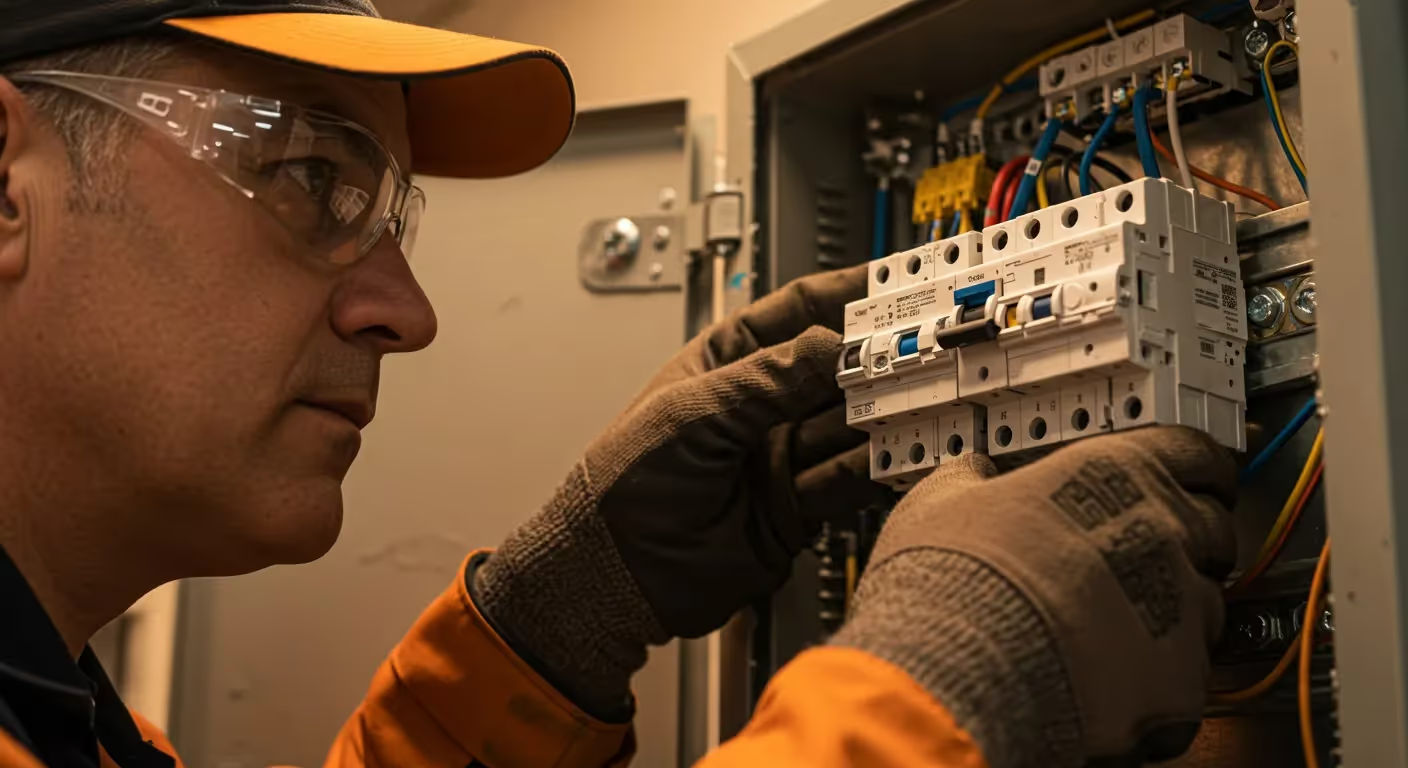
When you commission an electrical panel upgrade, you are purchasing a comprehensive overhaul of your home's electrical service entrance. This is not merely swapping out a metal box; it is an infrastructure update that involves several critical components working in unison to deliver safe power from the utility grid to your branch circuits.
- Service Capacity Increase: Most upgrades involve moving from 100 or 150 amps to 200 amps. This requires not only a new breaker box but often an upgrade to the meter socket and the entrance cables that run from the utility lines to your home.
- New Circuit Breakers: We replace old, worn-out breakers with new, high-performance units. This includes standard breakers for general lighting and outlets, as well as specialized AFCI and GFCI breakers for areas like kitchens, bathrooms, and bedrooms, as mandated by code.
- Bus Bar Replacement: The bus bar is the metal backbone of the panel that distributes electricity to the breakers. Over time, these can corrode or degrade. A new panel features high-conductivity copper or aluminum bus bars that ensure efficient power transfer and reduce heat buildup.
- Grounding and Bonding System: A critical part of the upgrade is verifying and updating the grounding system. This typically involves driving new copper grounding rods into the earth and ensuring the water and gas pipes are properly bonded. This path to the ground is your primary defense against lightning strikes and voltage surges.
- Weather Head and Riser: If your service is overhead, the pipe (riser) and the cap (weather head) where the utility lines connect to your house often need replacement to handle thicker, higher-capacity cables and to ensure a watertight seal against rain.
- Labeling and Organization: A major benefit of a new installation is a clearly labeled directory. We trace your circuits to ensure every breaker is accurately identified, eliminating the guessing game when you need to shut off power to a specific room.
Our Step-by-Step Upgrade Process
A professional electrical panel upgrade is a choreographed event involving coordination between our technicians, local code inspectors, and the utility provider. We manage the entire timeline to minimize downtime and ensure your power is restored quickly. ReliaBee Air, Electric, & Plumbing handles the logistics so you do not have to navigate the bureaucracy of permits and disconnects alone.
- Initial Assessment and Load Calculation: First, we conduct a thorough audit of your current electrical usage. We calculate the total load your home requires based on square footage, HVAC size, and appliances. This determines whether a 200-amp upgrade is sufficient or if a larger service is needed.
- Permitting and Coordination: Before any work begins, we pull the necessary electrical permits from the local building department. Simultaneously, we contact the utility provider to schedule a temporary power disconnect. This step is mandatory for safety and legality.
- Site Preparation: On the day of service, our team clears the work area and sets up safety perimeters. We verify that all sensitive electronics in the home are unplugged or protected to prevent damage during the power switch-over.
- Utility Disconnect and Removal: Once the utility company cuts power to the home, we remove the electric meter and dismantle the old electrical panel. We carefully label existing wires to ensure they are reconnected to the correct circuits in the new panel.
- Installation of New Hardware: We mount the new panel enclosure, install the new meter base if required, and run the new service entrance cables. We then meticulously terminate the branch circuit wires into the new breakers and bus bars, ensuring tight, secure connections.
- Grounding Verification: We install or upgrade the grounding electrode system. This usually involves driving two eight-foot grounding rods roughly six feet apart and connecting them to the panel with a continuous grounding conductor.
- Inspection and Reconnection: Once the physical work is done, a city inspector reviews the installation to ensure it meets all safety codes. Upon passing inspection, the utility company is notified to reconnect power to your home.
- Testing and Labeling: Finally, we energize the system, test every circuit for proper voltage and polarity, and apply a durable, typed legend to the inside of the panel door.
Deciding Between Electrical Panel Repair or Replacement
Homeowners often struggle to decide whether a problematic electrical panel needs a simple repair or a full replacement. While repairs can solve isolated issues, certain conditions dictate that a full replacement is the only safe and financially sound option. Making the right decision depends on the age of the equipment, the nature of the failure, and the brand of the existing panel.
- Age of the System: If your panel is over 25 years old, it is reaching the end of its engineered life expectancy. Breakers rely on internal springs and contacts that fatigue over time. If a panel is technically obsolete, finding replacement parts becomes difficult and expensive, making replacement the smarter long-term investment.
- Recurring Breaker Trips: If you find yourself resetting breakers multiple times a week, it indicates the system is chronically overloaded or the breakers are failing to hold their rated load. While a single breaker can be replaced, widespread tripping usually signals that the panel lacks the capacity for your lifestyle.
- Physical Signs of Damage: Rust on the panel enclosure, burn marks near the bus bars, or a buzzing sound coming from the box are immediate red flags. Water intrusion creates corrosion that increases resistance and heat, posing a severe fire risk. No repair can reverse corrosion on internal components; replacement is necessary.
- Problematic Brands: Certain panel brands installed in previous decades, such as Federal Pacific Electric (FPE) Stab-Lok and Zinsco, have documented design flaws. These panels are known to have breakers that fail to trip during an overload, leading to fires. Insurance companies frequently require these specific panels to be replaced before renewing a policy.
- Home Renovations: If you are planning a kitchen remodel, adding a hot tub, or installing a central air conditioning system, your current panel may not have the physical space for new circuits. "Tandem breakers" or "cheater breakers" can only be used so much before the panel is dangerously overcrowded. A replacement provides the physical slots needed for new dedicated circuits.
Compliance and Permitting in Timberwood Park
Electrical work is strictly regulated to protect public safety. In Timberwood Park and the surrounding Texas regions, adherence to the National Electrical Code (NEC) is not optional; it is the law. Upgrading an electrical panel is classified as major electrical work, requiring a permit from the local building authority before work commences.
- Permit Requirements: The permitting process serves as a third-party check on the quality of work. It ensures that the wire sizes match the breaker ratings, that grounding is sufficient for local soil conditions, and that the load calculations are accurate. Attempting unpermitted work can lead to heavy fines, insurance denial in the event of a fire, and significant complications when trying to sell your home.
- Utility Coordination: The local utility provider has specific requirements for where and how the meter can be mounted. They also dictate the specifications for the service entrance cables. We handle all communication with the utility to ensure the exterior portion of your upgrade meets their distribution standards.
- Seasonal Considerations: Timberwood Park experiences hot summers with average highs reaching 94°F. This heat places a significant load on electrical components. Ambient temperature affects the conductivity of wire and the trip curves of thermal-magnetic breakers. Our installations account for these environmental factors, ensuring that your panel is rated to perform reliably even during the peak of summer when your HVAC system is running constantly.
- Regional Weather Events: While snow is rare, occasional ice storms and heavy spring rains occur. The exterior components of your electrical service must be weatherproofed against driving rain (approx. 30 inches annually). We use NEMA-rated outdoor enclosures and watertight fittings to prevent moisture from entering the panel and causing short circuits.
Why Choose Us? Experience and Reliability in Timberwood Park
Selecting the right contractor for your electrical panel upgrade is a decision that impacts the safety and functionality of your home for decades. You need a partner who understands the intricacies of high-voltage systems and respects the urgency of your electrical needs.
- Local Expertise: We are deeply familiar with the specific housing stock in this area, from new builds to older ranch-style homes requiring careful retrofitting. We know what inspectors look for and how to navigate local code nuances effectively.
- Technical Proficiency: Our electricians undergo rigorous training to stay current with the latest NEC updates and safety technologies. We do not cut corners on materials; every breaker, wire, and connector we install is premium grade to ensure longevity.
- Transparent Communication: We believe in clear, upfront explanations of the work required. You will understand exactly what is being installed, why it is necessary, and how it improves your home's safety profile. We prioritize keeping your home clean and minimizing disruption to your daily routine.
Your electrical system is the heart of your home, and a robust panel is essential for modern living. Do not wait for lights to flicker or breakers to fail before taking action. Ensure your home has the power and protection it deserves. ReliaBee Air, Electric, & Plumbing is ready to help you secure your electrical infrastructure.
Protect Your Home with a Modern, Code-Compliant Electrical Panel
Upgrading your electrical panel is one of the most effective ways to boost safety, improve performance, and prepare your home for modern energy demands. With ReliaBee Air, Electric, & Plumbing, you receive expert evaluations, precise installations, and full permitting support to ensure your upgrade meets all local and national safety standards. Whether you’re experiencing flickering lights, overloaded circuits, or planning future renovations, a properly upgraded panel delivers long-term reliability and peace of mind. Take control of your home’s electrical safety—schedule your professional panel upgrade with ReliaBee Air, Electric, & Plumbing today.
Secure your home's electrical future—schedule your panel upgrade consultation now.

Current Offers for
San Antonio Homeowners
Free Plumbing Safety Check


$59 AC Tune-Up
5% OFF FOR SENIORS
5% OFF FOR VETERANS & FIRST RESPONDERS

5% OFF FOR EDUCATORS


What Your Neighbors Are Saying