Ceiling Fan Installation in Universal City, TX

Eliminate Electrical Risks and Cooling Inefficiencies with Expert Fan Services
Installing a ceiling fan in Universal City, TX, involves more than just connecting wires; it requires ensuring the structural integrity of your ceiling and navigating complex electrical circuits to prevent fire hazards. Improper installation can lead to wobbly fixtures, noisy operation, or even fan failure during the peak of summer heat. Contact ReliaBee Air, Electric, & Plumbing today at or fill out our online form to schedule your safe, professional installation.
Homeowners often underestimate the physical weight and vibrational stress a moving fan places on a ceiling box. Our licensed professionals handle the installation swiftly and safely, ensuring your home remains cool and compliant with all electrical standards.
- Ensure safe and compliant installation tailored to your home's wiring and ceiling structure.
- Get your new ceiling fan up and running efficiently to combat the local heat.
- Enjoy clear, upfront pricing with no hidden fees or surprise surcharges.
Our work is guaranteed, fully insured, and meets all local code requirements to give you total peace of mind.
What to Expect: Comprehensive Scope and Transparent Execution
When you hire a professional for ceiling fan installation, you are paying for technical expertise that extends beyond simple assembly. The process begins with a thorough evaluation of the installation site. In many older homes across Universal City, the existing electrical box in the ceiling is rated only for static light fixtures, not the dynamic load of a spinning fan. Installing a heavy fan on a standard light box is a primary cause of ceiling damage and safety failures. We verify that your junction box is fan-rated and legally compliant before proceeding.
We handle every aspect of the project, from unboxing and assembly to final balancing. This includes managing the specific wiring requirements for fans with independent light kits, wall controls, or remote receivers. If your home requires running new wiring to a spot that currently lacks power, we assess the circuit load to ensure your electrical panel can handle the addition without tripping breakers.
Our service includes the assembly of the motor housing, attachment of blade irons, and the precise leveling of the unit. We also manage the disposal of old fixtures if you are replacing an existing unit. You receive a fully functional, silent, and stable cooling solution without lifting a finger. We respect your property by using drop cloths to catch debris and ensuring a clean workspace upon completion.
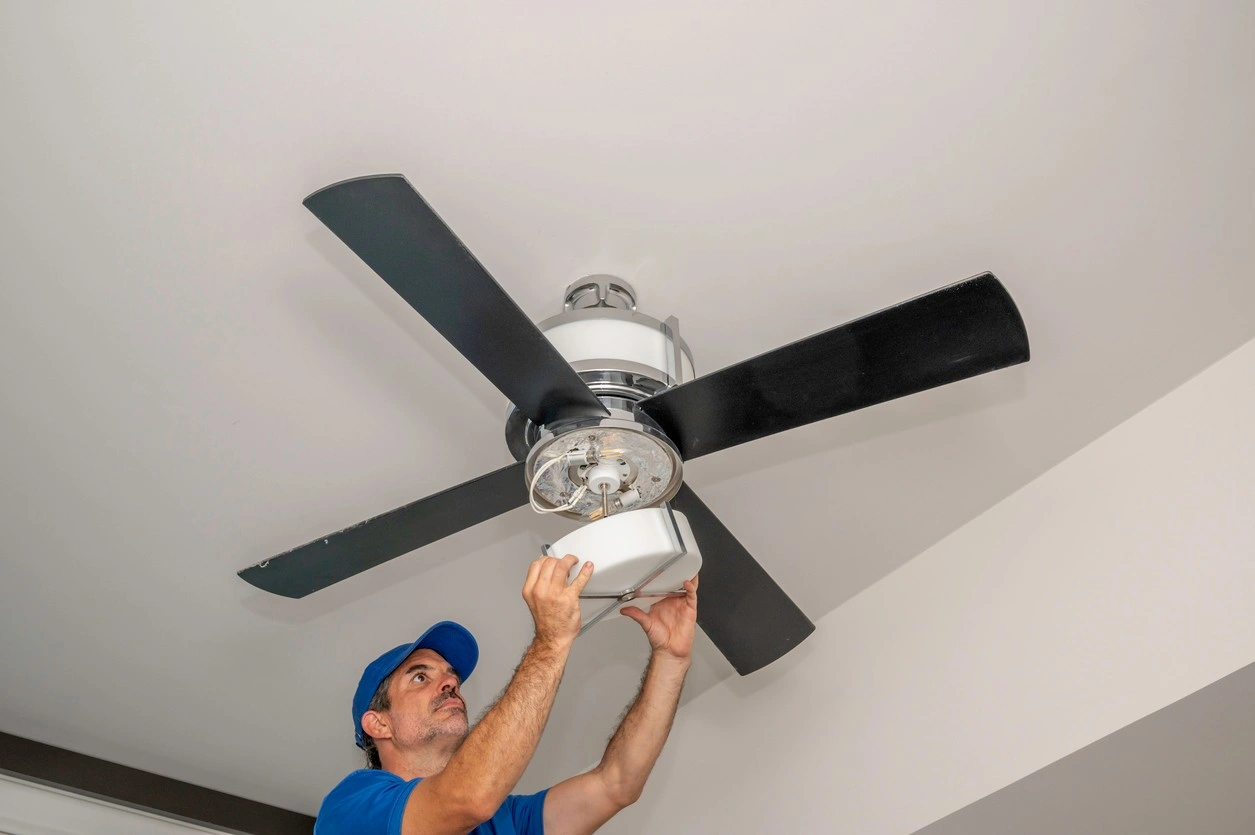
Installation Made Easy: Our Step-by-Step Approach
A correct installation follows a rigorous sequence to ensure safety and longevity. While DIY attempts often skip crucial safety checks, our protocol ensures every component is secure. We do not cut corners on mounting hardware or wiring connections.
- Site Inspection and Power Safety:
First, we locate the correct circuit breaker and cut power to the installation site to ensure zero risk of electrical shock. We then test the wires with a voltage detector to confirm the line is dead.
- Structural Support Verification:
Next, we remove the existing fixture to inspect the junction box. If the box is not rated for ceiling fans (which must support at least 35 to 50 pounds of dynamic load), we remove it. We then install a retrofit brace or a new fan-rated box directly into the ceiling joists to provide a rock-solid anchor point.
- Bracket Mounting and Wiring:
Then, the mounting bracket is secured to the fan-rated box. We meticulously connect the wiring—matching line, neutral, and ground wires. If a remote control receiver is part of the package, it is wired into the canopy at this stage. We use high-quality wire nuts and electrical tape to prevent loose connections caused by future vibrations.
- Motor and Blade Assembly:
After the wiring is tucked neatly into the canopy, we lift and secure the motor assembly. We attach the blade brackets and blades, ensuring they are tightened to the manufacturer's specified torque. Loose blades are the most common cause of clicking sounds and motor wear.
- Final Testing and Balancing:
Finally, we restore power and test the fan at all speeds. We check the light kit function and dimming capabilities. If there is any sign of wobble, we use a balancing kit to adjust the blade weight distribution until the fan spins perfectly smoothly.
Choosing Between Ceiling Fan Replacement or Repair
Homeowners often struggle to decide whether to repair a malfunctioning fan or invest in a modern replacement. While some minor issues are fixable, certain signs indicate that a full replacement is the more economical and safer choice.
- Motor Failure and Noise:
If your fan emits a loud humming or grinding noise, the internal bearings are likely shot or the motor windings are damaged. Repairing a motor often costs nearly as much as buying a brand-new unit. A new fan provides quieter operation and better energy efficiency.
- Wobbling Issues:
While some wobbling can be fixed with balancing, severe wobbling often indicates a bent shaft or warped blade irons. If the structural components of the fan are compromised, replacement is necessary to prevent the unit from detaching.
- Outdated Technology:
Older fans often use AC motors that consume more electricity and produce more heat. Modern fans, especially those with DC motors, use significantly less energy and offer greater speed control. Replacing an old unit helps lower utility bills, which is vital during long Texas summers.
- Lighting and Aesthetics:
If the light kit on your current fan is broken or uses obsolete bulb sockets, finding replacement parts can be difficult. upgrading allows you to choose a unit with integrated LED lighting, which is brighter, longer-lasting, and more energy-efficient.
- Remote and Smart Features:
If you want the convenience of remote controls or smart home integration (voice control via Alexa or Google Home), retrofitting an old fan is often complicated and unreliable. A new smart-enabled fan offers these features natively.
Understanding Universal City’s Installation Codes and Seasonality
Local climate and building regulations play a significant role in how ceiling fans should be selected and installed. In Universal City, the extreme summer heat requires fans that move a high volume of air. We recommend fans with a high CFM (Cubic Feet per Minute) rating to create an effective wind-chill effect. This allows you to raise your thermostat setting by about 4 degrees without sacrificing comfort, reducing the workload on your air conditioning system.
From a regulatory standpoint, adherence to the National Electrical Code (NEC) is non-negotiable. Local amendments often dictate specific requirements for ceiling fan support boxes. The NEC requires that any fan weighing more than 35 pounds must be supported independently of the outlet box unless the box is listed for the weight. Furthermore, fans installed in bathrooms or outdoor patios must be "damp-rated" or "wet-rated" to prevent moisture from corroding the internal electronics and causing short circuits.
Ceiling height is another critical factor regulated by safety standards. Fans should not be installed lower than seven feet from the floor to prevent injury. For homes with high vaulted ceilings, which are common in the area, we utilize extended downrods to position the fan at the optimal height for airflow efficiency. ReliaBee Air, Electric, & Plumbing ensures that every installation adheres to these specific height and support mandates.
Why Professional Execution Beats DIY Risks
The temptation to install a fan as a weekend project is high, but the risks outweigh the savings. Ceiling fans are heavy, awkward to lift, and require working on a ladder with both hands above your head. This physical challenge, combined with live electricity, creates a hazardous environment for untrained individuals.
- Eliminating Fire Hazards:
Loose wire connections are a leading cause of residential electrical fires. Aluminum wiring found in some older homes requires specific connectors when joining with the copper wiring of a new fan. Professionals know how to identify and mitigate these metallurgical incompatibilities.
- Ensuring Proper Anchoring:
A fan that falls due to improper anchoring can cause severe injury or property damage. We have the tools to locate joists through drywall and the hardware to secure heavy loads effectively. We do not rely on plastic anchors or drywall screws.
- Warranty Protection:
Most ceiling fan manufacturers void the warranty if the unit is not installed by a licensed professional. Professional installation ensures your product warranty remains valid. Additionally, our labor is backed by our own service guarantees.
- Complex Switching Solutions:
If you want to control the light and the fan separately but only have one wall switch, we can install specialized control modules or run new switch legs. This level of electrical modification requires a deep understanding of circuit logic.
Why Choose Us: Licensed Expertise and Reliability
Selecting the right contractor ensures that your ceiling fan is not just a fixture, but a long-term asset to your home’s comfort system. We differentiate ourselves through rigorous training and a commitment to code compliance. We do not use subcontractors; our technicians are vetted, background-checked, and trained in the latest electrical safety protocols.
We understand the nuances of local construction in Universal City, from the wiring types used in different decades to the specific drywall thicknesses found in local subdivisions. This local knowledge allows us to anticipate challenges before we even open the toolbox, preventing delays and unexpected costs. Whether you are installing a massive 72-inch windmill fan in a living room or a compact unit in a bedroom, we apply the same level of precision and care.
Ready to Beat the Heat? Schedule Your Professional Installation Today!
Trusting your electrical projects to qualified professionals prevents flickering lights, noisy motors, and safety hazards. We provide documentation of our work, ensuring that if you ever sell your home, you have proof that your electrical upgrades were performed to code.
Get your home ready for the heat with a perfectly installed ceiling fan. Contact ReliaBee Air, Electric, & Plumbing today to schedule your service and experience the difference of professional electrical work.

Current Offers for
San Antonio Homeowners
Free Plumbing Safety Check


$59 AC Tune-Up
5% OFF FOR SENIORS
5% OFF FOR VETERANS & FIRST RESPONDERS

5% OFF FOR EDUCATORS


What Your Neighbors Are Saying