Ceiling Fan Installation in Boerne, TX

Tired of the Scorching Heat? Upgrade with Professional Ceiling Fan Installation!
Are you struggling through Boerne's steamy summer days where the air feels stagnant inside your own home? Improving home comfort with a professionally installed ceiling fan could be the answer to alleviating the humidity and lowering the burden on your air conditioner. Contact us today to schedule your installation or call to discuss financing options available for your project.
ReliaBee Air, Electric, & Plumbing understands that in this climate, airflow is not just a luxury; it is a necessity for maintaining a livable environment. A properly installed unit moves air efficiently, creating a wind-chill effect that makes a room feel significantly cooler without drastically lowering the thermostat.
- Experience the refreshing difference in air quality and temperature distribution in less than a day.
- Custom installations are available to perfectly suit your home aesthetics, ceiling height, and airflow needs.
- Increase your energy efficiency and reduce cooling costs by supplementing your HVAC system.
Complete with industry-standard warranties and financing options to make your upgrade easier, our service ensures your new fixture is safe, balanced, and effective.
What You Get With Professional Service Today
When you invest in professional ceiling fan installation, you are purchasing more than just labor; you are securing safety, electrical compliance, and long-term performance. Many homeowners underestimate the technical requirements involved in swapping a light fixture for a ceiling fan. A standard light box is rarely rated to support the weight and vibration of a spinning fan motor. Our service includes a comprehensive assessment of your current electrical setup to ensure the mounting point can safely hold the fixture.
The scope of service covers everything required to take a fan from the box to fully operational status. This includes the removal of existing fixtures, inspection of wiring integrity, installation of a fan-rated junction box if necessary, and the precise assembly of the motor and blades. We handle standard flat ceilings, vaulted ceilings requiring downrods, and complex wiring scenarios involving dual switches for separate light and fan control.
You receive immediate relief from the heat. Once the installation is complete, the workspace is cleaned, the old fixture is removed or set aside based on your preference, and the new fan is tested at all speeds to ensure it is whisper-quiet and wobble-free. This turn-key approach means you do not have to worry about tools, ladders, or deciphering complex wiring diagrams.
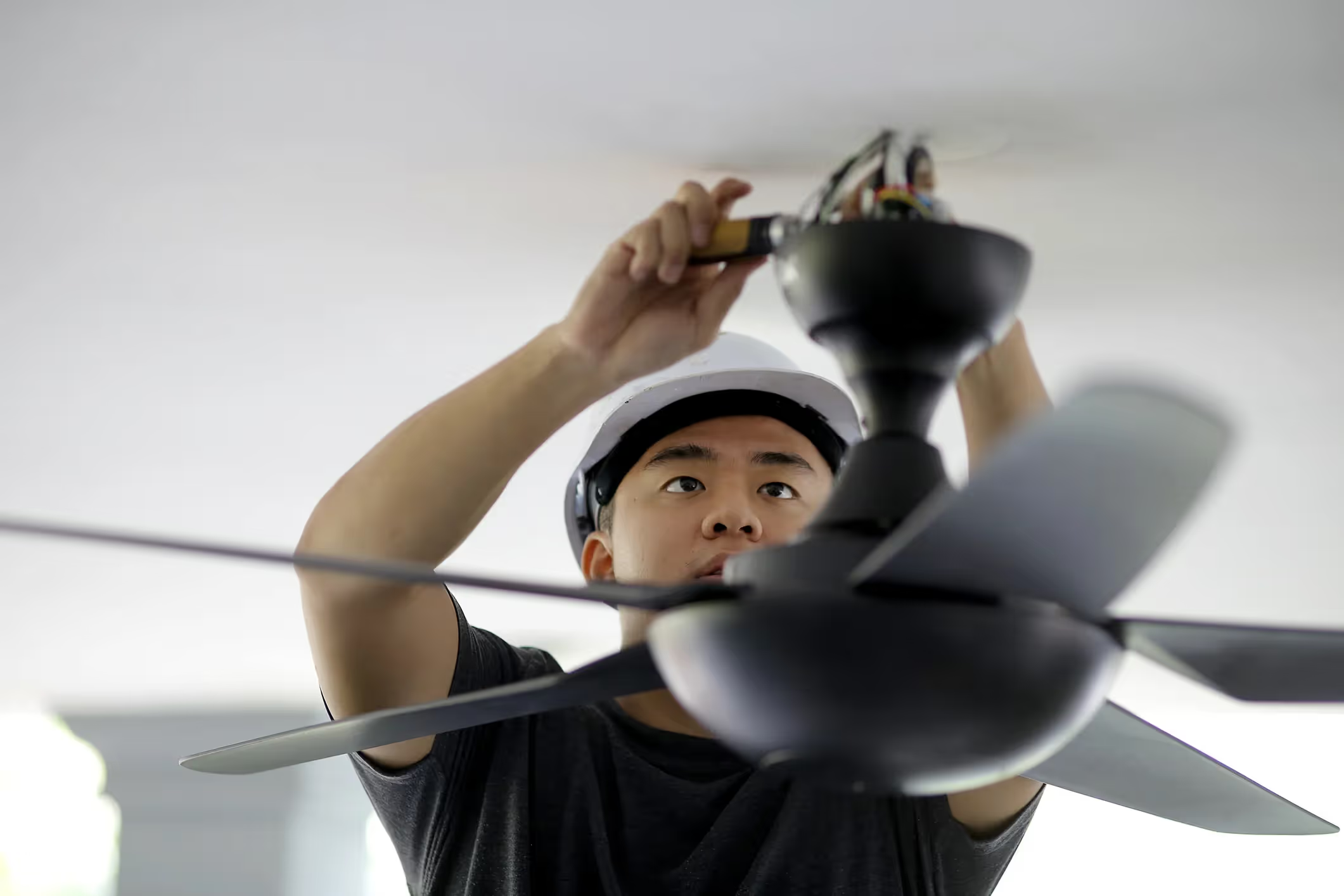
How the Installation Process Works
A seamless installation relies on a structured process that prioritizes safety and protects your property. We follow a strict protocol to ensure every fan is hung correctly and wired according to code.
Site Inspection and Preparation
The process begins by turning off power at the breaker panel to ensure electrical safety. Technicians inspect the ceiling location to determine if the existing junction box is "fan-rated." If the box is stamped only for lighting fixtures, it must be replaced with a heavy-duty box or a brace bar system that spans the ceiling joists to support the dynamic load of the fan.
Assembly and Mounting
The fan motor, housing, and downrod are assembled on the ground to minimize time spent on the ladder. The mounting bracket is secured to the ceiling structure using high-tensile screws. This is the most critical step for safety; an improperly secured bracket is the primary cause of noisy, wobbling, or falling fans.
Electrical Connections
Wiring is connected using secure wire nuts and wrapped with electrical tape where necessary. This step involves matching the household supply lines to the fan's receiver or motor wires. If you have a wall control or a remote receiver, it is wired into the canopy at this stage. Special attention is paid to grounding the unit to prevent electrical hazards.
Blade Attachment and Balancing
Once the motor is hung and wired, the blades are attached using the manufacturer’s hardware. Even high-end fans can arrive with slight weight discrepancies in the blades. Technicians run the fan at high speed to check for wobble. If any oscillation is detected, a balancing kit is used to distribute weight evenly, ensuring smooth operation.
Final Testing
The power is restored, and the fan is tested for directional airflow, speed variances, and light kit functionality. We ensure that the wall switches operate the intended functions and that no humming or grinding noises are present.
Deciding When to Replace vs. Repair Your Existing Unit
Homeowners often debate whether to fix a noisy, aging fan or invest in a new unit. While some minor issues can be repaired, there are specific signs that indicate a full replacement is the more economical and practical choice.
Motor Failure or Hum
If your fan emits a loud buzzing or humming noise that persists even after tightening screws and cleaning, the motor windings or bearings are likely failing. Replacing the motor often costs nearly as much as a new unit. A new fan provides quieter operation and improved energy efficiency compared to older models.
Inadequate Airflow
Older fans or budget models may have a shallow blade pitch (less than 12 degrees) or an underpowered motor, resulting in poor air movement. If the fan is spinning but you do not feel a breeze, it is not serving its purpose. Modern fans are designed with steeper blade pitches and higher cubic feet per minute (CFM) ratings to move air effectively in large rooms.
Outdated Controls
If your current fan relies on pull chains that are broken or difficult to reach, upgrading to a modern unit allows for the integration of wall controls, handheld remotes, or smart home connectivity. This adds convenience and allows you to adjust speed and lighting without leaving your seat.
Wobbling That Cannot Be Fixed
While balancing works for minor issues, severe wobbling usually indicates a bent shaft, warped blades, or a compromised mounting bracket. Running a severely unbalanced fan is a safety hazard as it loosens connections over time. Replacement eliminates this risk — request service today.
Local Considerations: Permits, Codes, and Seasonality
Operating in the Boerne area requires an understanding of specific local building standards and environmental factors. The electrical infrastructure in Texas homes must adhere to the National Electrical Code (NEC), specifically regarding the support and grounding of ceiling suspended paddle fans.
Junction Box Requirements
Local codes strictly mandate that any ceiling fan weighing more than 35 pounds—or any fan regardless of weight that produces significant vibration—must be supported by an outlet box identified for such use. We verify that your home meets these compliance standards during the installation to prevent code violations and safety hazards.
High Ceilings and Downrods
Many homes in this region feature vaulted or cathedral ceilings to help dissipate heat. Installing a fan flush against a high ceiling renders it ineffective because the air cannot reach the living space. We calculate the correct downrod length to position the fan typically 8 to 9 feet above the floor, ensuring you feel the cooling effect.
Outdoor and Patio Installs
Given the popularity of outdoor living spaces here, installing fans on covered patios is common. However, standard indoor fans will droop, rust, and fail when exposed to humidity and temperature fluctuations. We ensure that only "Damp-Rated" or "Wet-Rated" fans are installed in exterior zones to withstand moisture and prevent electrical shorts.
Seasonal Directional Usage
While cooling is the priority for most of the year, ceiling fans are also tools for winter efficiency. Your installer can demonstrate how to reverse the motor direction. In the winter, an updraft pushes warm air trapped at the ceiling down the walls and into the room, reducing the workload on your heating system during those chillier months.
Risks Associated with DIY Installation
Attempting to install a ceiling fan without professional training carries significant risks. The most common issue is the "wobble" caused by failing to mount the bracket directly to a joist or using the wrong type of electrical box. A fan that is not anchored to the structural framing of the house can work itself loose over time, leading to catastrophic failure.
Electrical complexity is another hurdle. Modern fans often come with remote receivers that must be wired precisely into the canopy housing. Wiring these incorrectly can short out the receiver, trip breakers, or permanently damage the fan motor. Furthermore, working with electricity on a ladder introduces a fall hazard that is best left to insured professionals with the proper equipment.
ReliaBee Air, Electric, & Plumbing prioritizes safety protocols that protect your home and your family. We ensure that wires are not pinched during the hanging process—a common DIY mistake that creates a fire hazard—and that all connections are tight and insulated.
Optimizing Airflow for Maximum Cooling
The effectiveness of your new ceiling fan depends heavily on selecting the right size for the room. An undersized fan in a large living room will spin rapidly without circulating air effectively, while an oversized fan in a small bedroom can create an overwhelming wind tunnel effect.
Room Sizing Guide
For rooms up to 144 square feet (12x12), a 42-to-44-inch fan is typically sufficient. Master bedrooms and living areas ranging from 144 to 225 square feet require a 52-inch fan. Large open-concept areas common in Texas architecture often require fans spanning 60 inches or more, or the installation of two separate units to ensure even coverage.
Blade Pitch and Motor Quality
The angle of the blade, known as the pitch, dictates how much air the fan scoops with every rotation. Cheaper fans often have flat blades (10-degree pitch) that slice through the air without moving it. We recommend fans with a blade pitch between 12 and 15 degrees, paired with a heavy-duty motor capable of driving that resistance without overheating.
Placement Strategy
Fans should be centered in the room for optimal distribution. However, in rooms with recessed lighting, care must be taken to position the fan blades so they do not create a strobe-light effect by passing under the lights. We assist in determining the optimal layout to balance lighting needs with airflow requirements.
Why Professional Installation is the Standard
Choosing professional installation guarantees that your ceiling fan operates at peak efficiency from the moment it is turned on. It eliminates the guesswork regarding support structures and wiring compatibility. Professionals bring the necessary bracing hardware to retrofit old ceiling boxes, ensuring that even in older homes, the new fan is secure.
You also gain the benefit of proper assembly. Many fans arrive with confusing instructions and dozens of small parts. A professional ensures that lock washers, safety cables, and set screws are utilized correctly. Skipping these small components is a frequent cause of noisy operation and premature wear.
Furthermore, professional service protects the manufacturer’s warranty. Many fan brands include clauses that void the warranty if the unit is found to be installed incorrectly or on an improper circuit. By using a certified service, you maintain the coverage on your investment.
Contact Us Today!
Upgrading your home with new ceiling fans is a strategic move to combat the heat and improve energy efficiency. It allows you to feel cooler without overworking your air conditioning system, resulting in tangible savings on energy bills. Whether you are replacing a wobbly, outdated fixture or installing a new fan in a room with high ceilings, the quality of the installation dictates the quality of the performance.
ReliaBee Air, Electric, & Plumbing is dedicated to providing precise, code-compliant installation services that ensure your comfort and safety. Do not let the heat dictate your comfort levels this season.
Ready to improve your home’s airflow? Click here to schedule your professional ceiling fan installation now.

Current Offers for
San Antonio Homeowners
Free Plumbing Safety Check


$59 AC Tune-Up
5% OFF FOR SENIORS
5% OFF FOR VETERANS & FIRST RESPONDERS

5% OFF FOR EDUCATORS


What Your Neighbors Are Saying