EV Charger Installation in Boerne, TX

Secure Reliable Charging at Home Without Electrical Risks
Waiting days for a vehicle to charge on a standard wall outlet hampers your mobility, while improper wiring for high-voltage stations creates significant fire hazards within your home’s electrical system. Residents in Boerne need a solution that balances rapid charging speeds with absolute safety compliance to protect their property and vehicle. Contact us today to schedule your site assessment or inquire about financing options for your installation.
Installing an Electric Vehicle (EV) Supply Equipment unit is not a simple plug-and-play operation; it requires a calculated integration into your home’s existing electrical grid. Our certified technicians specialize in upgrading your infrastructure to handle the substantial continuous load required by modern EVs. We ensure that your investment in a greener vehicle does not compromise the safety or functionality of your home’s power supply.
- Rapid installation services designed to get your vehicle powered up without unnecessary delays.
- Strict adherence to National Electrical Code (NEC) and local municipal regulations to ensure system safety.
- Comprehensive site evaluation to determine the most efficient wiring path and load management strategy.
All installations come with a full warranty on workmanship and complete management of necessary local permits.
Professional Installation Standards for Maximum Charging Efficiency
When you choose professional installation, you are securing a dedicated high-voltage circuit designed specifically for the demands of your vehicle. A standard 120-volt outlet (Level 1) often provides only 3 to 5 miles of range per hour of charging. This is insufficient for daily commuters or those with larger battery capacities. Our service focuses on installing Level 2 charging stations, which operate on 240 volts and can fully charge most EVs overnight.
The scope of our service goes beyond simply mounting a box on the wall. We analyze the amperage capacity of your main electrical panel to ensure it can support the additional load. Most Level 2 chargers require a dedicated circuit ranging from 40 to 60 amps, depending on the charging speed desired. If your current panel is near capacity, we identify the need for load management devices or a service panel upgrade to prevent main breaker trips.
We also assist in the selection and installation of the specific hardware that suits your vehicle and lifestyle:
- Hardwired Units: These are directly wired into the electrical system. They offer a cleaner look, higher protection against the elements (crucial for outdoor installs), and often support higher amperage settings for faster charging speeds.
- Plug-In Units (NEMA 14-50): We install heavy-duty industrial-grade receptacles. This option allows for portability if you move, though it may be limited to slightly lower amperages compared to hardwired versions.
- Smart Charger Integration: Many modern chargers connect to Wi-Fi to track usage, schedule charging during off-peak utility hours, and balance loads. We ensure these smart features are configured correctly during installation.
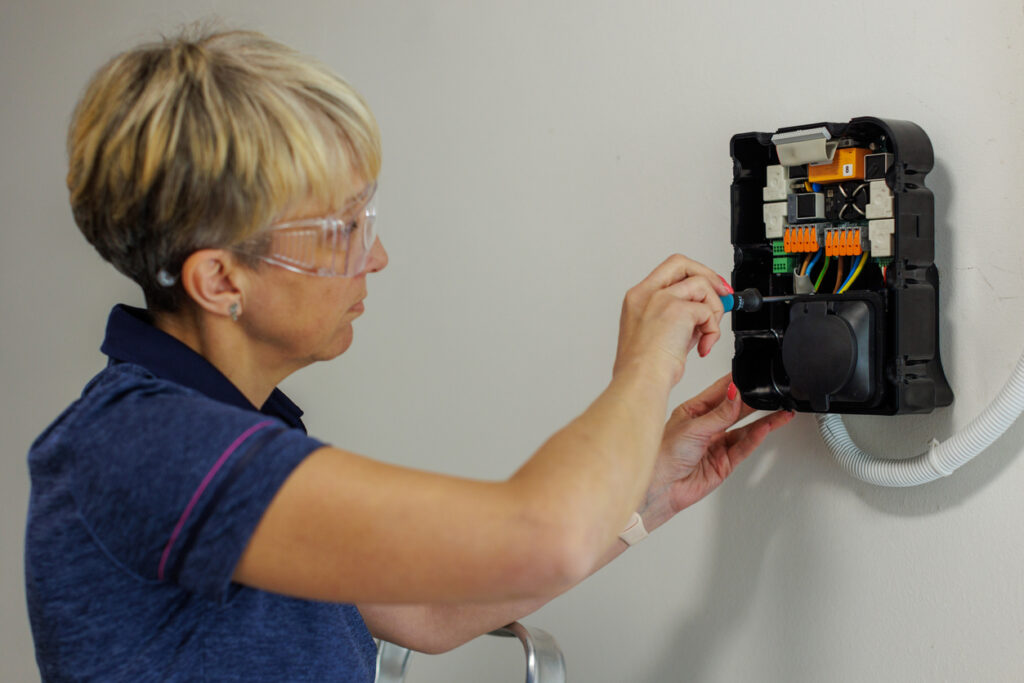
Our Installation Process: Safe, Swift, and Professional
ReliaBee Air, Electric, & Plumbing follows a rigorous, step-by-step protocol to ensure every installation meets the highest safety standards. We do not skip steps or cut corners. Dealing with high-voltage electricity requires precision, and our process is designed to mitigate risk while maximizing the longevity of your equipment.
Site Assessment and Load Calculation
The process begins with a detailed inspection of your electrical panel and the proposed charger location. We perform a load calculation based on your home’s square footage and existing major appliances (HVAC, ovens, dryers). This calculation tells us exactly how much spare capacity your system has. If the panel is full, we discuss options such as sub-panels, service upgrades, or smart load splitters that allow you to share a dryer circuit safely.
Permitting and Layout
Before a single wire is run, we handle the administrative requirements. Electrical work of this magnitude requires a permit to ensure insurance compliance and future resale value. We submit the necessary diagrams and applications to the local building department. We also plan the conduit run—the protective tubing that houses the wires—ensuring it is aesthetically pleasing and minimally invasive to your garage or exterior walls.
Circuit Installation and Wiring
Our electricians install the dedicated circuit breaker in your panel. We run the appropriate gauge of copper wiring to the charging location. Using the correct wire gauge is critical; undersized wires can overheat under the continuous load of EV charging, leading to melted components or fire. We size wires strictly according to code, often exceeding minimum requirements to ensure cool operation during Boerne’s hot summer months.
Mounting and Final Connections
We securely mount the charging station to the wall studs or a pedestal. Whether it is a hardwired connection or a receptacle installation, we torque every connection to manufacturer specifications. Loose connections are a leading cause of electrical failure, so we double-check every termination point.
Testing and Commissioning
Once the hardware is in place, we energize the circuit and perform a series of tests. We check for proper voltage, grounding, and polarity. If the charger is a smart unit, we verify that it is communicating with the network. We also simulate a charging session to ensure the breaker holds and the unit operates without thermal throttling.
Deciding When to Install a New Charger vs. Repairing
Homeowners who already have an existing EV infrastructure may face issues as equipment ages or as they upgrade to newer vehicles. Knowing when to repair an existing setup versus performing a complete replacement or upgrade is vital for maintaining efficiency and safety.
Incompatible Charging Speeds
Early EV adopters may have installed 16-amp or 30-amp chargers. While functional, these older units cannot take advantage of the faster onboard chargers found in modern EVs, which often accept 48 amps. If you have purchased a new vehicle with a larger battery, your old charger might feel frustratingly slow. In this case, repairing an old unit is not the solution; a full replacement with upgraded wiring to handle higher amperage is necessary.
Physical Damage and Wear
Charging cables and connectors endure significant wear and tear. If the insulation on the cable is cracked, exposing wires, or if the connector handle is damaged, the unit is unsafe. While some manufacturers offer replacement cables, internal component failure in older units often makes replacement more cost-effective than repair.
Smart Feature Requirements
Older "dumb" chargers simply push power to the car. If you have shifted to a time-of-use utility plan where electricity is cheaper at night, you need a charger that can schedule sessions. Upgrading to a smart charger allows you to save money on utility bills by automating the process, a feature that cannot be added to an older unit via repair.
Signs You Need Immediate Service
- Breaker Tripping: If your EV charger frequently trips the circuit breaker, it indicates an electrical fault or an overloaded circuit. This requires immediate professional attention — request service today.
- Overheating Components: If the plug, outlet, or wall around the charger feels hot to the touch, stop using it immediately. This suggests high resistance in the connection, which is a fire risk.
- Intermittent Charging: If the car starts and stops charging randomly, the issue could be with the vehicle, but it is often due to a failing communication protocol in the wall unit.
Navigating Local Permits and Regulations for EV Chargers
Installing an EV charger in Boerne involves navigating specific local codes and environmental considerations. The region’s climate and regulatory environment dictate how installations must be performed to ensure longevity and compliance.
Permitting and Code Compliance
Local building codes require permits for the installation of dedicated electrical circuits. This is not just red tape; it is a safety verification mechanism. An inspector will verify that the wire sizing, conduit fill, and breaker specifications match the load. Unpermitted work can lead to fines, issues with home insurance claims in the event of a fire, and complications when selling your home. We manage this entire process, ensuring that the installation passes inspection on the first attempt.
Heat and Seasonality Considerations
Boerne experiences high temperatures during the summer. EV charging generates heat, both in the battery and the charging equipment. Additionally, electrical resistance increases with temperature. If a charger is installed in a non-climate-controlled garage or on a sun-facing exterior wall, the ambient heat can cause the equipment to "derate" or lower its charging speed to protect itself.
- We recommend installing chargers out of direct sunlight whenever possible.
- We use high-temperature rated wiring and conduit to withstand attic or outdoor runs during the summer.
- We account for ambient temperature when performing load calculations to ensure the breaker does not trip due to thermal conditions rather than electrical faults.
Utility Coordination
Some local utility providers offer rebates or incentives for installing Level 2 chargers or for signing up for off-peak charging programs. However, these programs often require professional installation by a licensed contractor and the submission of specific documentation. We provide the necessary invoices and technical specifications to help you qualify for any available local incentives.
Certified Electrical Expertise for Your Vehicle
Your electric vehicle is a sophisticated piece of technology, and the equipment that powers it should be installed with the same level of technical precision. Relying on general handymen or uncertified installers for high-voltage work invites risk. We provide the assurance that comes with hiring licensed electrical specialists who understand the intricacies of continuous load circuits.
Our team stays updated on the latest EV technologies, from bidirectional charging (V2H) capabilities to the newest NACS (North American Charging Standard) connectors. We troubleshoot complex electrical environments, ensuring that your panel is balanced and that your home’s voltage remains stable even when the AC is running and the car is charging simultaneously.
We prioritize the integrity of your home’s electrical system above all else. By using industrial-grade materials and adhering to strict installation protocols, we deliver a charging solution that is durable, safe, and ready for the future of transportation.
For a charging solution that combines speed, safety, and reliability, trust the experts at ReliaBee Air, Electric, & Plumbing to power your journey.
Ready to upgrade your home charging experience?
Contact us immediately to book your professional installation.

Current Offers for
San Antonio Homeowners
Free Plumbing Safety Check


$59 AC Tune-Up
5% OFF FOR SENIORS
5% OFF FOR VETERANS & FIRST RESPONDERS

5% OFF FOR EDUCATORS


What Your Neighbors Are Saying