Electrical Repair in Cibolo, TX

Experiencing Electrical Issues? Get Reliable Repair Fast.
Don’t let a faulty electrical system disrupt your day or endanger your property. Whether you are dealing with a sudden power outage, a tripping breaker, or a sparking outlet, ReliaBee Air, Electric, & Plumbing provides the expertise needed to restore safety and functionality to your home immediately. Call us now to speak with a technician or apply for financing to handle urgent repairs without delay.
- Same-day service ensures your electrical issues are fixed without delay, minimizing downtime in your home.
- Transparent pricing with no hidden fees gives you peace of mind before any wire is touched.
- 24/7 availability means we’re on call to help you any time, day or night, regardless of weather conditions.
Fully licensed and insured, with all services backed by a satisfaction guarantee.
What You Get Today: Comprehensive Diagnostics and Repair
When electrical systems fail, the cause is often deeper than a simple loose screw. A professional response involves a systematic approach to identify not just the symptom, but the root cause of the failure. In Cibolo, TX, where homes range from new constructions to older properties with aging infrastructure, the scope of repair must be tailored to the specific electrical load and configuration of the building.
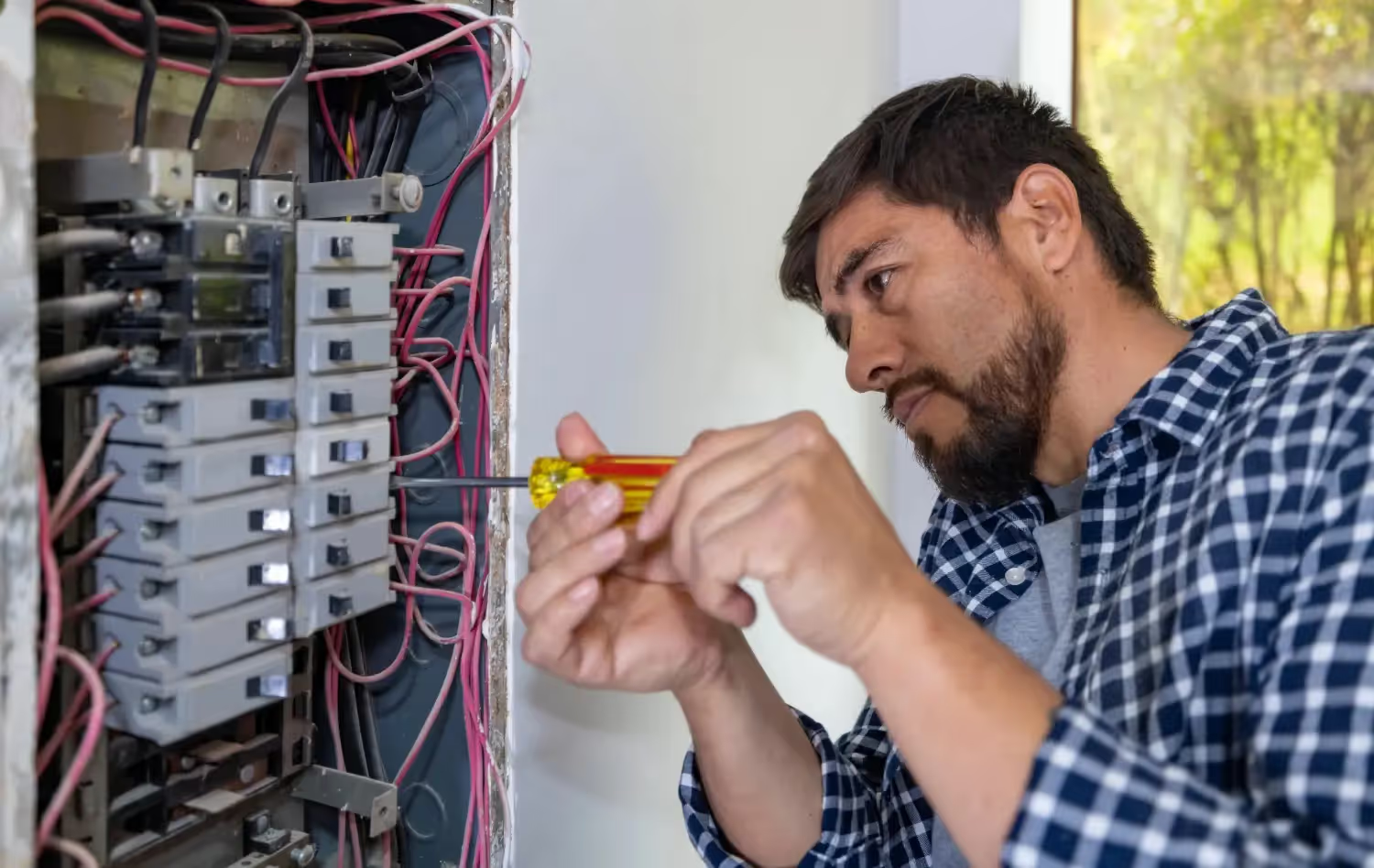
Residents receive a thorough evaluation of the affected circuit and the main distribution panel. Electrical flow is invisible, which makes it inherently dangerous. Professional troubleshooting utilizes advanced multimeters, circuit tracers, and thermal imaging to detect hotspots, resistance, and voltage drops that are undetectable to the naked eye. The goal is to isolate the fault—whether it is a short circuit, an overload, or a ground fault—and implement a permanent code-compliant solution.
Service usually includes:
- Circuit Analysis: Technicians trace the wiring from the panel to the fixture to ensure continuity and insulation integrity.
- Load Calculation: ensuring the circuit is not being overloaded by modern appliances, which is a common issue in households adding new electronics or HVAC units.
- Component Replacement: Swapping out damaged receptacles, switches, breakers, or GFCI/AFCI devices with commercial-grade components that exceed standard builder-grade quality.
- Safety Verification: Testing the grounding system to ensure that, in the event of a surge, the excess electricity has a safe path to the ground rather than through your appliances or family members.
This process eliminates the guesswork. Instead of trial-and-error, you get a definitive diagnosis and a repair strategy that adheres to the National Electrical Code (NEC).
The Professional Repair Protocol: From Inspection to Restoration
Understanding the sequence of a professional electrical repair helps homeowners know what to expect. This is not a quick patch job; it is a structured process designed to ensure long-term safety.
- Initial Site Safety Assessment: Upon arrival, the technician first ensures the area is safe to work in. This involves checking for live wires, water exposure, or immediate fire hazards. Power to the affected area is cut off at the main panel to prevent accidental electrocution during the diagnostic phase.
- Diagnostic Testing: Using specialized tools, the technician tests the voltage and amperage at various points in the system. They check for "ghost voltage," loose neutral wires, and corroded connections. This step identifies exactly where the break in the circuit has occurred.
- Presentation of Findings: Once the issue is isolated, the technician explains the problem clearly. You receive a detailed explanation of what failed, why it failed, and the options for repair. This creates a transparent environment where you approve the scope of work before tools are applied for the fix.
- Execution of Repair: The technician proceeds with the repair, removing damaged wiring or components and installing new materials. All connections are torqued to manufacturer specifications—a critical step often missed in amateur repairs that leads to arcing later on.
- System Stress Test: After the repair is complete, power is restored, and the system is tested under load. The technician turns on appliances and lights on that circuit to ensure the repair holds up under real-world usage conditions.
- Final Cleanup and Inspection: The workspace is cleaned, and a final walkthrough is conducted to demonstrate the restored function and answer any maintenance questions.
Determining Whether to Repair or Upgrade Your Electrical System
One of the most difficult decisions for a homeowner is knowing when a simple repair is sufficient and when a system upgrade is necessary. Electrical components do not last forever. Insulation dries out and cracks, connections loosen due to thermal expansion and contraction, and panels become obsolete as safety standards evolve.
Making the right choice depends on several technical factors regarding the age and condition of your current setup.
When to Repair
Repair is the correct path when the issue is localized and the surrounding infrastructure is sound.
- Isolated Component Failure: If a single outlet stops working or a switch feels "mushy," but the wiring behind it is copper and in good condition, a direct replacement is cost-effective and safe.
- Loose Connections: Often, lights flicker simply because a wire nut has come loose or a screw terminal wasn't tightened properly. Tightening these connections solves the problem without the need for major renovations.
- Nuisance Tripping: If a breaker trips occasionally due to a known overload (like running a vacuum and a hair dryer on the same circuit), moving appliances to different circuits or replacing a worn-out breaker is the standard solution.
When to Upgrade or Replace
There are specific scenarios where repair is merely a band-aid on a critical wound. In these cases, replacement or upgrading the panel and wiring is the only responsible option for safety.
- Outdated Wiring Types: Homes built between the mid-60s and mid-70s may contain aluminum wiring. Aluminum expands and contracts more than copper, leading to loose connections and fire hazards. If aluminum wiring is found at the failure point, a comprehensive rewire or "pigtailing" service is required.
- Panel Obsolescence: If your home utilizes a fuse box or specific brands of breaker panels known for failure (such as Federal Pacific Stab-Lok or Zinsco), repair is rarely recommended. These panels have high failure rates where breakers fail to trip during a surge, leading to fires. Replacement is necessary for insurability and safety.
- Insufficient Amperage: Modern homes consume far more power than homes built thirty years ago. If you are constantly resetting breakers or noticing lights dimming when the AC kicks on, your service panel (likely 100 amps or less) may need to be upgraded to 200 amps to handle the load of central air, electric vehicles, and modern appliances.
- Charred or Brittle Insulation: If the insulation on wires creates a crumbling mess when touched, the wiring has reached the end of its life. Attempting to strip and reconnect brittle wires often causes insulation to flake off further up the line, creating short circuits inside the walls.
Common Electrical Failures Demanding Immediate Attention
Recognizing the signs of electrical failure early can prevent catastrophic damage. Electrical fires often start inside walls where they cannot be seen immediately. Being vigilant about the behavior of your electrical system is key to home maintenance.
- Persistent Burning Smell: A plastic or fishy odor near outlets or switches indicates that wire insulation is melting due to overheating. This is an emergency that requires immediate shutdown of power to that circuit.
- Hot Switch Plates: Dimmer switches may get slightly warm, but a standard toggle switch or outlet cover should never be hot to the touch. Heat indicates high resistance in the connection, often a precursor to arcing.
- Buzzing or Sizzling Sounds: Electricity should be silent. If you hear a buzzing sound coming from the main panel or a specific outlet, it indicates a loose connection where electricity is jumping across a gap (arcing). This generates intense heat and is a primary cause of electrical fires.
- Flickering Lights: While sometimes caused by the utility company, flickering restricted to one room or one circuit suggests a loose neutral wire or a failing connection in the circuit loop.
Local Regulations, Permitting, and Utility Considerations
Electrical work in Cibolo, TX is governed by strict regulations designed to protect public safety. The Texas Electrical Safety and Licensing Act establishes the standards for who can perform electrical work and how it must be executed. While minor repairs like swapping a switch might not always trigger a permit requirement, significant alterations to the electrical system do.
Permitting and Inspections
Work that involves the main service panel, structural wiring changes, or the addition of new circuits typically requires a permit from the local building department. This process ensures that the work is reviewed by a third-party inspector to verify compliance with the National Electrical Code (NEC). Professional electricians handle the permitting process on your behalf, ensuring that all work is documented and legal. This is crucial for maintaining your home’s insurance policy and resale value.
Climate Impact on Electrical Systems
The local climate plays a significant role in electrical health. The humid subtropical climate brings intense summer heat, which places a massive strain on electrical panels. As air conditioning units run continuously to combat high temperatures, the electrical load remains near peak capacity for hours. This heat accumulation can cause old breakers to trip prematurely or weaken over time.
Additionally, while winters are generally mild, occasional freezes can impact outdoor electrical components, such as meter cans and external disconnects. Moisture ingress from humidity or storms can corrode contacts within the meter box, leading to intermittent power issues that mimic internal wiring problems.
Utility Coordination
In scenarios where the issue lies between the street and the meter, or if the meter lug itself is damaged, coordination with the local utility provider is necessary. Licensed electricians distinguish between homeowner-owned equipment (everything from the meter output into the house) and utility-owned equipment (the service drop and the meter itself). Technicians communicate directly with utility providers to schedule temporary disconnects when repairs to the meter base or weatherhead are required.
Why Homeowners Trust Us with Critical Electrical Systems
Electricity is not a DIY category. The risks associated with improper handling include electrocution, severe burns, and property loss due to fire. Professional service mitigates these risks through rigorous training and adherence to safety protocols.
ReliaBee Air, Electric, & Plumbing employs technicians who are not only skilled in the trade but are also trained in the specific diagnostic challenges presented by local housing stocks. The focus remains on safety, accuracy, and longevity of the repair.
- Code Compliance: Every repair is performed in strict accordance with the current NEC standards adopted by the state. There are no shortcuts; correct wire gauges, proper grounding methods, and approved connectors are non-negotiable.
- Advanced Technology: Utilization of circuit analyzers and thermal detection tools allows for non-invasive diagnosis. This means less cutting into drywall and a faster path to identifying the problem.
- Preventative Approach: The goal is not just to fix the immediate break but to inspect the surrounding system for signs of future failure. If a breaker failed due to heat, the technician checks the bus bar for pitting. If an outlet shorted, the downstream devices are tested for damage.
Securing Your Home’s Electrical Integrity
A functioning electrical system is the backbone of modern living. When lights flicker, breakers trip, or power fails, it brings daily life to a halt. Ignoring these signs or attempting amateur repairs can lead to dangerous consequences. Professional intervention ensures that the complex network of wires hiding behind your walls is safe, compliant, and capable of handling your energy needs.
From urgent troubleshooting to complex rewiring projects, the right expertise makes the difference between a temporary fix and a permanent solution. ReliaBee Air, Electric, & Plumbing is dedicated to providing high-quality, code-compliant electrical repair services that keep your power running and your home secure.
Ensure your electrical system is safe and fully functional. Schedule your professional electrical repair today.

Current Offers for
San Antonio Homeowners
Free Plumbing Safety Check


$59 AC Tune-Up
5% OFF FOR SENIORS
5% OFF FOR VETERANS & FIRST RESPONDERS

5% OFF FOR EDUCATORS


What Your Neighbors Are Saying